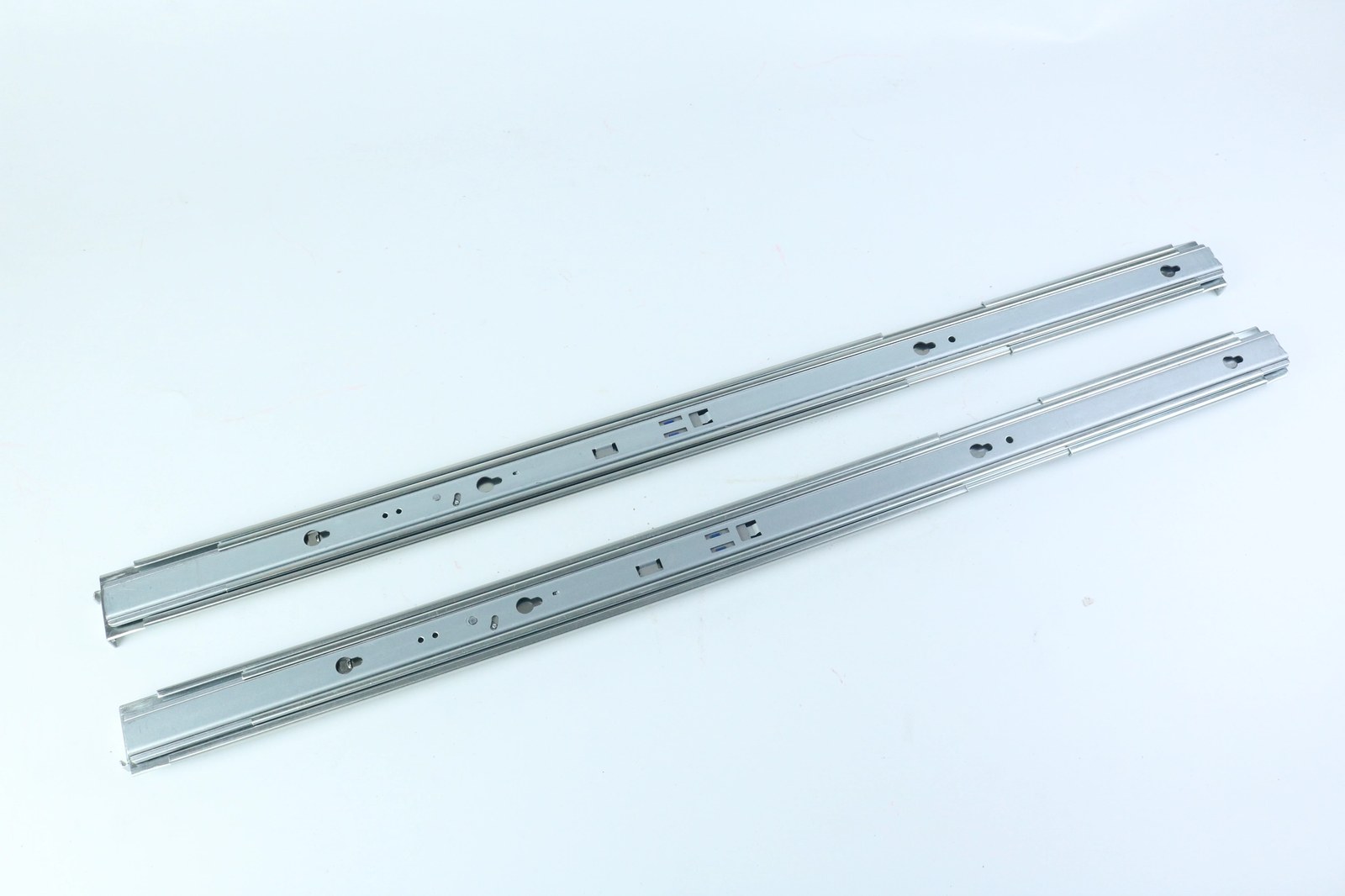


If you are searching for King Slide server rails alternatives, you usually have one of three problems: the kit you need is out of production, your chassis is not a standard model, or your volume is too small for an OEM program. This article compares six routes to a working rail kit and tells you what each one gets you, when it fits, and where it goes wrong. The measuring method is in our guide to finding a King Slide replacement that fits, and the supplier landscape in our server rail manufacturers overview.
Why buyers end up looking for an alternative
King Slide is the benchmark for tier-1 OEM volume programs. MetrixSlide is built for teams that need engineering attention, fast iteration and transparent pricing. Those two sentences explain most of the search traffic on this topic.
According to King Slide's website, its server rails are presented on a single page without a catalog, part numbers, spec tables or prices, and the only conversion path is an enquiry form. That is normal for an ODM supplier serving major server brands, but it leaves a buyer with a legacy fleet or a non-standard enclosure with no direct way to order a King Slide kit by part number.
The alternatives are not equal. Some are the original OEM part through another door, some are engineered replacements, and some are compromises that work in a lab and fail in a loaded rack. The sections below separate them.
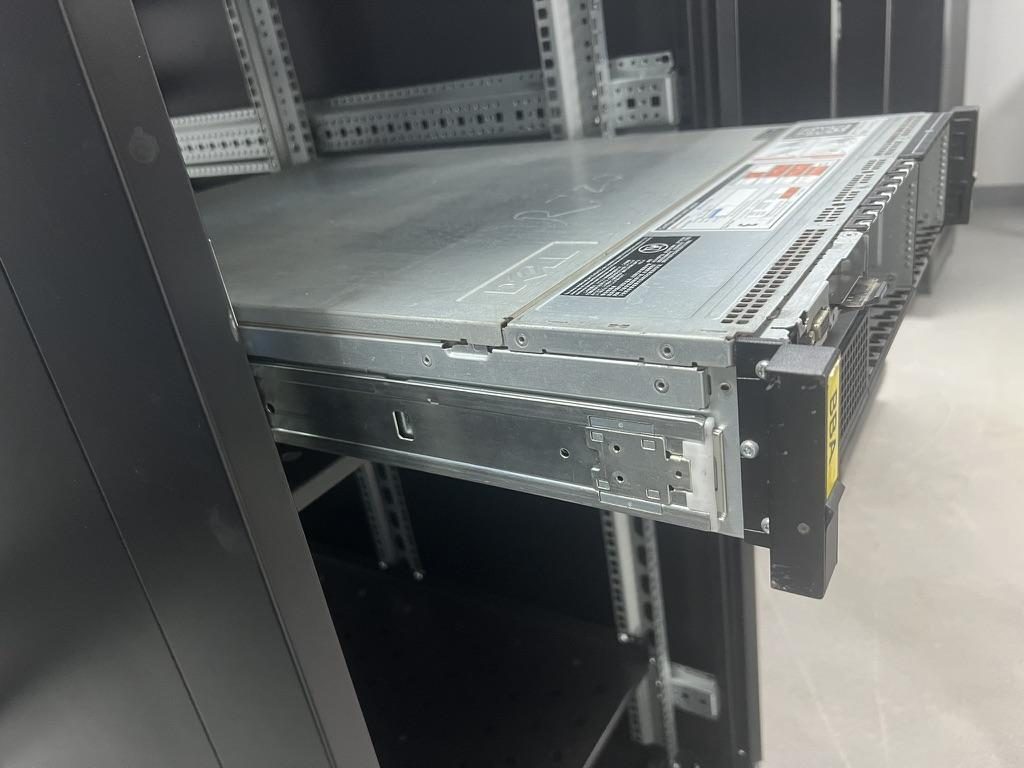
Option 1: MetrixSlide functional-equivalent rails built from your chassis data
What you get. A rail kit engineered to your chassis, not to a part number. You send a chassis or rack drawing, or the measurements from our compatibility checklist, and you receive a fitment proposal within 24 hours, reviewed by a mechanical engineer. Bracket changes, hole patterns, length and thickness can be adjusted within defined boundaries with no tooling fee and no MOQ on those flexible changes. Chassis-side holes are stamped to a tolerance within ±0.08 mm, which is what lets a functional equivalent engage cleanly on existing standoffs.
The standard range covers 1U to 10U, sliding (ball-bearing and friction), fixed and tool-less. Two reference points: the MS-TLS-120 tool-less ball-bearing kit has a specified capacity of 120 kg per pair, and the MS-BBR-180 has a nominal capacity of up to 180 kg per pair for AI, GPU and liquid-cooled servers. Standard models have a typical MOQ of 1 pair and ship in 3 business days.
When to review a replacement. Start with the actual chassis attachment and rack requirements; the R720 replacement rail guide provides a review checklist.
Risks. This is a functional equivalent, not a copy; the difference is explained in functional equivalent vs copy. You must supply accurate chassis data, and the sample pair should be checked in your rack before you release volume. Sample orders are paid, at MOQ 1 pair on standard models. A custom sample takes a few weeks from drawing validation, longer than pulling a used kit off a marketplace.
Option 2: New OEM kits from the server vendor
What you get. The rail kit the server vendor specifies for that model, such as Dell ReadyRails for PowerEdge or HPE rail kits for ProLiant. It matches the chassis it was designed for and sits inside the vendor's support process.
When it fits. Current-generation servers still sold by the vendor, procurement rules that require vendor-sourced accessories, or support processes that need the exact kit part number.
Risks. Fit is defined by server model, so the vendor kit does nothing for a custom or third-party chassis. Once a server generation reaches end of sale, the matching kit tends to become scarce. There is no customization: an unusual rack depth or hole type needs an adapter or a different route. Vendor pricing is not covered here; our OEM rail kit price article collects what is public.
Option 3: Refurbished or used OEM kits from marketplaces
What you get. The same original kit as option 2, bought second-hand from eBay sellers, refurbishers or surplus dealers. As a reference, used and refurbished Dell ReadyRails II 2U sliding rail kits (type B6) were listed at roughly US$80 to US$120 on eBay and refurbisher stores as of September 2026; new kits from the server vendor cost more, and the vendor store has the current figure.
When it fits. A single replacement for a legacy server, or a lab that buys its servers the same way.
Risks. Condition is the main one. Used kits arrive with missing screws or CMA brackets, bent inner members or the wrong variant for the chassis revision. There is usually no warranty beyond the seller's return window. Availability is not a supply chain; four kits this week and none next month makes this route unsuitable for anything repeatable. Our server rail installation guide shows how the original kits mount if you want to check before buying used.
Option 4: King Slide-made retail kits, such as Chenbro 84H341300-002
What you get. Some King Slide-made rails reach retail under a chassis maker's part number. Chenbro 84H341300-002 is a 26-inch 2U to 4U sliding rail kit of this kind, sold through eBay, Newegg and Amazon. It was listed at roughly US$50 to US$66 on Walmart, Amazon and smaller e-tailers as of September 2026. This is a retail listing, not an official price from either company.
When it fits. You are using the Chenbro chassis the kit was designed for, or have verified a matching mounting pattern yourself. Small quantities, fast delivery, no engineering involvement.
Risks. The kit fits the chassis it was designed for; that promise does not extend to other enclosures, and no dimensions beyond what the seller publishes should be assumed. There is no customization, no engineering contact and no volume pricing, and retail stock changes without notice.
Option 5: Universal and adjustable rail kits
What you get. A kit with adjustable outer members and generic chassis-side hardware, usually L-brackets, clamps or a slotted inner member, designed to cover a range of rack depths and chassis without a specific drawing. Our universal server rails category is one example of this class.
When it fits. Generic or in-house chassis with flat sides and no factory standoffs. Test racks, short deployments and mixed-depth racks where getting the box mounted this week matters more than travel or tool-less handling.
Risks. Fit is a compromise by definition: lower load ratings than a chassis-specific ball-bearing kit, a chassis that may sit off center, and lock-out behavior that depends on the generic bracket. The rack depth math still has to be right, so read rack mounting depth vs rack depth vs chassis depth before ordering.
Option 6: Other slide makers through their OEM programs
What you get. Engineered slides from established manufacturers, ordered the way King Slide sells: through a program, with drawings and qualification. Three examples, described at the level that is broadly known:
- Nan Juen (Taiwan), a slide rail manufacturer serving industrial and server applications.
- Accuride (US and global), known for industrial and telescopic slides across many sectors.
- General Devices (US), which makes chassis slides for rack-mounted equipment.
When it fits. You have a volume program, an engineering team that owns the interface, and a timeline that accepts qualification, or your application is closer to industrial equipment than to a standard 19-inch server.
Risks. Program entry usually means minimum volumes, longer lead times and a qualification cycle a small buyer will not clear. Several of these makers supply slides rather than complete server rail kits with brackets, adapters and hardware, so integration work can land on you. Sourcing this way is covered in how to find a server rail manufacturer in China and the manufacturers overview.

Comparison table
| Option | Fit to chassis | Availability | Customization | Typical route | Best for |
|---|---|---|---|---|---|
| 1. MetrixSlide functional equivalent | Engineered from your chassis data, proposal in 24 h | Standard models MOQ 1 pair, 3 business days; custom in a few weeks | Brackets, holes, length, thickness, no tooling fee within boundaries | Drawing or checklist, quote page, sample pair | Refurbishers, integrators, non-standard chassis, mixed fleets |
| 2. New OEM kit from server vendor | Exact for the named server model | Good for current models, thin for end-of-sale | None | Vendor store or reseller | Current-generation servers under vendor support |
| 3. Used OEM kit from marketplaces | Exact if the variant matches | Sporadic, condition varies | None | eBay, refurbishers, surplus | One-off replacements on legacy servers |
| 4. King Slide-made retail kit (Chenbro 84H341300-002) | Exact for the designed chassis only | Retail stock, changes without notice | None | Amazon, Newegg, eBay | Small quantities on the matching chassis |
| 5. Universal or adjustable kit | Approximate, bracket-dependent | Usually in stock | Adjustment range only | Catalog order | Generic chassis, test racks, short deployments |
| 6. Other slide makers via OEM programs | Engineered, after qualification | Program lead times | Full, at program volumes | Enquiry, drawings, qualification | Volume programs with in-house engineering |
How to choose in five questions
According to King Slide's website, its selection guidance rests on five points: space between rack and chassis, chassis dimension and weight, travel length, locking mechanism and tool-less assembly. Use them to test every option above.
1. How much space is there between rack and chassis?
Measure the gap between rack post and chassis side wall. A slim gap rules out thick universal brackets, and it is the first thing a fitment proposal checks. Options 1 and 6 can work it out from a drawing; options 2 to 5 assume you already match.
2. What are the chassis dimensions and weight?
Depth, height in U, side profile and loaded weight. Weight decides the rail class: a light 1U node and a 150 kg GPU server do not share a kit. Our load capacity guide explains dynamic versus static ratings. Weight is where universal kits drop out and where heavy-duty models like the MS-BBR-180 come in.
3. How much travel do you need?
Full extension for top-access drives or GPU trays, partial travel for a switch or a sealed 1U node. Travel and rail length are different numbers, covered in the rail length and travel guide. Retail and used kits give you whatever travel they were designed with; engineered kits let you specify it.
4. Which locking mechanism do you want?
Lock-out on extension, lock-in at the rear, the release lever, and whether one person can remove the chassis. MetrixSlide kits use a dual-lock anti-drop structure; vendor kits have their own conventions; universal kits vary widely. Decide this before the sample stage.
5. Does it need to be tool-less?
Tool-less mounting on square holes, screw mounting on round or threaded holes, or both with adapters. Check your rack against rack hole types: square, round, threaded; MetrixSlide supports square 9.5 mm, round and threaded M5, M6, 10-32 and 12-24 style holes. See also tool-less vs screw-mount rails.
FAQ
Is a MetrixSlide rail a King Slide rail?
No. MetrixSlide rails are designed and manufactured by MetrixSlide as functional equivalents built from your chassis data. They are not King Slide products, copies or licensed parts, and MetrixSlide has no relationship with King Slide.
Can I buy King Slide server rails directly?
According to King Slide's website, server rails are sold through OEM programs and the site offers an enquiry form rather than a catalog with part numbers or prices. Some King Slide-made kits reach retail under chassis-maker part numbers, such as Chenbro 84H341300-002, which is designed for specific Chenbro chassis.
Which option is fastest for a single legacy server?
A used OEM kit from a marketplace, if the right variant is listed and the condition is acceptable. For anything repeatable, a standard MetrixSlide model at MOQ 1 pair shipping in 3 business days is usually the faster reliable route.
Do universal rails work on a Dell or HPE chassis?
Sometimes, on chassis with flat sides and enough rack gap, but they ignore the factory standoffs and usually carry a lower load rating. For those chassis, a chassis-specific kit, new, used or a functional equivalent, is the safer choice.
Do I pay for MetrixSlide sample pairs?
Yes. Sample orders are paid at MOQ 1 pair on standard models and ship in 3 business days. Keeping samples as normal paid orders is what keeps them fast.
Next step
Send your chassis or rack drawing, or the numbers from the five questions above, through the quote page. You will get a fitment proposal within 24 hours, reviewed by a mechanical engineer, and you can then order a sample pair to check in your own rack before committing to volume. If your server is a standard 1U to 4U chassis at up to 120 kg, start with the MS-TLS-120 tool-less ball-bearing kit.
King Slide is a trademark of King Slide Works Co., Ltd. Dell and PowerEdge are trademarks of Dell Inc. HPE and ProLiant are trademarks of Hewlett Packard Enterprise. Other brand names are the property of their respective owners and are used only to describe compatibility or comparison. MetrixSlide is not affiliated with, endorsed by, or sponsored by these companies.