

Find the right rails for your equipment
Use these seven starting points to find relevant products and engineering support. A brand name alone does not establish compatibility with every server or rack.
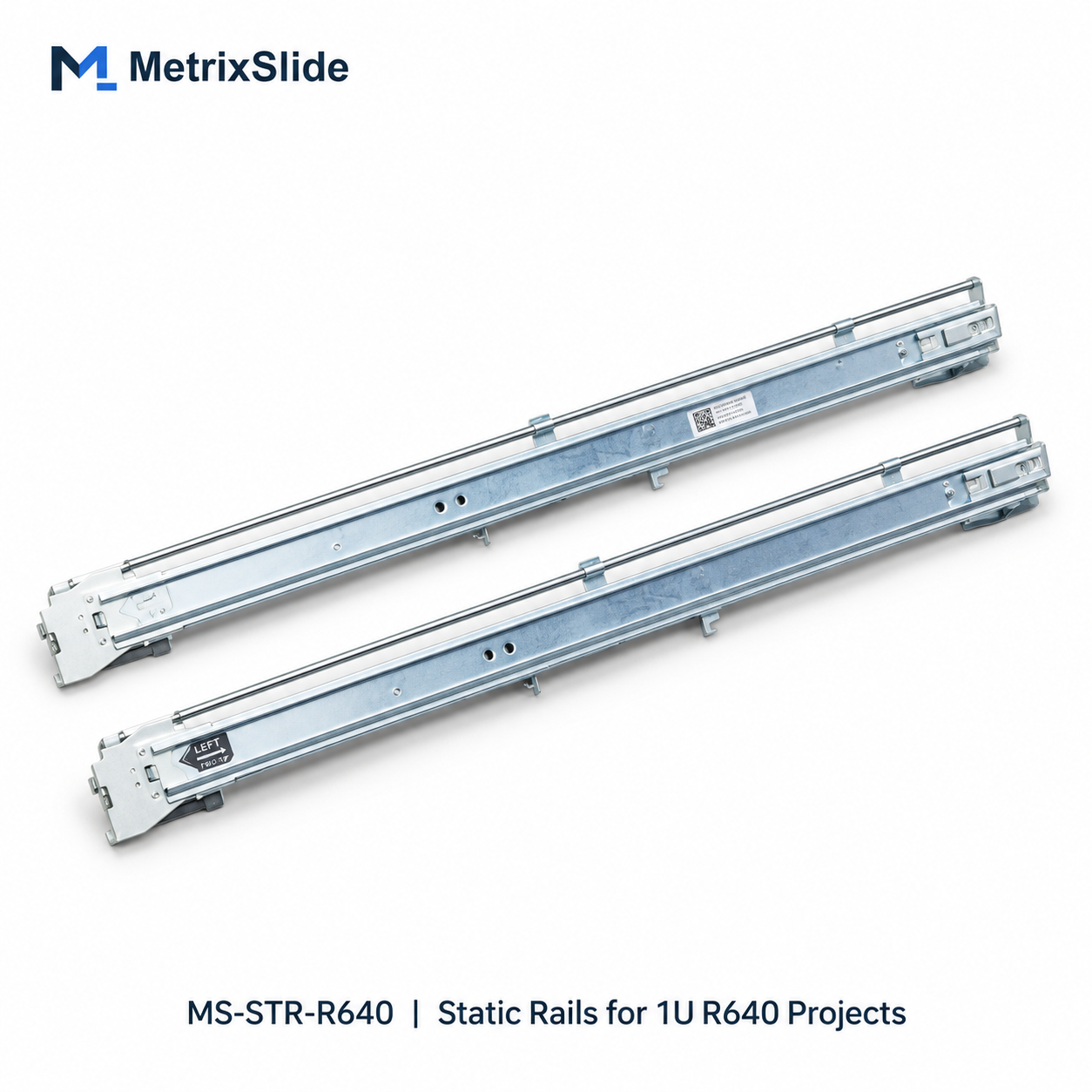
Dell PowerEdge
Review static and sliding approaches for selected PowerEdge models. Start with the R640 static-rail project and confirm the chassis attachment, rack depth and required access.
Review Dell compatibility
HPE ProLiant
Explore friction rails for selected Gen8, Gen9 and Gen10 applications. Confirm the exact chassis interface, rail length and mounting-hole configuration.
Review HPE compatibilityCustom Server Chassis
Develop rails around your chassis dimensions, mounting points, equipment weight and rack requirements. Review custom lengths, brackets and interface drawings.
Explore custom engineering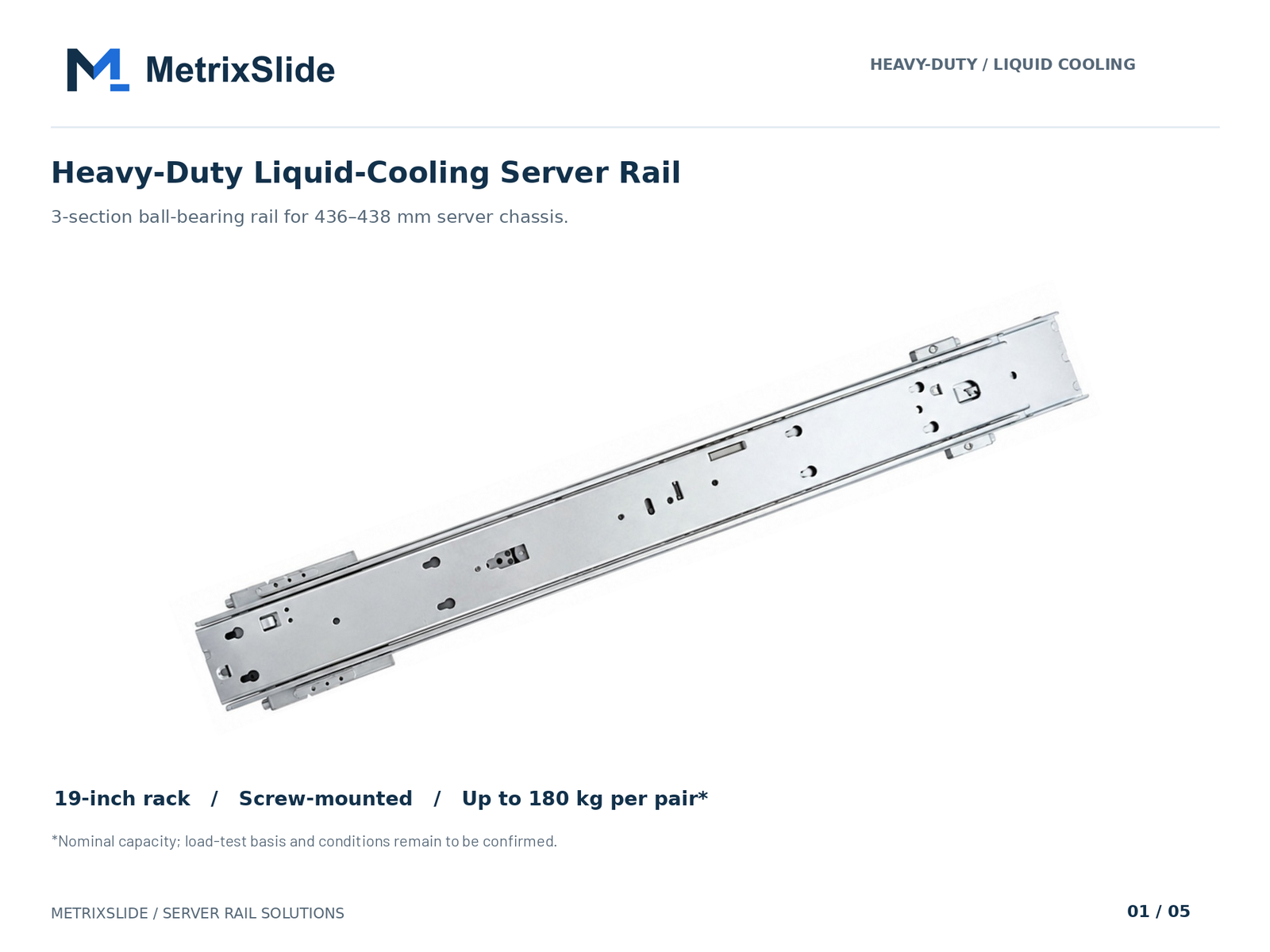
AI / GPU & Liquid-Cooled Servers
Review equipment weight, load distribution, service travel and rack integration. Include coolant-connection clearance and maintenance access in the proposed configuration.
Explore heavy-duty rails
NVR & Storage
Consider compact or ultra-slim rails where side clearance is limited. Review mounting points, equipment dimensions and the required service position.
Explore compact rails
Power Shelf Support Rails
Explore the MS-PSR Series for 19-inch EIA support and project-specific 21-inch OCP ORV3 development. Confirm support geometry and mounting interfaces.
Explore power shelf rails
Universal Server Rails
Start with a flexible rail option, then confirm chassis dimensions, rack depth, mounting points and the load conditions for your equipment.
Explore universal support railsCheck the application, not just the rack width
Review compute, switching, storage and power equipment separately. A fixed support rail does not provide sliding service travel.
For an ORv3 tray, confirm rail supply responsibility, tray attachments, latch engagement, rear connector/busbar alignment and removal clearance before selecting a rail.
Review cable-management arms, power distribution units and coolant lines through the required service travel. Model compatibility requires the actual interface drawings.
Interface example: Juniper ORv3 switch-tray installation guideCannot find your equipment or rail model?
Share the exact equipment model and basic chassis/rack requirements for an engineering compatibility review.