
King Slide makes some of the most widely used server rails in the world, which is exactly why so many people end up hunting for a replacement — a rail arrives damaged, a used server shows up with no rails at all, or the lead time and minimum order on genuine parts don't fit a small deployment. The problem is that "server rails" are not a universal commodity. Rail length, mounting style, hole pattern, and chassis-side latches vary from model to model, and buying something that merely looks similar is the fastest way to end up with a server you can't rack.
This guide walks through how to identify what you actually have, measure it correctly, compare your real options, and install a substitute without creating a safety problem.
Start With the Exact King Slide Model and Server Chassis
Before you shop for anything, confirm precisely what you're replacing. Generic advice like "get a 1U rail" causes most failed swaps.
Check these first:
- The rail label itself. King Slide rails are usually stamped or labeled with a part number on the inner member — write it down exactly.
- Server brand and model. A Dell R740, Supermicro CSE-825, or HPE DL380 each expect different mounting geometry.
- Chassis height (1U, 2U, 3U, 4U) and whether the rails are a left/right matched pair — most sliding rails are handed and not interchangeable.
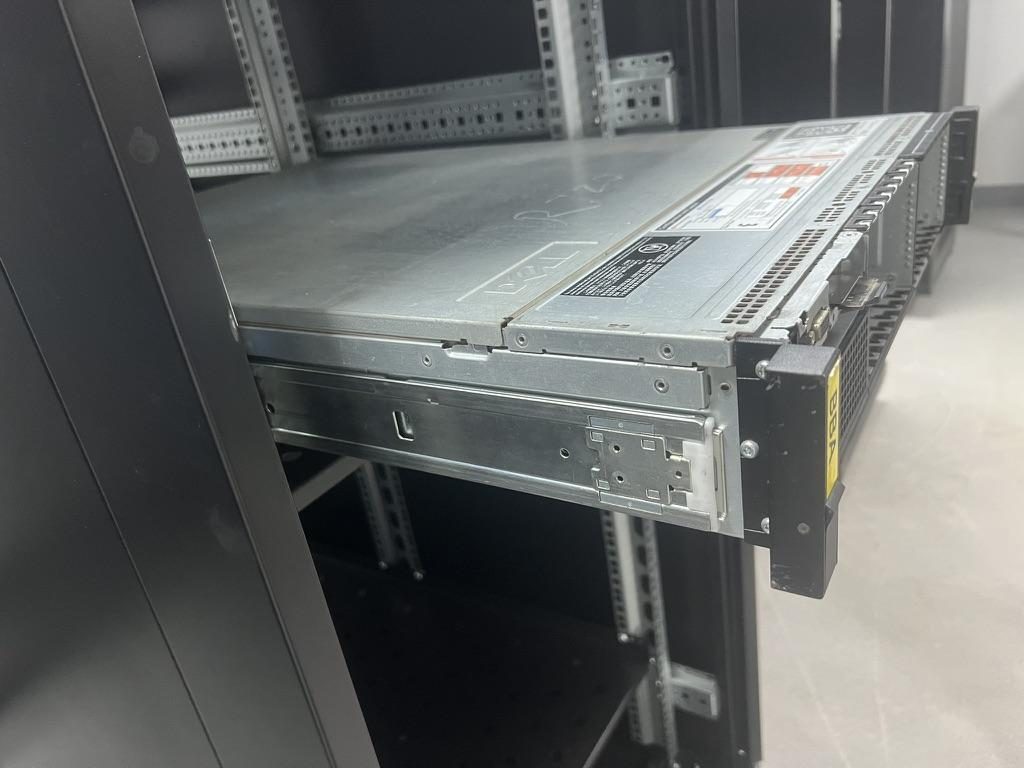
- Proprietary mounting features: factory side-latches, side studs/bosses, or dedicated mounting ears that engage slots on the chassis wall rather than screw holes.
The single most useful thing you can build — and something most sellers skip — is a cross-reference matrix. List the original part number, the server chassis model, closed rail length, mounting method, and candidate replacements side by side:
| OEM rail P/N | Chassis model | Closed length | Mounting | Candidate replacement |
|---|---|---|---|---|
| (from label) | Dell R730 2U | ~ in/mm | Tool-less side-latch | OEM cross-ref / universal telescopic |
This matters most in the scenarios US buyers hit constantly: home labs, second-hand Dell or Supermicro chassis, decommissioned data-center gear, and auction servers that arrive with no rails. In every one of those cases, "it looks about the same" is not enough — the matrix is.
Measure Rack Depth, Rail Length, Hole Patterns, and Clearance
Dimensional mismatch is the number-one reason replacements fail, so measure before you buy. Grab a tape measure and calipers and record:
- Chassis outer width (standard 19" equipment is ~17.5" between rails, but confirm).
- Chassis depth, front face to rear-most point.
- Rail closed length and fully extended length.
- Front-to-rear mounting post distance inside your rack — this is the number that decides whether an adjustable rail will span your rack at all.
- Hole type: square (cage nut), round threaded, or unthreaded round — and the vertical hole spacing (standard EIA-310 is a 0.5"–0.625"–0.625" repeating pattern).
- Screw hole spacing on the chassis side, and front/rear ear positions.
- Rear clearance for a cable management arm, if you use one.
Two hard rules save people from returns: a four-post rail cannot substitute for a two-post rack (and vice versa), and a short-depth network cabinet may not physically accept a full-length server, no matter which rail you buy. Competitors usually just say "check compatibility." The point here is that with these measurements in hand, you can decide yes or no with a caliper — not a guess.
Compare OEM Cross-References, Universal Telescopic Rails, and Fixed Shelves
Once you know your dimensions, there are several legitimate paths — each with a right use case:
- OEM cross-reference part. The closest match to a King Slide rail; ideal when you have the exact part number and need drop-in behavior.
- Universal telescopic (sliding) rails. Adjustable-depth rails that fit a range of chassis. Best when you need frequent pull-out maintenance and your chassis uses standard mounting.
- Fixed shelves / heavy-duty rack shelves. A flat shelf the server simply sits on. The most forgiving option when the model is unknown, the budget is tight, or the chassis has no matching side-latch for any sliding rail.
- Salvaged/pulled rails from a matching decommissioned unit.
The trade-off most guides omit is the sliding rail vs. fixed shelf decision. Sliding rails let you service a server without pulling it off the rack, but they demand correct latch and hole geometry. A fixed shelf sacrifices slide-out convenience but will safely rack almost anything when a proprietary rail simply isn't available. If you can't source a dedicated slide, a rated shelf is a perfectly professional fallback — not a compromise on safety.
Check Load Rating, Bearing Design, Locking Features, and 2U Fitment
Fit is only half the job; the rail also has to carry the weight safely. This is separate from dimensions — don't conflate the two.
Compare:
- Static load (weight at rest) vs. dynamic load (weight while sliding out) — they are different numbers, and dynamic is what matters for maintenance.
- Bearing design — heavy-duty ball-bearing slides for anything you'll pull out under load.
- Locking and anti-drop stops, plus correct left/right pairing.
A critical caution: a rail's headline load rating does not mean it's safe to fully extend under that load repeatedly — especially a 2U storage server loaded with drives. Fully populated 2U chassis carry a higher center of gravity and are prone to front-end droop, rail twist, and unsafe single-side support if the rail is under-specified. Match the rail to the job:
- Light lab / switch gear: basic sliding or fixed rails are fine.
- Standard production 1U/2U servers: rated ball-bearing telescopic rails with proper locks.
- Heavy, drive-loaded storage chassis: heavy-duty rails with high dynamic rating and anti-drop stops, or a rated shelf.
Install Substitute Rails and Troubleshoot Proprietary Mounting Problems
Install in a repeatable order so problems show up early:
- Dry-fit the rails empty in the rack first.
- Confirm left/right orientation before tightening anything.
- Mount the front and rear brackets to the correct hole positions.
- Slide the inner member onto the chassis and verify it latches.
- Check the locking stops, then test the slide at low load before trusting it with the server.
Common proprietary-mount questions:
- Can tool-less clips be removed and screwed in instead? Often yes — many chassis have usable threaded holes behind the tool-less features. Verify before assuming.
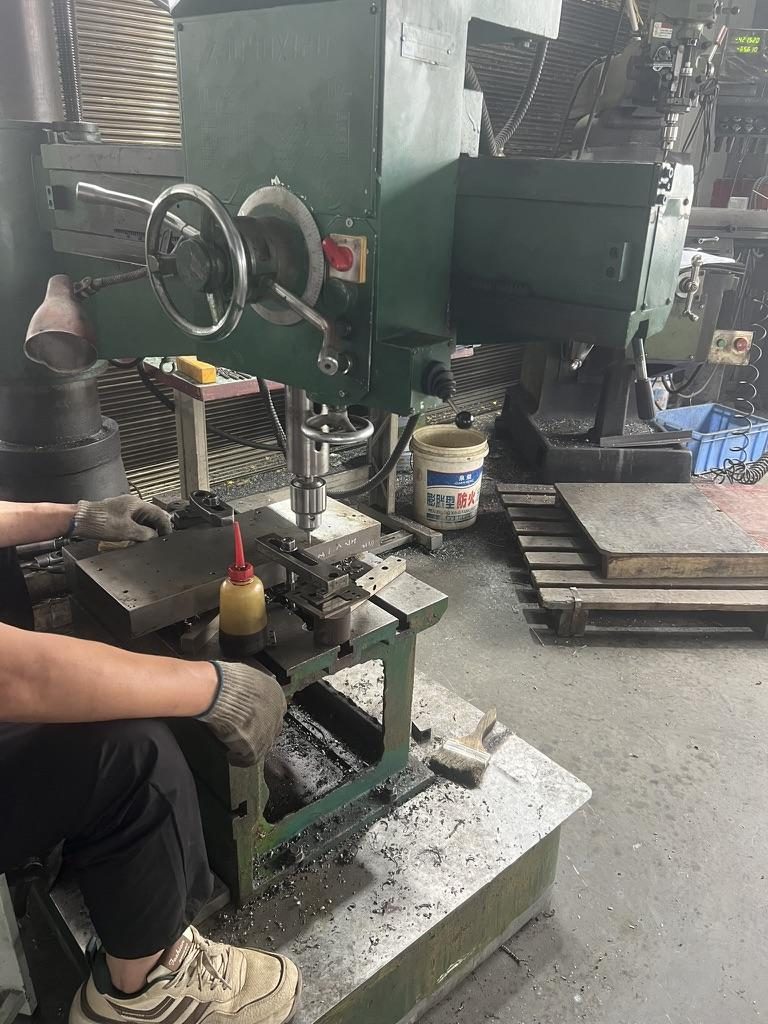
- When should you not drill? If modifying the chassis or rail voids structural integrity or warranty, stop — use a shelf instead.
- Side studs/bosses don't match? Swap to a compatible inner member if one exists, or fall back to a fixed shelf rather than forcing it.
Finally, before you call it done, check cable-management clearance, rear-door closure, airflow, and service access. A rail that mounts but blocks the rear door or pins the power cable is not a working install.
Choosing Your Path
Collapse it to a simple decision:
- Have the OEM part number? Source a cross-reference part first.
- Standard chassis and dimensions match? A universal telescopic rail is your best value.
- Low budget, unknown model, or proprietary side-latch? A fixed shelf is usually the safer, faster choice.
Before you request a quote or buy, have five things ready: chassis model, clear photos of the rail, front-to-rear post distance, chassis weight, and hole type. And when comparing new, used, refurbished, or surplus rails, weigh more than price — check for a matched left/right pair, return policy, ship time, and whether mounting hardware is included.
If your model is proprietary or you can't find a clean cross-reference, that's exactly the gap MetrixSlide fills: we match rails from your chassis drawing or photos within 24 hours, and adjust brackets, hole patterns, length, and thickness with no tooling fees and no minimum-order requirement on flexible changes — big-brand fit and quality without the OEM lead times. Send us your specs and we'll tell you honestly whether a stock rail, a custom match, or a shelf is right for your build.
FAQ
What are the best alternatives to King Slide server rails?
The best alternative depends on your chassis. In order of preference: an OEM cross-reference part matching your original number, a universal telescopic (sliding) rail for standard chassis needing pull-out service, or a heavy-duty fixed shelf when the model is unknown or uses proprietary side-latches. Salvaged rails from a matching decommissioned unit are also an option.
How do I measure my server and rack to find compatible replacement rails?
Record chassis width, depth, and height; the rail's closed and fully extended length; the front-to-rear mounting-post distance in your rack; and the hole type and spacing (square vs. round). These let you confirm fit with a tape measure and calipers instead of guessing.
Can tool-less King Slide rails be converted to screw-in rack mounting?
Often yes. Many chassis have usable threaded holes behind the tool-less clips, so you can mount with screws instead. Confirm the holes exist and line up before you buy, and don't drill into the chassis if it risks structural integrity — use a shelf as a fallback.
Can you mount a server in a rack without rails?
Yes — a rated four-post shelf or heavy-duty rack shelf lets you rack a server safely without dedicated rails. You lose slide-out maintenance access, but it's a solid choice for unknown models or tight budgets.
Are universal sliding rails safe for a heavy 2U server chassis?
Only if the rail's dynamic load rating (weight while extended) comfortably exceeds your fully loaded chassis weight, and it has proper anti-drop stops and ball-bearing slides. Drive-loaded 2U servers have a high center of gravity and can droop or twist on under-rated rails, so size up.
Where can I buy new, used, or surplus King Slide-compatible server rails?
Sources include OEM parts channels, IT resellers, refurbishers, and surplus/auction listings. When comparing, check for a matched left/right pair, return policy, ship time, and included mounting hardware — not just price. For proprietary or hard-to-match models, a manufacturer that does custom fitment is often faster than hunting surplus.