

Summary
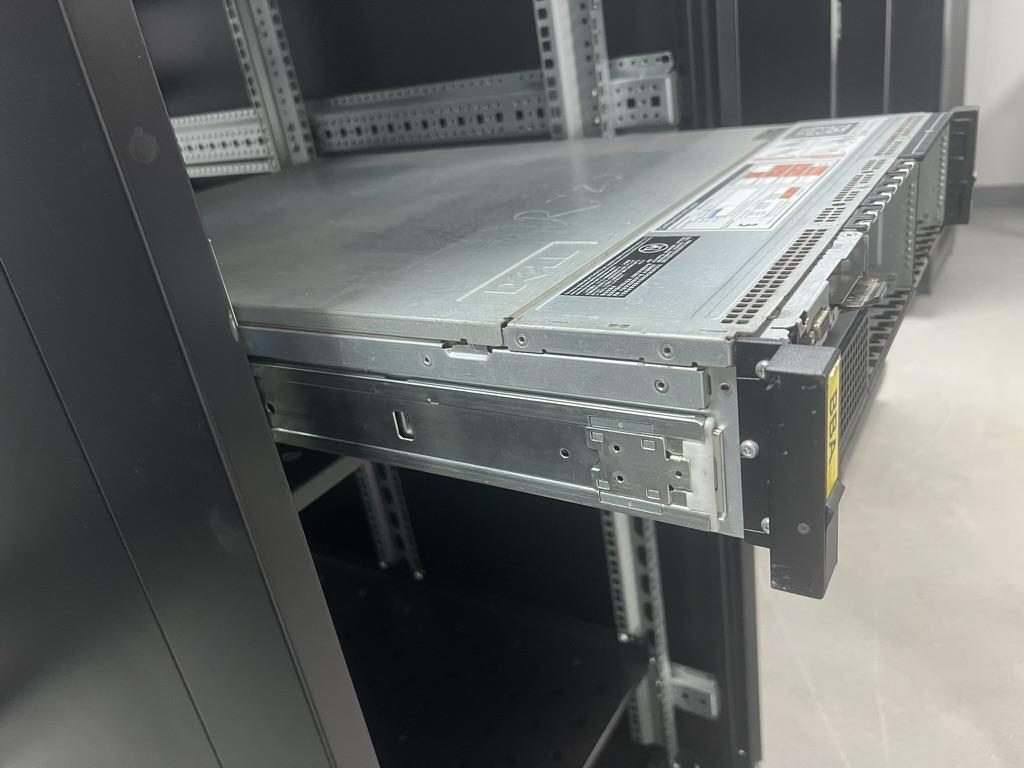
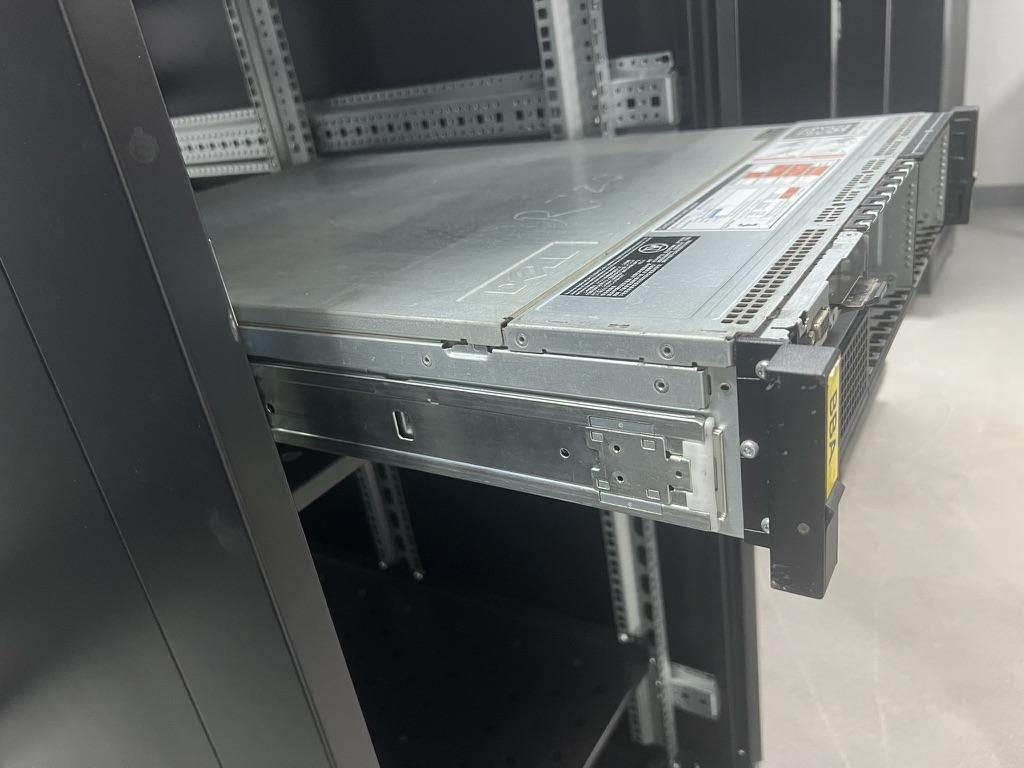
A data-center operator migrating about 200 HPE ProLiant DL380 Gen9 servers found that the rack post depth in their new cabinets was outside the adjustment range of the rails they had. We shortened the rail and redesigned the rear-bracket adjustment on our MS-TLS-120 platform, keeping full extension for hot-swap service.
The Challenge
- The new cabinets had a front-to-rear post distance of 620 mm, outside the rails' adjustment range: the rails either could not be installed or fouled the PDUs at the rear.
- Servers still had to slide fully out for hot-swap drive, PSU and fan maintenance.
- The migration had a fixed window, so the rail solution had to be sampled and delivered quickly.
Step 1: Understanding the Application
We measured the front-to-rear post distance in the new cabinets, the rear clearance needed for PDUs and cable management, and confirmed the chassis interface of the DL380 Gen9. See rack mounting depth vs rack depth vs chassis depth for why the post distance, not the cabinet depth, is the number that matters.
Step 2: Requirement Confirmation
| Parameter | Requirement |
|---|---|
| Server | HPE ProLiant DL380 Gen9 (2U) |
| Rack | 19-inch 4-post, 620 mm post depth |
| Constraint | 80 mm rear clearance for PDU and cable management |
| Load | Up to 35 kg per server |
| Slide type | Full-extension ball bearing, tool-less |
| Service model | In-rack hot-swap of drives, PSUs and fans |
| Quantity | About 200 sets |
| Timeline | 3-week migration window |
Step 3: Engineering Matching
Starting from the MS-TLS-120 platform, we:
- Shortened the outer member to a 560 mm closed length
- Redesigned the rear-bracket adjustment range to 600–760 mm
- Matched the inner-member interface to the DL380 Gen9 chassis
The rail structure is unchanged: the same ball-bearing slide, 115 kg rating and dual-lock anti-drop design. Length and bracket changes are within the customization we do without a tooling fee.
Step 4: Sample and Validation
- Fitment proposal within 24 hours of receiving the cabinet and chassis data
- Samples in 10 days, checked in the customer's cabinets for post engagement, rear clearance and full travel
- Production quantity delivered 20 days after sample approval
Results
- 200 servers racked within the 3-week migration window
- Full extension and hot-swap service retained in the shallower cabinets
- No change to the customer's racks or PDU layout
The Engineering Value We Provided
Rack depth is one of the most common reasons rails do not fit, and one of the easiest to solve with length customization. We did not ask the customer to change their racks. We changed the rail. Read more on what can be customized on a server rail.
Moving servers into racks that were not built for them?
Send the post-to-post distance and the chassis model and we will confirm fit within 24 hours. Request a quote.
Dell and PowerEdge are trademarks of Dell Inc.; HPE and ProLiant are trademarks of Hewlett Packard Enterprise. MetrixSlide is not affiliated with either company. Model names are used only to describe compatibility.