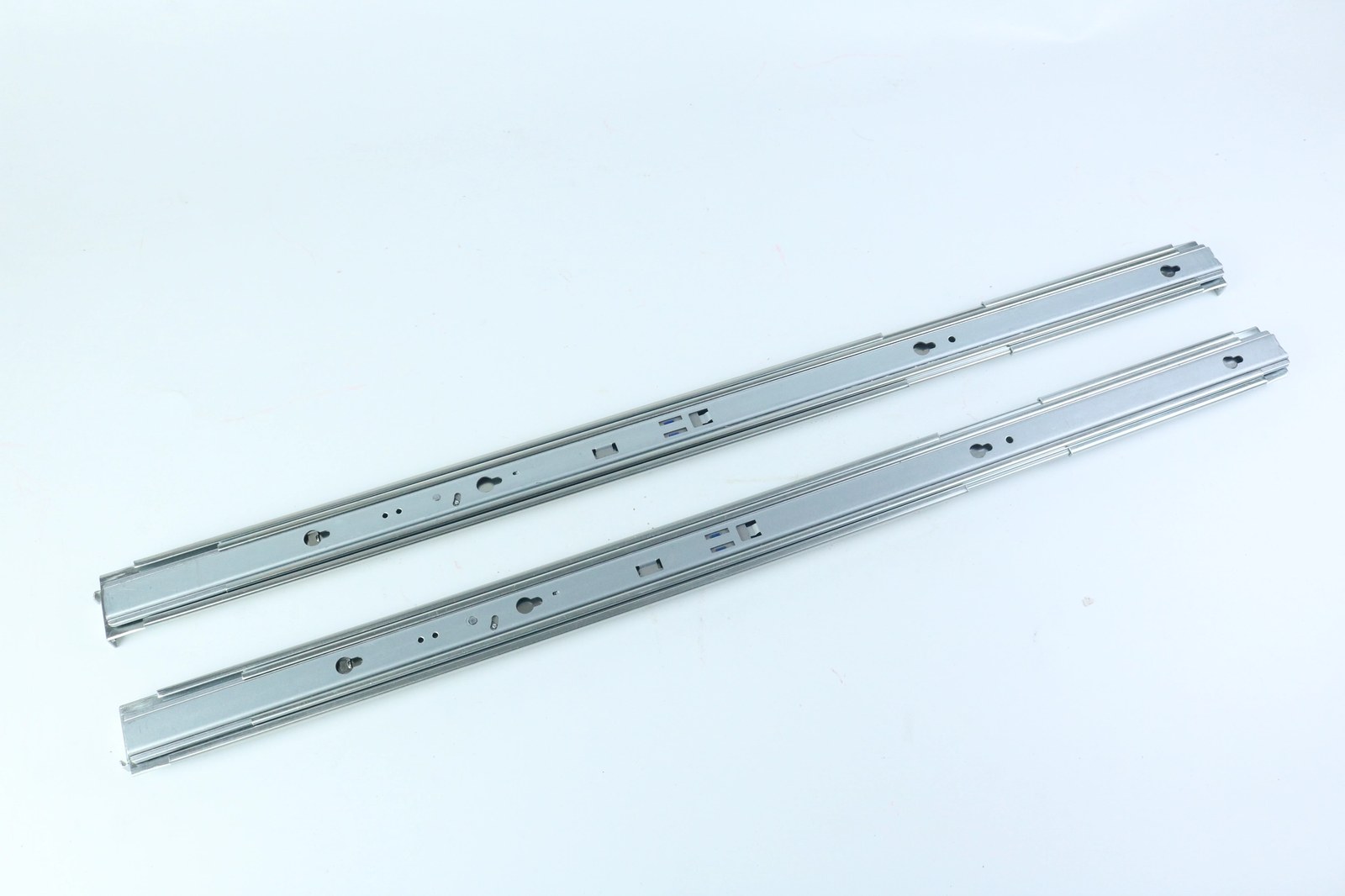


Searching for a King Slide server rails price returns marketplace listings, forum guesses and no official number, because there is no list price to find. This article explains why, shows the only two public reference points worth citing, and breaks down what actually drives the cost of an OEM-grade rail kit so you can compare quotes on the same spec sheet. It does not publish MetrixSlide prices either; those are quoted per project, and the last section explains how to get one.
Why there is no King Slide list price
King Slide is a Taiwan-based slide rail manufacturer that supplies server rails to major global server brands as an ODM. According to King Slide's website, server rails and cable management arms are presented on a single page with no catalog, no part numbers, no spec tables and no prices; the only conversion path is an enquiry form. Its stated selling points are ultra-thin kits, tool-less installation, ball-bearing slides with multiple locking mechanisms, heavy loading that meets UL safety tests and CMA as standard configuration.
That is how OEM programs work. The rail is engineered for a specific chassis, priced against a forecast volume and delivered to the server brand's line, so the price is a program term, not a catalog figure. The server brand then sells the kit to end users under its own part number, at its own price.
For a buyer outside those programs, you cannot get a King Slide server-rail price without entering one, and everything in the search results is either a resold OEM kit or a different product.
What buyers actually pay through other channels
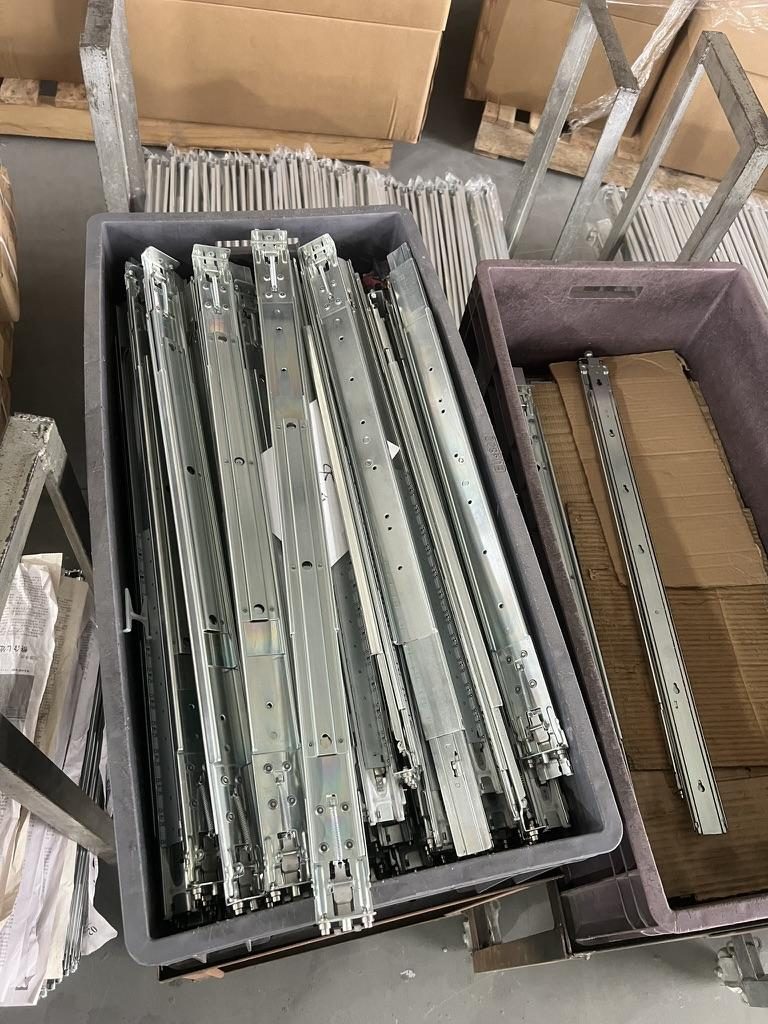
Two public reference points exist, and both need to be read with care. They are marketplace listings observed in September 2026 on US marketplaces, not official prices from any manufacturer.
King Slide-made retail kit. Chenbro 84H341300-002 is a King Slide-made 26-inch 2U to 4U sliding rail kit sold at retail. It was listed at roughly US$50 to US$66 on Walmart, Amazon and smaller e-tailers as of September 2026. This is the closest thing to a public King Slide server-rail price, and it applies to one kit designed for specific Chenbro chassis.
OEM-branded server vendor kit, used. Dell ReadyRails II 2U sliding rail kits (type B6) appeared in used and refurbished listings at roughly US$80 to US$120 on eBay and refurbisher stores as of September 2026. New kits from the server vendor cost more; check the vendor store for the current figure. This data point says nothing about who manufactures Dell's rails; it is included because a Dell or HPE kit is what most buyers compare against.
Those two ranges bracket what a single-pair buyer sees. They say nothing about what a chassis maker pays per thousand pairs or what a custom kit for your own chassis will cost. For that you need the drivers.
What drives the cost of a server rail kit
A rail kit is two or three cold-rolled steel members per side plus retainers, brackets, adapters, locks, springs and hardware. The price moves with the following.
- Rail type. Fixed support rails are the cheapest structure; friction sliding rails add an inner member and a slot; ball-bearing rails add retainers and precision-ground raceways; tool-less ball-bearing kits with lock-out add the most parts. Our types of server rack rails guide covers the mechanical differences.
- Load rating. Higher dynamic load means thicker strip, more bearings and longer overlap between members. A kit rated for a 150 kg GPU server is a different bill of materials from a 1U storage node kit; see heavy-duty rails for GPU and AI servers.
- Length and travel. Longer members use more steel and need longer dies and longer packaging. Full-extension travel needs a third member or a longer overlap. The rail length and travel guide explains the numbers to specify.
- Tool-less hardware. Spring-loaded rack latches, T-pins, keyhole plates and release levers are stamped and assembled parts. They cost more per kit than four screws and cage nuts.
- CMA. A cable management arm is an assembly in its own right, often with its own brackets. Whether it is bundled or optional changes the quoted figure.
- Volume. Setup, inspection and packing are per batch. A pair costs more than a thousand pairs, but the curve flattens quickly for standard models.
- Tooling and NRE for custom work. A new progressive die or a chassis-side bracket that needs its own tooling is the single largest one-off item on a custom project; custom server rail cost and NRE goes deeper.
- Packaging and freight. Rails are long, dense and easy to dent. Individual boxing, pallet configuration, ocean versus air and delivery terms can shift the landed cost more than the rail itself.
Price drivers and their effect
| Driver | Effect on kit price | What to specify |
|---|---|---|
| Rail type | Fixed < friction sliding < ball-bearing < tool-less ball-bearing with lock-out | Type and lock functions required |
| Dynamic load | Rises with load; thicker strip, more bearings | Loaded chassis weight, static and dynamic |
| Length and travel | Rises with length; full extension adds a member | Rack depth range, chassis depth, travel needed |
| Tool-less hardware | Adds stamped and assembled parts | Rack hole type: square, round, threaded |
| CMA | Separate assembly, bundled or optional | Whether a CMA is required |
| Volume | Falls per pair as batches grow | Sample quantity, then annual volume |
| Tooling and NRE | One-off charge on custom dies and brackets | Chassis drawing, hole pattern, what must change |
| Packaging and freight | Can exceed rail cost on small air shipments | Box type, pallet, Incoterm, destination |
Where the money goes on a custom project
A quote for a rail that matches an existing chassis splits into recurring unit cost and one-off cost. The one-off part is where custom projects get expensive.
- Engineering. Reading the chassis drawing, checking the gap between rack and chassis, choosing the rail section, and validating the hole pattern against the standoffs. At MetrixSlide this review is done by a mechanical engineer and returned as a fitment proposal within 24 hours.
- Die changes. A chassis-side bracket with a new hole pattern, a different length or a thicker strip may need a die modification. A completely new rail section needs a new progressive die.
- Samples. A sample pair, its inspection and its shipment. On a new die this is the first physical check that the design and the chassis agree.
- Freight. Samples usually go by air; volume goes by sea. Both are quoted separately from the rail.
MetrixSlide runs roll forming, progressive-die stamping, an in-house tooling workshop, assembly, inspection and packing on one site. Because the tooling workshop is in-house, changes that stay within defined boundaries, meaning bracket changes, hole patterns, length and thickness, are treated as engineering adjustments rather than as billable new tooling. That is why there is no tooling fee on flexible changes and no MOQ on them.
Work that goes beyond those boundaries, such as an entirely new rail section, is quoted as a custom project with its own tooling line. The custom server rail solutions page describes what can and cannot be changed, and what can be customized lists the usual requests.
How to compare quotes on the same spec sheet
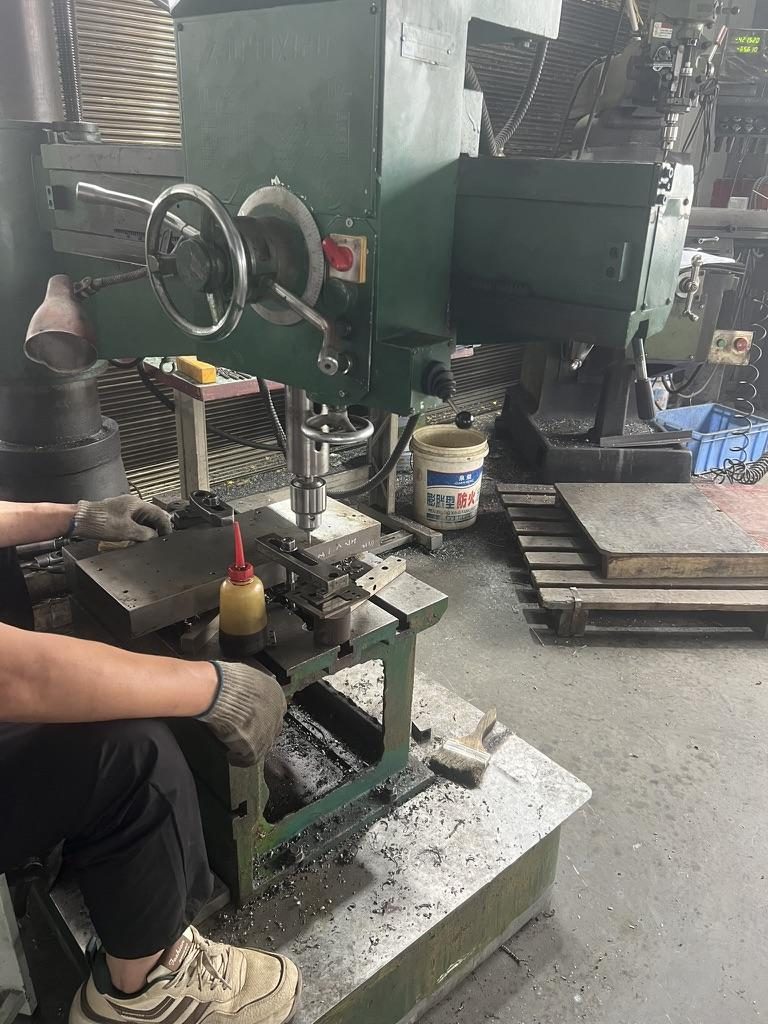
Most rail price comparisons fail because the two quotes describe different products. Write one spec sheet and send it to every supplier, including the server vendor if you are pricing an OEM kit.
According to King Slide's website, its own selection framework has five points, and they make a good first half of the sheet:
- Space between rack and chassis. The side gap available for the rail.
- Chassis dimension and weight. Depth, height in U, side profile, loaded weight.
- Travel length. Partial or full extension, and how far.
- Locking mechanism. Lock-out, lock-in, release type, single-person removal.
- Tool-less assembly. Required on the rack side, the chassis side, or both.
Add three commercial lines:
- Load rating. Dynamic and static, with the test basis. Our load capacity explainer covers what the numbers mean.
- Finish. Zinc plating type and thickness, salt spray expectation if any.
- Packaging. Pair per box or bulk, hardware bagged or loose, pallet spec.
With those eight lines fixed, ask every supplier for unit price at sample quantity and at your annual volume, tooling or NRE as a separate line, lead time for samples and for volume, and the Incoterm. Then compare. For an OEM-branded kit the answer to most of the lines is "as designed," which is fine; you are then comparing a fixed design against an engineered one. Our RFQ guide has the full template.
How to get a MetrixSlide quote and sample order
MetrixSlide does not publish prices. Pricing is factory-direct and quoted per project within one business day. The process is short:
- Send your chassis or rack drawing through the quote page, or the measurements from the compatibility checklist. CAD under NDA is fine; see sharing CAD with a rail manufacturer under NDA.
- Receive a fitment proposal within 24 hours, reviewed by a mechanical engineer, naming a standard model or the changes needed.
- Order a sample pair. Sample orders are paid, at MOQ 1 pair on standard models, and ship in 3 business days. Custom samples take a few weeks from drawing validation.
- Check the sample in your rack, then request the volume quote on the same spec sheet.
Every kit is stamped to a chassis-side hole tolerance within ±0.08 mm and uses a dual-lock anti-drop structure. In the factory static-load test a rail pair is held under load at full extension for 24 hours, and the MS-FMR-2U-100 held 100 kg in that test. The MS-TLS-120 tool-less ball-bearing kit, with a specified capacity of 120 kg per pair, is the usual starting point for 1U to 4U servers. The rail selector page lists the standard range.
FAQ
Is King Slide expensive?
There is no public King Slide price to judge. Its server rails are sold through OEM programs, and the price is a program term negotiated with a server brand. The only public reference is a King Slide-made retail kit, Chenbro 84H341300-002, listed at roughly US$50 to US$66 on US marketplaces as of September 2026.
Can I buy King Slide server rails directly?
According to King Slide's website, there is no catalog, part number list or price for server rails, and the only path is an enquiry form for OEM programs. Individual buyers usually end up with a resold OEM kit under a server or chassis brand's part number.
Do I pay for MetrixSlide samples?
Yes. Sample orders are paid at MOQ 1 pair on standard models, which keeps them fast: they ship in 3 business days, and you get the fitment proposal within 24 hours before you order.
How much cheaper is MetrixSlide?
We do not publish a comparison figure. Ask for a quote against the same spec sheet, including the load rating, finish and packaging lines above, and compare it with the OEM kit on that sheet.
Why do custom rails cost more than standard ones?
Custom projects carry one-off engineering, possible die changes, samples and sample freight on top of the unit price. MetrixSlide absorbs changes within defined boundaries, such as bracket, hole pattern, length and thickness, with no tooling fee; a new rail section is quoted as custom tooling.
Next step
Put your chassis data on one spec sheet and send it through the quote page. You will have a fitment proposal within 24 hours and can order a sample pair to check in your rack before asking for the volume quote. For standard 1U to 4U servers, start from the MS-TLS-120 tool-less ball-bearing rail kit.
King Slide is a trademark of King Slide Works Co., Ltd. Dell and PowerEdge are trademarks of Dell Inc. HPE and ProLiant are trademarks of Hewlett Packard Enterprise. Other brand names are the property of their respective owners and are used only to describe compatibility or comparison. MetrixSlide is not affiliated with, endorsed by, or sponsored by these companies.