
A practical checklist for purchasing and engineering teams: what chassis, rack and load information to send (and why “standard 19‑inch” is not enough).
Mounting Dimensions, Rail Lengths, and Chassis Compatibility
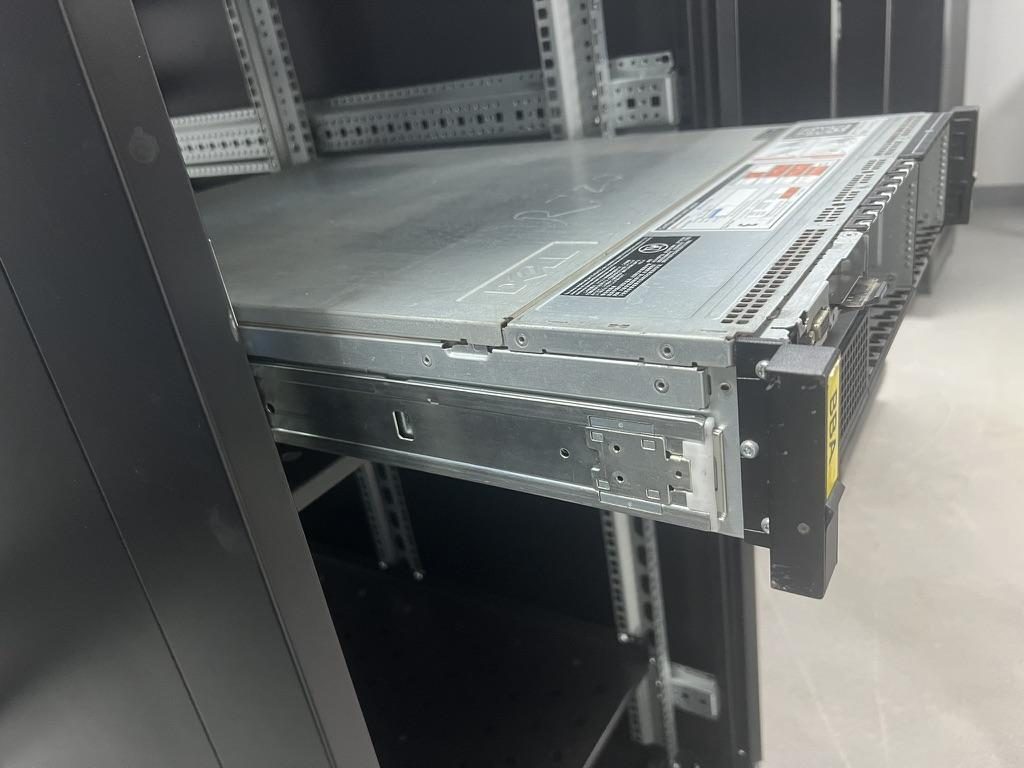
The most common reason a rail quote is slow, vague or wrong is missing mechanical inputs. “19‑inch” (IEC 60297 / 482.6 mm) only identifies a family of front‑panel widths — it does not prove the rail will install, lock, or put the chassis into the intended RU/OU location. For a usable RFQ, provide explicit rack‑side and chassis‑side datum measurements, hole patterns and a small set of photos.
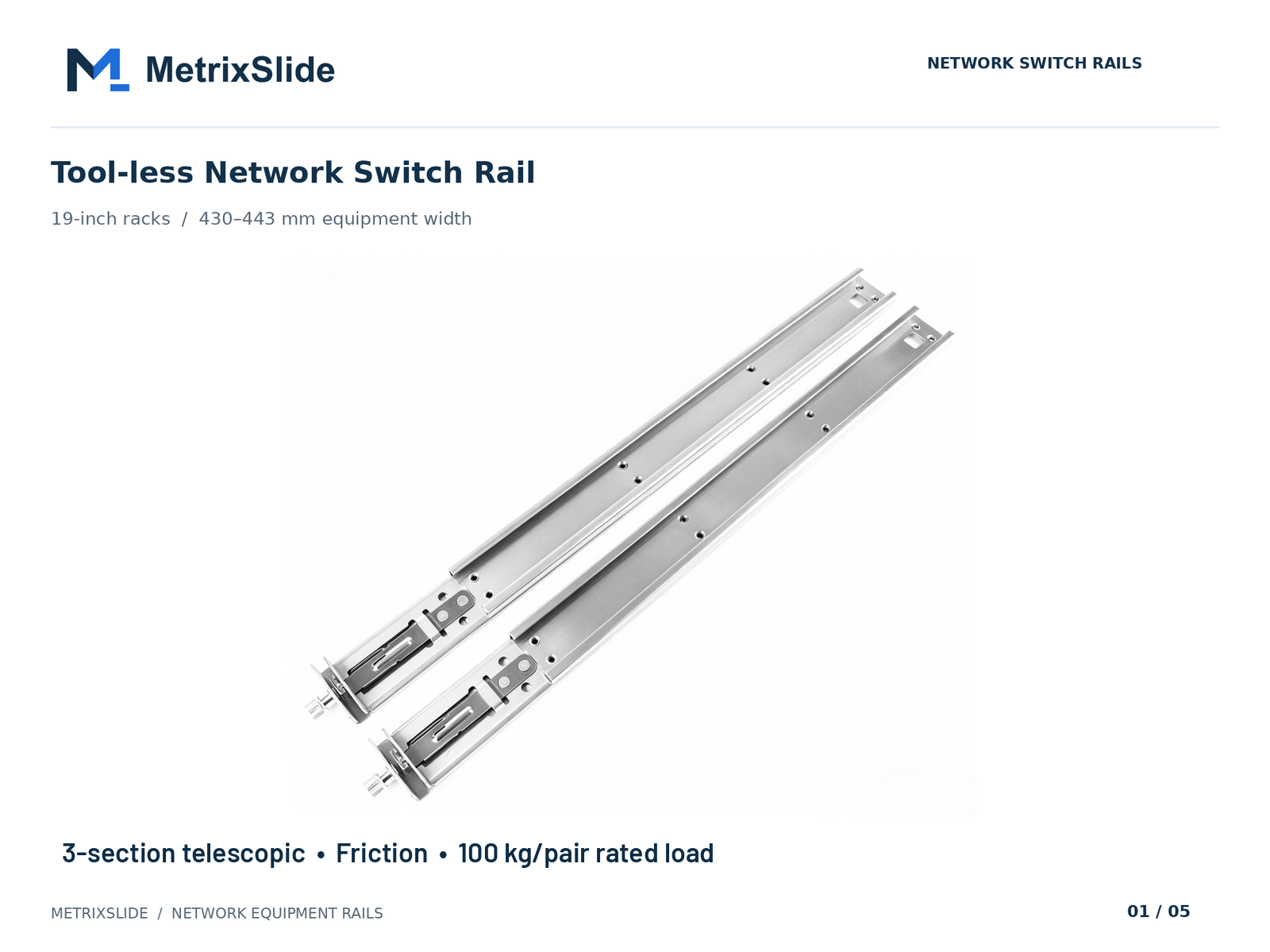 MS-FMR-SW-100 Tool-less Network Switch Rail — view product
What to include (mechanical hard gates)
- Rack family and architecture: state EIA‑310 / IEC 60297 (19‑inch) or OCP ORv3 (21‑inch) and whether the bay uses RU vs OU indexing when ORv3 applies. "19‑inch" is necessary but not sufficient.
- Exact front‑to‑rear post distance (actual mounting‑post centre or inside faces) or a min/max bracket range the rail must span. If the rack has adjustable posts, give the actual installed post distance seen in the field. (Don’t substitute cabinet external depth for mounting depth.)
- Rack hole type and any thread spec: square‑punched, round, or threaded/tapped. If threaded, give the actual thread spec (examples include 10‑32, #12‑24 or metric where relevant) rather than leaving it generic. Include a close photo of the post showing existing cage nuts or screws.
- Chassis mounting‑area drawing (2D) plus a mounting‑area STEP or STEP‑subset that shows the intended attachment features (T‑pins, keyholes/J‑slots, PEMs, captive-screw bosses). If full CAD is confidential, a STEP of the mounting area with datum is usually enough for preliminary checks.
- Rail architecture preference: fixed vs sliding (two‑section or three‑section), mechanism (ball‑bearing vs friction) and whether the inner rail must be removable. Treat these as preferences that follow compatibility and load hard gates.
- Closed length, extended length and required pull‑out travel (closed ≠ fit range). Supply closed / full‑extended / pull‑out numbers and any lock‑out positions called out on the drawing.
- Chassis‑side fastener/interface details: T‑pin head Ø, shaft Ø, under‑head clearance, centre spacing, quantity and datum references; or provide the PEM/fastener part number where used.
Rack hole quick reference (attach photos)
- Square punch (cage nut): send punch size, post web thickness and centre spacing.
- Round hole: send Ø and whether a cage nut is normally used.
- Threaded: send thread spec, depth and thread class.
Pre‑quote information to provide
- Photo of rack post showing local bracket/nut/screw state.
- PDF chassis drawing + STEP of mounting area (datum).
- Measured post‑to‑post distance or the actual bracket range the rail must cover.
- Required U/OU position (for example, chassis must land in RU #3–#6 or OU #x).
- Any adjacent‑U clearance needs (cable managers, airflow) that affect front alignment.
Why these hard gates matter
- Rack mounting depth is a separate, primary input: compare Actual Rack Mounting Depth → Candidate Rail Fit / Bracket Adjustment Range → CAD/fit check. CAD agreement does not replace physical validation, but it is the necessary next step when nominal dimensions are insufficient.
MetrixSlide engineering practice: compatibility hard gates before preferences
- Verify rack‑side and chassis‑side interfaces (hole type, post distance, mounting features).
- Verify rail‑side bracket fit range contains actual post distance.
- Verify chassis mounting features (T‑pin / PEM positions) align to a common datum.
- Only then evaluate mechanism preferences (ball vs friction), section count, tool‑less options and service behavior.
Load Ratings, Material Specifications, Surface Finish, and Engineering Drawings
Load, materials and drawing detail determine whether a quoted rail is “fit for service” — not marketing names. Spell out static vs dynamic ratings, per‑pair vs per‑rail definitions, and finish/inspection expectations in the RFQ.
Key engineering inputs to request or provide
- Load definition: demand the load stated plainly — “X kg per pair” or “X kg per individual rail” — and define the installation state (closed, partially extended, full extension) for each rating. Use a static full‑extension case as your baseline acceptance test unless you explicitly need a dynamic lifetime rating. MetrixSlide’s MS-BBR-180 has a nominal capacity of up to 180 kg per pair, and a formal test report at that load is not yet available; treat such numbers as model‑specific and require test records.
- Test duration & fixture: require the supplier to state the test fixture, mounting condition and static hold time (in MetrixSlide’s factory static‑load test a rail pair is held under load at full extension for 24 hours, and the MS‑FMR‑2U‑100 held 100 kg in that test). Insist on no permanent deformation, no binding and return of raw test data for sample acceptance.
- Materials and treatments: specify material family (steel / aluminium), minimum gauge/thickness only if critical, and surface finish (e.g., electro‑galvanize, phosphating, powder coat). If corrosion resistance matters, request coating specs or salt‑spray evidence. Do not assume finishes or thicknesses without explicit supplier data.
- Engineering drawings & tolerances: ask for 2D DWG with full dimension chains, datum calls and positional tolerances for critical features (hole‑pattern, PEM/keyhole datums, J‑slot geometry), plus 3D STEP aligned to the same datum. Require a first‑article inspection (FAI) plan listing critical dimensions.
- Certification / traceability: require material test reports (MTR) and a finished‑goods inspection report for initial production lots.
Notes on quoted tolerances and precision
- Treat supplier precision claims as statements to be verified. For example, an internal stamping precision claim (T‑pin / inner‑rail hole fit absolute error within 0.08 mm) is an internal statement — in RFQs require FAI evidence rather than accepting such claims unverified.
- If you require a maximum deflection at full extension, specify the deflection (mm), load condition and the measurement fixture so supplier results are comparable.
Deliverables to request on quote
- 2D DWG + 3D STEP/IGES (with revision and datum).
- Material grade and finish spec with MTR reference.
- Dimensional inspection plan and FAI report for initial samples.
- Functional test report (static hold, extension, lock/unlock) for sample parts.
Per‑pair vs per‑rail and multi‑rail systems
- Always confirm whether a published rating is "per pair" or "per rail". MetrixSlide’s engineering baseline uses per‑pair ratings (MS-BBR-180 = nominal capacity of up to 180 kg per pair). If your system will use additional parallel rail pairs, treat that as an engineering change and ask for validated sharing analysis rather than simple arithmetic multiplication.
Lead Times, MOQ, Pricing Breakdown, and Samples
Commercial clarity keeps procurement cycles short. Separate prototype/sample expectations from production and ask suppliers to itemize costs so you can compare responsiveness, risk and price.
What to request in the commercial section
- Sample vs production lead time: require sample (prototype) lead time and mass production lead time separately. As a benchmark from past 2U projects, sample pairs have shipped in the order of a few weeks after drawing approval (MetrixSlide projects show ~15–20 days for 2U sample pairs); always ask suppliers to confirm calendar days for your build.
- MOQ and capacity statements: request clear MOQ for standard and customised parts and ramp tiers or price breakpoints. If tooling/NRE is possible, ask suppliers to identify which bounded customisations carry no tooling fee.
- Pricing breakdown: unit price, tooling/NRE (if any), packaging, freight terms (EXW/FOB/DDP), spare‑parts kit, and any on‑site support charges. Ask whether prototype fees are refundable against production orders.
- Price tiers and validity: require quantity breakpoints and a price‑validity period so bids are comparable.
- Expedited/change costs: ask for express sample fees, typical expedite lead time and payment terms.
How to handle tooling and NRE
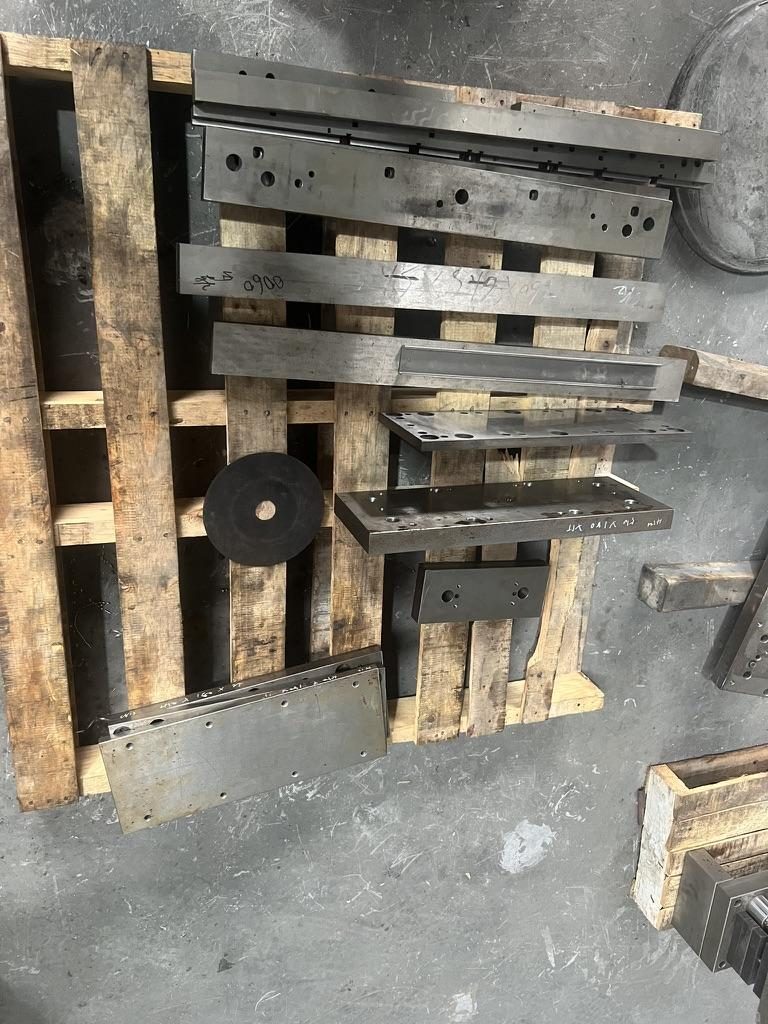
- Distinguish bounded customisations (bracket position, hole pattern, length, thickness) from structural redesign or 1:1 copy work that typically requires dies or stamping redesign. In many cases bracket/hole/length tweaks do not need full new tooling — ask suppliers to state when adjustments carry no tooling fee. If tooling is required, request a separate quoted line with justification.
Samples and acceptance
- Request a small sample batch for fit & functional testing and list acceptance gates (dimensional CA, fit to the rack and chassis, static load test, coating acceptance). Require a sample inspection report and the raw test data be returned with the parts.
Testing, Warranty, Certifications, and Vendor Qualification
Turn requirements into pass/fail tests and a supplier scorecard. RFQs that include measurable acceptance criteria yield comparable responses.
Minimum testing and documentation to require
- Functional tests: pull‑out travel verification, lock/unlock at full extension, and interference checks in the intended rack/chassis geometry. Define pass/fail criteria and measurement fixtures.
- Load tests: static load at a defined weight, duration and state (closed vs full extension). For heavy‑duty rails, request a static hold test and ask for the fixture description and the acceptance criteria. For lifecycle expectations, require cycle‑count sliding tests only if you need dynamic lifetime data. (In MetrixSlide’s factory static‑load test a rail pair is held under load at full extension for 24 hours, and the MS‑FMR‑2U‑100 held 100 kg in that test.)
- Corrosion and finish: salt‑spray or coating thickness data when corrosion resistance is required; state the minimum hours or coating spec.
- Dimensional FAI: first‑article inspection report with critical dimensions and hole‑pattern verification against the supplied drawing.
Warranty and service levels
- State a warranty period and describe RMA / replacement workflows, turnaround times and who pays freight for warranty returns. Specify exclusions such as improper installation or non‑approved modifications. Request the supplier's standard warranty statement and replacement SLA.
Vendor qualifications and documents to collect
- Quality system: require ISO 9001:2015 (MetrixSlide is ISO 9001:2015 certified) and, if relevant, ISO 14001.
- Regulatory: RoHS/REACH declarations and any electrical safety approvals you need for assemblies.
- Traceability: batch MTR/COC and the ability to retain inspection records for a defined period.
- References: ask for anonymised references for similar rails and whether the supplier has executed comparable drop‑in or drop‑fit conversions.
Scoring suppliers
- Convert tests and qualifications into a weighted matrix. A MetrixSlide practice example: fit verification (30%), load test evidence (25%), quality & traceability (15%), delivery & pricing (20%), warranty & ECN (10%). Use this to shortlist vendors for sample orders.
Packaging, Installation, Spare Parts, Change Control, and RFQ Line‑Item Table
Specify how rails arrive and how they will be accepted on site — this avoids delays at receiving and reduces damage.
Packaging and labelling
- Require anti‑corrosion inner wrap, foam or edge protectors, and palletised or boxed shipping suitable for the transport mode. Request carton labels that include supplier part number, customer PO, quantity and lot number. Provide your receiving dock details and any pallet or pallet‑labelling requirements.
Installation and spares
- Ask for an installation sheet and an exploded view showing fasteners and torque values where applicable. Request a spare fastener kit (thumb screws, toothed washers, end caps, retaining pins) and a spare‑parts list with supplier part numbers. For tool‑less or drop‑in rails, insist on a step‑by‑step procedure that matches your rack sequence.
Change control and returns
- Require an ECN process: minimum notification lead time for design changes, trigger conditions for re‑qualification and sample requirements for changed parts. Request the supplier’s return policy and whether RMA labels or pre‑authorised returns are supported.
RFQ line‑item table fields (include these in your RFQ)
- Internal SKU | Supplier SKU | Description | Material | Surface finish | Load rating (kg/pair) | Closed/extended/pull‑out (mm) | CAD reference (DWG + STEP link) | Unit | MOQ | Unit price | Sample price | Sample lead time | Production lead time | Acceptance criteria | Warranty months
Practical note: require suppliers to attach DWG/STEP per line so bids are directly comparable.
Practical MetrixSlide engineering additions (how we evaluate RFQs)
- Decision order (hard gates before preferences): Application/Chassis input → Rack input → Compatibility screening (interface & dimensional fit) → Load screening (validated rating basis) → Rail architecture selection → CAD/drawing review → Sample physical validation → Production.
- Chassis‑side intake checklist: U height; actual chassis width; chassis depth or rail engagement envelope; mounting‑feature datum + positions; T‑pin / PEM data; required load; reference rail model if any.
- Rack‑side intake checklist: rack family; hole type + thread spec; post‑to‑post distance; required bracket adjustment range; post photos.
- Taxonomy (compatibility language): Sliding / Fixed = motion architecture; Ball‑bearing / Friction = sliding mechanism; Tool‑less / screw / stab‑in / drop‑in = mounting attributes; Section count, extension, load = selection parameters. Treat these as orthogonal input dimensions.
Anonymised examples you can reference when drafting RFQs
- An Indian HPC ODM required a 2U solution with chassis width 434 mm, ball‑bearing slides and a required bracket adjustment range of 650–965 mm; the measured rack post distance was ~812 mm and CAD‑level compatibility was confirmed before sample ordering.
- A North American telecom OEM requested a 1U friction slide where pull‑out was reduced from a nominal 300 mm to 150 ±3 mm (lock‑out and positive manual release required); the project used closed/extended post distances of 674 ±3 / 919 ±3 mm in CAD review.
- A SaaS company building its own servers supplied PEM T‑pin data (PEM SKS‑R1.5‑4‑0) so the inner‑rail J‑slot could be redesigned for drop‑in installation; the critical PEM values were head Ø 6.502 mm, shaft Ø 4 mm and panel→underside‑of‑head 1.585 mm.
- A Korean surveillance‑equipment maker asked for an ultra‑slim 4U rail solution and preferred ≤5 mm rail thickness and M4 chassis holes; the project began by selecting a platform family and then deriving a bounded bracket/hole pattern to avoid structural NRE.
Important caveat: these examples are anonymised project evidence and show decisions and numbers that were used to make CAD‑level compatibility calls. They are not universal standards and—unless accompanied by test reports—do not substitute for physical validation.
Conversion / CTA
Information to include with every RFQ:
- Line‑item fields table (above).
- Rack photos, measured post distance (or bracket range) and hole type.
- Mounting‑area STEP or DWG with datum.
- A short acceptance matrix (tests and pass/fail criteria) and the commercial terms sheet (MOQ, lead times, payment and freight terms).
To convert a platform drawing into a complete RFQ, provide the mechanical, load, testing and commercial details above so compatibility can be checked, a candidate model family identified and a sample plan proposed.
FAQ
Q: What specific mounting hole patterns and dimensional data should I request to ensure server rails fit EIA‑310 racks and different chassis models?
A: Ask for the post‑to‑post distance (actual inside faces) or the bracket range the rail must span, the rack hole type (square, round, threaded) with sizes and centre spacing, and a photo of the rack post showing the current fastener condition. From the chassis side, provide the mounting‑area drawing or a STEP with datum, T‑pin or PEM dimensions and positions, and the desired U‑position so the supplier can verify front‑to‑front alignment.
Q: Which load ratings and safety factors are standard for 1U–4U server rails, and how should I specify them in an RFQ?
A: Require the supplier to state load in clear terms, “X kg per pair” or “X kg per rail”, and define the state (closed, partial, full extension). Include whether the rating is static or dynamic and ask for the test fixture and duration. Use a full‑extension static test as your acceptance baseline unless you explicitly require dynamic lifetime data. MetrixSlide’s MS-BBR-180 (example) has a nominal capacity of up to 180 kg per pair; a formal test report at that load is not yet available.
Q: What engineering drawings and file formats should I require from suppliers to verify fit and tolerances before production?
A: Request 2D DWG with full dimension chains and datum references plus 3D STEP or IGES of the rail assembly. Insist that the DWG contains critical feature tolerance calls (hole‑pattern positional tolerances, PEM datum, J‑slot geometry) and that the STEP aligns to the same datum so you can perform a CAD interference check.
Q: How do I structure a line‑item RFQ for server rails so vendors provide consistent pricing, CAD references, and delivery commitments?
A: Use a CSV line‑item table that captures supplier SKU, internal SKU, material, finish, load rating (kg/pair), closed/extended/pull‑out (mm), CAD reference (DWG + STEP), unit, MOQ, unit price, sample price, sample lead time, production lead time, acceptance criteria, and warranty. Ask suppliers to populate this table and attach supporting DWG/STEP files for each line so bids are directly comparable.
Q: What minimum vendor qualifications and certifications should I require for manufacturers of rack accessories and server rails?
A: Require ISO 9001:2015 and supplier traceability (MTR/COC) as a baseline. Also request RoHS/REACH declarations and any industry‑specific approvals you need (UL/ETL) and ask suppliers to provide a recent first‑article inspection report and example references for similar rail projects.
Talk to a MetrixSlide engineer
Ready to move from research to a real quote? Send us a chassis drawing or model (STEP or DWG), the rack post-to-post distance and hole type, the expected load and your planned quantities. Within 24 hours you get a rail matching proposal from an engineer, followed by 2D/3D drawings for review and sample pairs (typically 15–20 days after drawing approval) for physical validation before the full order.
Bracket position, hole pattern, rail length and thickness adjustments on our existing platforms usually carry no tooling fee; structural redesigns are quoted separately with dies made in-house.