

Buyers ask how much server rails weigh for two reasons: to estimate freight, and as a rough proxy for how strong the rail is. The first is a fair use of the number. The second is not, because rail weight is driven by steel thickness, length, member count and hardware, and only some of that translates into load capacity. This guide gives typical weight ranges for server rail kits, explains what drives the figure, and shows why the load rating on the spec sheet matters more than the mass on the scale.
Typical server rail kit weights
The ranges below are typical for the industry, not MetrixSlide specifications, and they cover a pair of rails with the hardware bag. Individual kits vary with length and steel gauge, so treat these as a sanity check rather than a spec.
| Rail type | Typical pair weight | What is in the box |
|---|---|---|
| 1U friction or fixed support rail, two-member | Around 1 to 2 kg | Two thin-section channels, brackets, screws or pegs |
| 1U to 2U ball-bearing sliding rail, three-member | Around 2 to 4 kg | Three nested members per side, ball retainers, tool-less brackets |
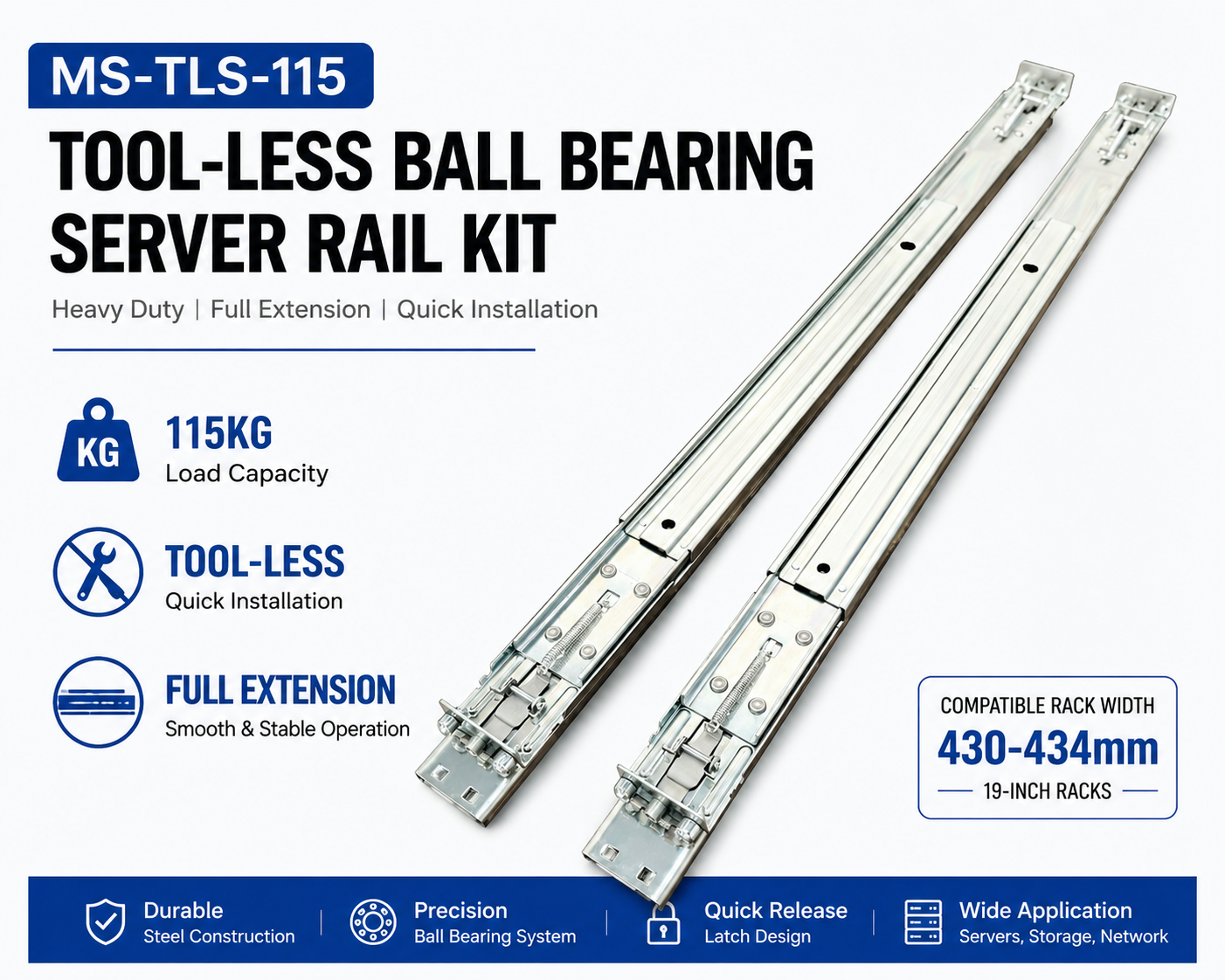
| 2U tool-less ball-bearing kit with full extension | Around 3 to 5 kg | Longer members, heavier gauge, latches, bracket hardware, sometimes CMA brackets |
| Heavy-duty 2U to 4U rail for GPU, storage or liquid-cooled chassis | More than 5 kg; often several kilograms above the standard 2U kit | Thicker steel, deeper channel sections, reinforced brackets |
| Cable management arm (if included) | Adds noticeably to the kit weight | Arm, hinges, mounting brackets |
Two observations. A friction rail can weigh half what a ball-bearing rail of the same U height weighs, because it has one fewer member and no retainers. And length matters as much as type: a 26-inch rail is not just longer than a 20-inch one, it is proportionally heavier in every member.
What drives server rail weight
Steel thickness
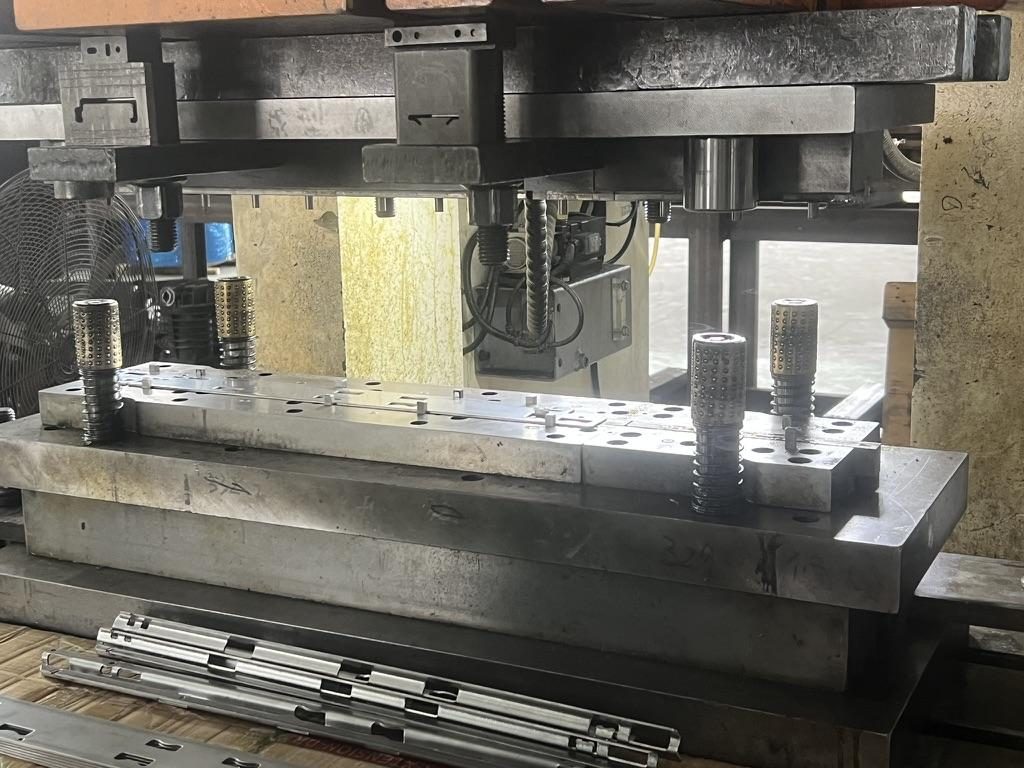
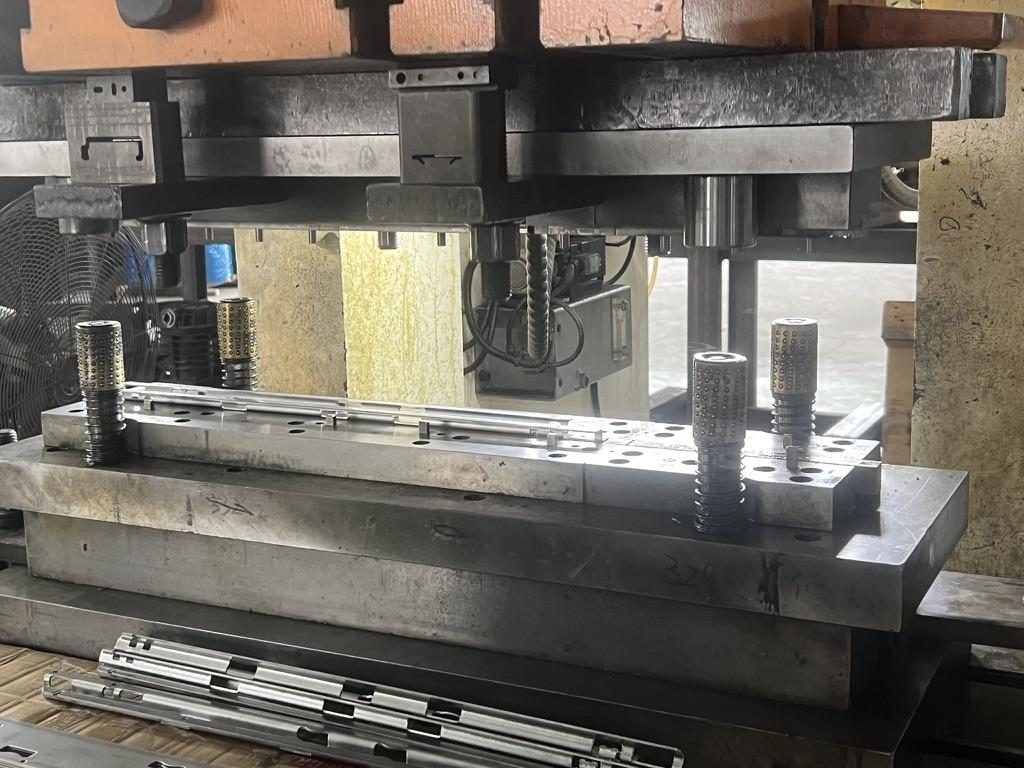
Rail members are roll-formed and stamped from cold-rolled steel strip, and gauge is the first lever on weight. A small increase in thickness across three members and two sides adds up fast, which is why heavy-duty rails are noticeably heavier in the hand. Thickness also drives stiffness, so this is the one weight driver that does correlate with load performance, at least within a given rail design.
Length and travel
Server rails scale with chassis depth. A rail for a deep 4-post rack is longer in all three members, and full-extension designs need longer intermediate members to keep enough overlap at the end of travel. The rail length and travel guide explains the relationship between rail length, travel and overlap.
Number of members
A fixed support rail is one channel per side. A two-member friction slide adds an inner member. A three-member ball-bearing slide adds an intermediate member plus two ball retainers per side. Each step up adds mass, and the third member is what makes full extension possible. See types of server rack rails for the structural differences.
Hardware and brackets
Tool-less brackets with spring latches and pegs weigh more than plain screw-mount tabs, and a hardware bag with cage nuts, screws and adapters for square, round and threaded racks adds a little more. A CMA and its brackets can add a significant share on top of the rail pair.
Weight versus load rating
Here is the part that matters for specification. Rail weight is an input; load rating is an output, and only one of them is on the drawing that keeps a server in the rack.
Two rails of the same weight can have very different ratings, because the rating depends on:
- Channel section geometry. A deeper, better-formed section is stiffer than a flat one at the same gauge, which is why anti-sag structures matter more than raw material.
- Ball retainer design and ball count. More balls, correctly spaced, share the load along the length instead of concentrating it.
- Overlap at full extension. A rail that keeps more overlap between members at the end of travel sags less at the same weight.
- Latch and bracket strength. The rating is capped by the weakest interface, including the pegs in the rack post.
- Test method. Dynamic rating (sliding under load, over cycles) and static rating (held at extension for a fixed period) are different numbers, and a rating without a test method is not much use.
MetrixSlide states the load figure and its basis on each product page; in the factory static-load test a rail pair is held under load at full extension for 24 hours, and the MS-FMR-2U-100 held 100 kg in that test. The MS-TLS-120 tool-less ball-bearing kit has a specified capacity of 120 kg per pair, and the MS-BBR-180 has a nominal capacity of up to 180 kg per pair for AI, GPU and liquid-cooled servers, though a formal test report at that load is not yet available. Neither figure can be read off the shipping weight. How the rating is defined, and what to compare it against, is covered in server rail load capacity explained and, for the heavy end, heavy-duty server rails for GPU and AI servers.
A practical corollary: if a supplier's only answer to "how strong is it" is "it is very heavy", ask for the rating and the test method instead.
Shipping weight, cartons and freight
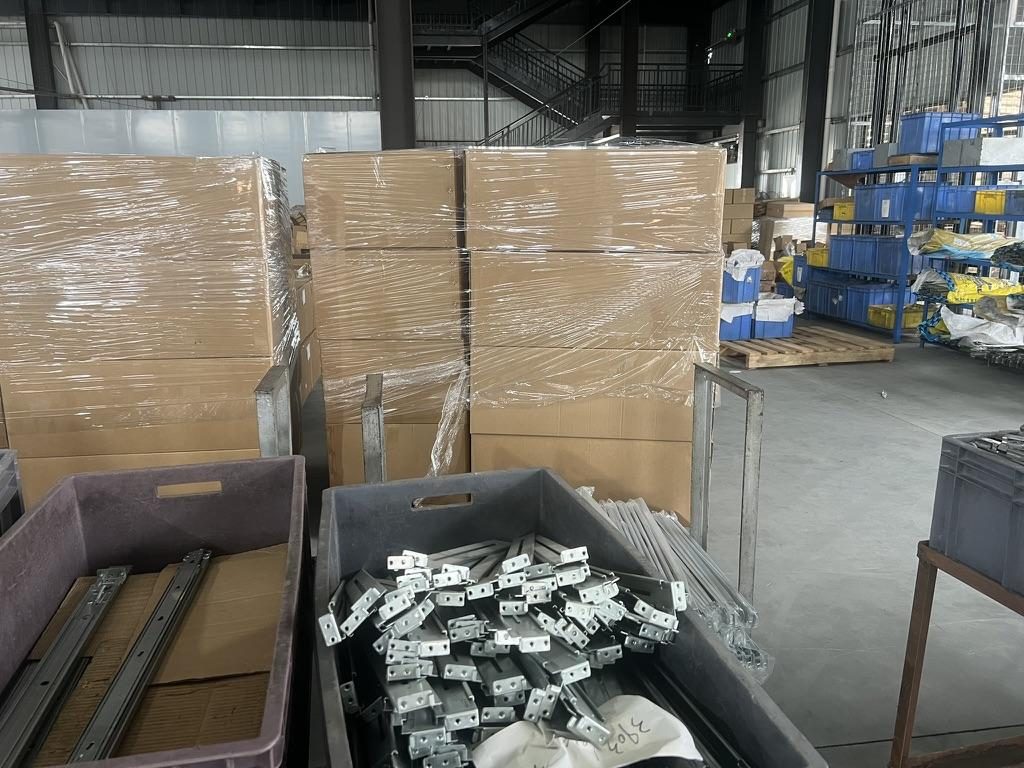
For import planning the number you need is the gross carton weight, not the rail pair weight. Rail kits are usually packed one pair per inner box with the hardware bag, then several boxes to a master carton. Add the box, foam or paper, and the carton itself, and the gross figure is higher than the rails alone. Volumetric weight can also apply on air freight, because a 26-inch rail box is long and mostly air.
When you request a quote, ask for:
- Net weight per pair and gross weight per master carton.
- Pairs per master carton and carton dimensions, so you can work out pallet count and volumetric weight.
- Whether the CMA, if any, ships in the same carton.
MetrixSlide packs and inspects in-house, and standard models ship in 3 business days with an MOQ of one pair, so you can order a sample pair, weigh it and check the packaging before a container order. For the wider sourcing process, from supplier checks to shipping terms, see how to find a server rail manufacturer in China and wholesale vs OEM rails.
How to read a rail spec sheet for weight and load
A good spec sheet gives you enough to check the weight against the rating. Look for:
| Spec sheet line | What it tells you | What to compare it with |
|---|---|---|
| Material and thickness | Steel grade and gauge of each member | Other rails of the same type; thicker is stiffer but heavier |
| Rail length and travel | Overall closed length, extended length, travel | Rack post spacing and the service access you need |
| Number of members | Two or three sections | Whether full extension is possible |
| Net weight per pair | Rail mass without carton | Freight estimate; a sanity check on the gauge |
| Dynamic load rating | Load while sliding, tested over cycles | Populated server weight plus CMA |
| Static load rating | Load held at extension for a set time | Safety margin at full extension |
| Cycle life | Cycles to failure at rated load | Expected service frequency |
| Gross weight, carton size, pairs per carton | Shipping data | Freight quote and pallet plan |
If a spec sheet gives weight but no rating, or a rating but no test method, treat it as incomplete. MetrixSlide's downloads and CAD page has product data for standard models, and the rail selector lists them side by side.
FAQ
How much does a server rail kit weigh?
Typical industry ranges for a pair with hardware: around 1 to 2 kg for a 1U friction or fixed rail, around 3 to 5 kg for a 2U tool-less ball-bearing kit, and more for heavy-duty rails. These are generic ranges, not MetrixSlide specifications; check the net weight on the spec sheet of the model you are ordering.
Does a heavier server rail hold more weight?
Not necessarily. Weight comes from steel thickness, length, number of members and hardware. Load rating comes from section geometry, ball retainer design, overlap at full extension and latch strength, tested under a defined method. Compare the published dynamic and static ratings, not the mass.
Why are ball-bearing rails heavier than friction rails?
A ball-bearing rail has three members per side plus ball retainers, while a friction rail usually has two members and no retainers. The extra member is what allows full extension and higher dynamic ratings, so the weight buys function, not just mass.
What is the difference between net weight and shipping weight for rails?
Net weight is the rail pair and hardware bag. Shipping (gross) weight adds the inner box, packing material and master carton. For air freight the volumetric weight based on carton dimensions may apply instead, because rail boxes are long and mostly empty space.
Where can I find the weight of MetrixSlide rails?
On the product pages and the downloads page for each standard model, or in the fitment proposal for a custom rail. Standard models can be ordered as a sample pair, with an MOQ of one pair shipping in 3 business days, so you can verify weight and packaging before a volume order.
Next step
If you are estimating freight or comparing rails on strength, ask for the net weight, carton data and load rating together. Send your chassis and rack details through the quote page and a mechanical engineer will return a fitment proposal within 24 hours with the matching model, or start from the sliding rack rails category and order a sample pair to weigh and test on your own rack.
King Slide is a trademark of King Slide Works Co., Ltd. Dell and PowerEdge are trademarks of Dell Inc. HPE and ProLiant are trademarks of Hewlett Packard Enterprise. Other brand names are the property of their respective owners and are used only to describe compatibility or comparison. MetrixSlide is not affiliated with, endorsed by, or sponsored by these companies.