
A ball-bearing slide on a server rail and a ball-bearing slide under a kitchen drawer use the same mechanism: nested steel members rolling on caged balls, with stops and latches at each end. The repair problem is not the same. A stuck drawer is an annoyance; a loaded server that binds halfway out of the rack, or drops at full extension, is a safety and uptime problem, and some faults worth fixing on furniture are replace-only on a loaded rail. This guide explains how to fix ball bearing slides on server rails first, then closes with a short section on how to fix drawer slides with ball bearings.
How a ball-bearing server rail is built
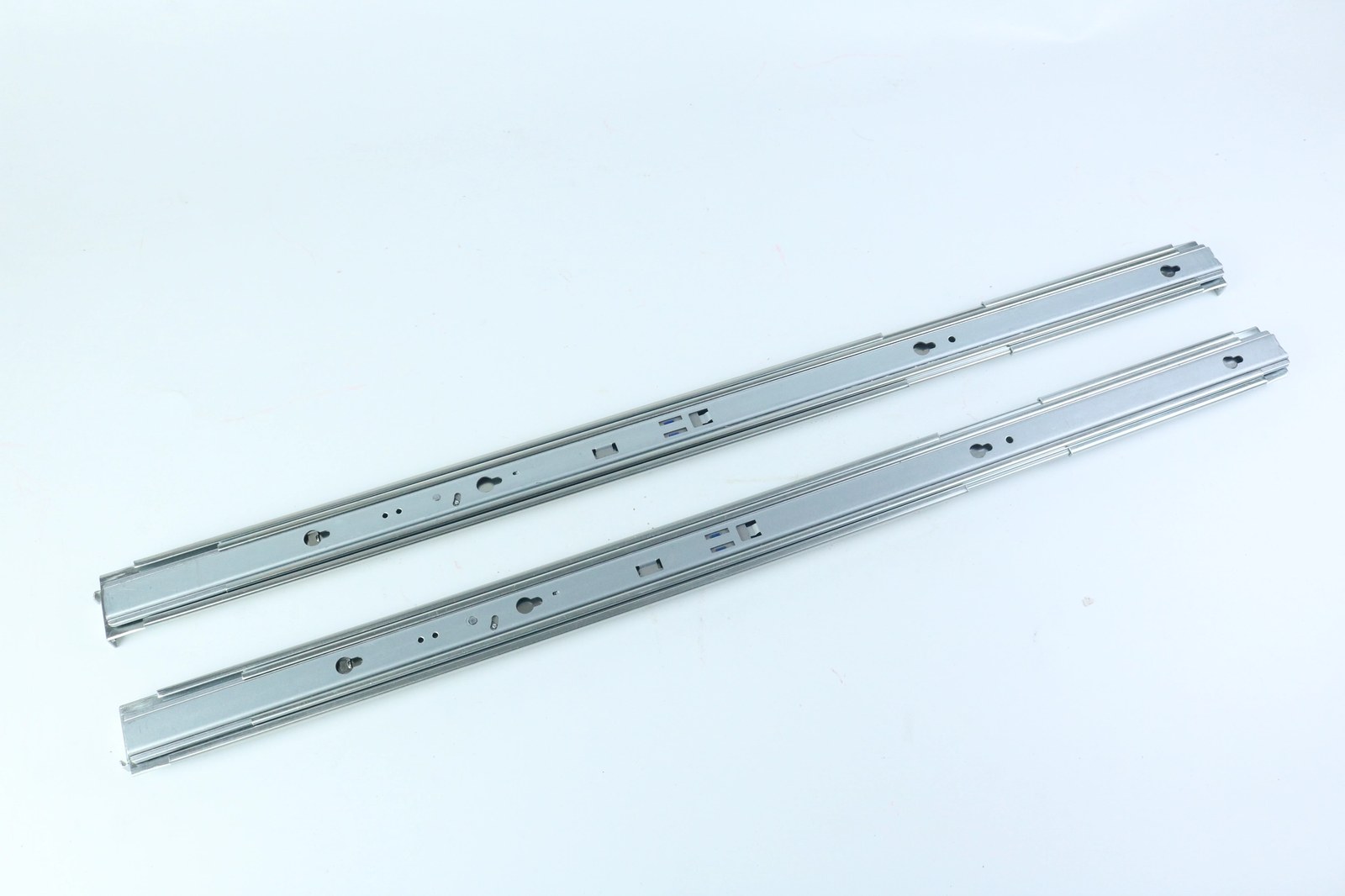
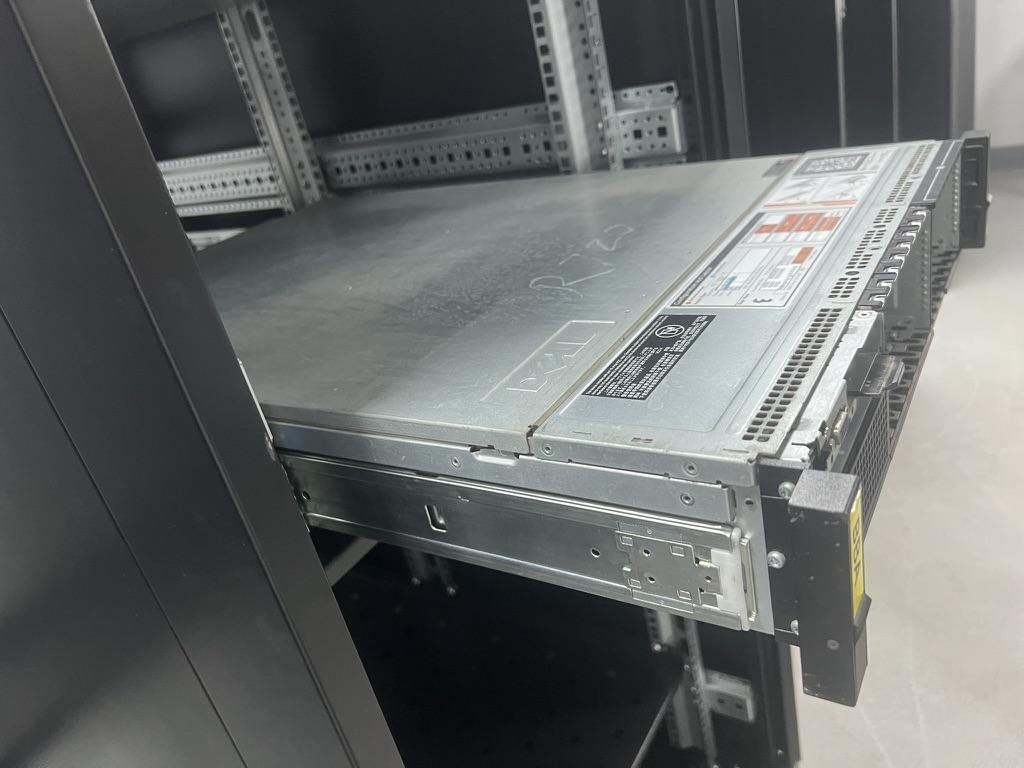
A sliding server rail is a three-member telescopic slide. The outer member bolts or clips to the rack posts. The intermediate member rides inside it and carries most of the travel. The inner member attaches to the chassis side wall, usually on standoffs, and rides inside the intermediate member. Between each pair sits a ball retainer, a steel or plastic cage holding a row of balls in raceways formed into the channel walls. The retainer moves at half the speed of the member above it, so it stays centered under the load when the slide is in sync.
Three more parts govern the ends of travel:
- Lock-out: a spring tab that holds the slide at full extension during service.
- Release latch: the lever on the inner member that lets the chassis separate from the intermediate member.
- Anti-drop stop: keeps the inner member from leaving the intermediate member unless the release latch is pressed. MetrixSlide rails use a dual-lock anti-drop structure.
If any of these is displaced, bent or missing, the rail misbehaves in a recognizable way. Full anatomy: how server rails work.

Symptoms and what they usually mean
Diagnose before you touch anything; the symptom usually points at the cause.
| Symptom | Likely cause |
|---|---|
| Will not slide fully out; hard stop before the lock-out engages | Ball retainer out of sync, pushed to the rear of its raceway |
| Binds at the same point every time, then frees | Debris or paint in the raceway, or a bent member at that point |
| Intermediate member races ahead, then the inner member drags | Retainer out of sync between inner and intermediate members |
| Rattles, tilts or drops at full extension | Missing balls, cracked retainer, or a lock-out engaging on one side only |
| Will not latch closed, or pops back out | Rail stretched or compressed by uneven mounting, or a bent latch tab |
| Grinding or gritty noise through the travel | Debris in the raceways, or grease that has picked up dust |
Two rules. A ball bearing slide stuck under a loaded server is never freed by force; pulling harder bends members and dislodges balls. And every fix below is done with the server off the rails.
Fix 1: reset a ball retainer that is out of sync
This is the most common fault, usually caused by the chassis being shoved back in while the retainer was stuck, or by the rail being cycled with no inner member installed. The retainer ends up at one end of its raceway and limits the travel of the member above it.
Use two people: a populated server is a two-person lift, and both release latches must be pressed at the same time.
- Pull the server out as far as it goes freely.
- Press both release latches and lift the chassis onto a bench, following how to remove a server from tool-less rails; the video below shows the sequence.
- On each rack rail, pull the intermediate member fully forward to its own stop.
- Find the retainer. At full travel it should sit near the middle of the exposed raceway. If it is jammed against the rear of the outer member, it is out of sync.
- Push the intermediate member forward against the retainer with steady hand pressure until it seats. If it will not move, slide it forward with a thin flat tool; never lever on the balls.
- Cycle the intermediate member fully in and out 3 to 5 times. The retainer should follow at half speed and end up centered each time.
- Check the retainer in the intermediate member's inner raceway the same way, then reinstall the chassis and cycle the loaded rail.
Video: third-party demonstration of rack rail removal on a Dell server
If the retainer drifts out of sync again within a few cycles, something is holding it: debris, a bent member or a cracked cage. See Fix 2 and Fix 4.
Fix 2: clear the tracks
Rails collect debris from the rack, the packaging and the room: paint overspray from new racks, foam crumbs and cardboard fiber from the kit box, zip-tie ends trimmed after cabling, and data center dust.
- Run a dry stiff brush along each raceway, then wipe with a lint-free cloth.
- Remove dried paint with a cloth dampened with isopropyl alcohol; do not soak plastic retainers.
- Pull out zip-tie ends and cable-arm hardware caught between members.
- Do not add grease. Grease traps dust and becomes an abrasive paste that wears the balls and cage. Penetrating sprays wash off the factory film.
- A very light oil, applied sparingly and wiped off, is acceptable only if the maker's documentation allows it. If it says nothing, add nothing.
Fix 3: correct the mounting
A rail that was fine on the bench and binds in the rack is usually a mounting fault:
- Rack posts not parallel. Out-of-plane posts twist the outer member, so the intermediate member drags along its whole length.
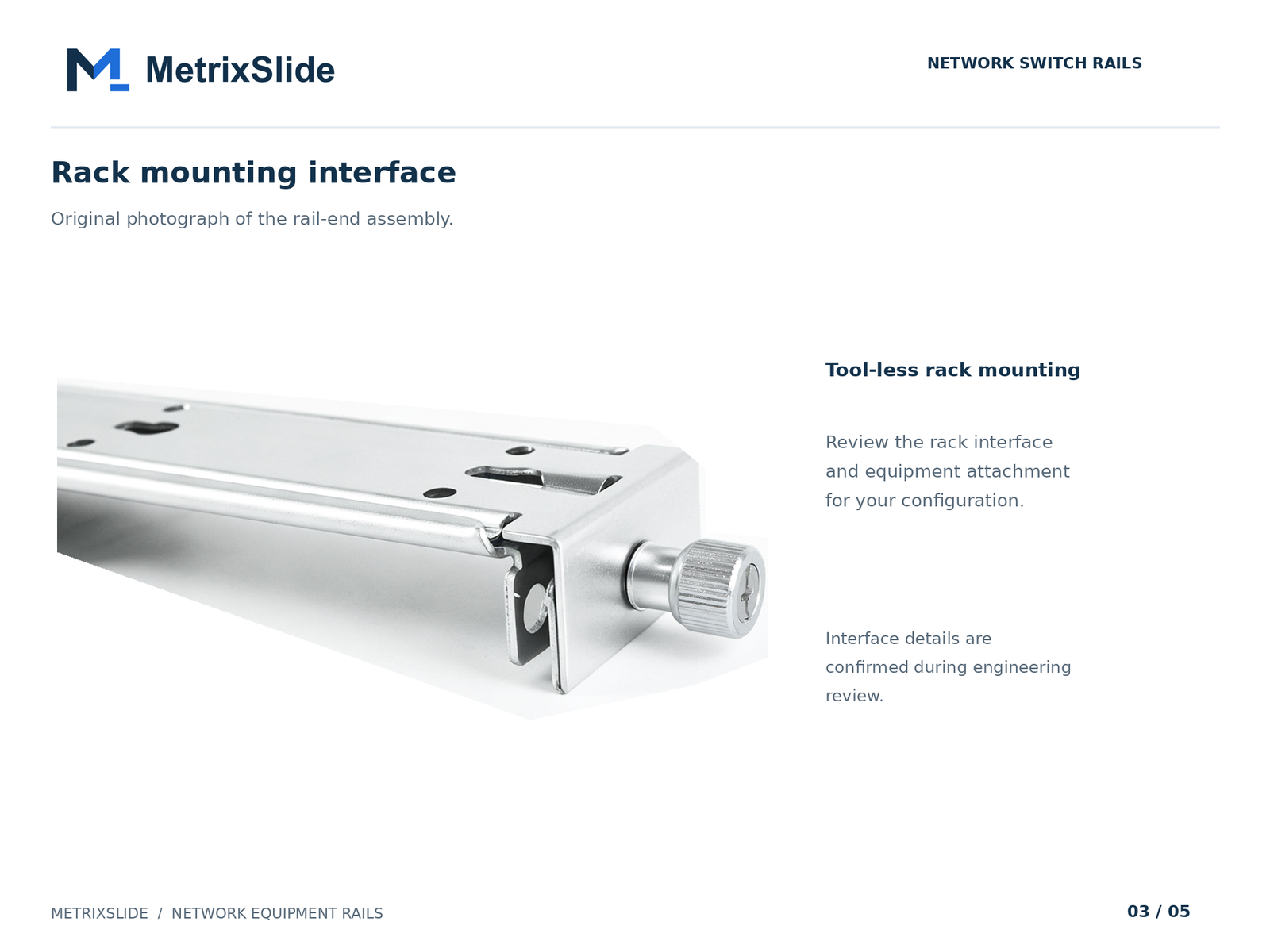
- Post distance set unevenly. If one outer member is set a hole different from the other, one rail is stretched and the other compressed, and the server will not latch closed on one side. See server rack distance between rails.
- Wrong hole on one side. A rail one hole higher on the left than the right twists the chassis so the inner member cannot slide. Count from the same U mark on all four posts.
- Screw through the wrong slot. A screw driven through a travel slot in the intermediate member instead of the outer member's mounting hole pins the slide.
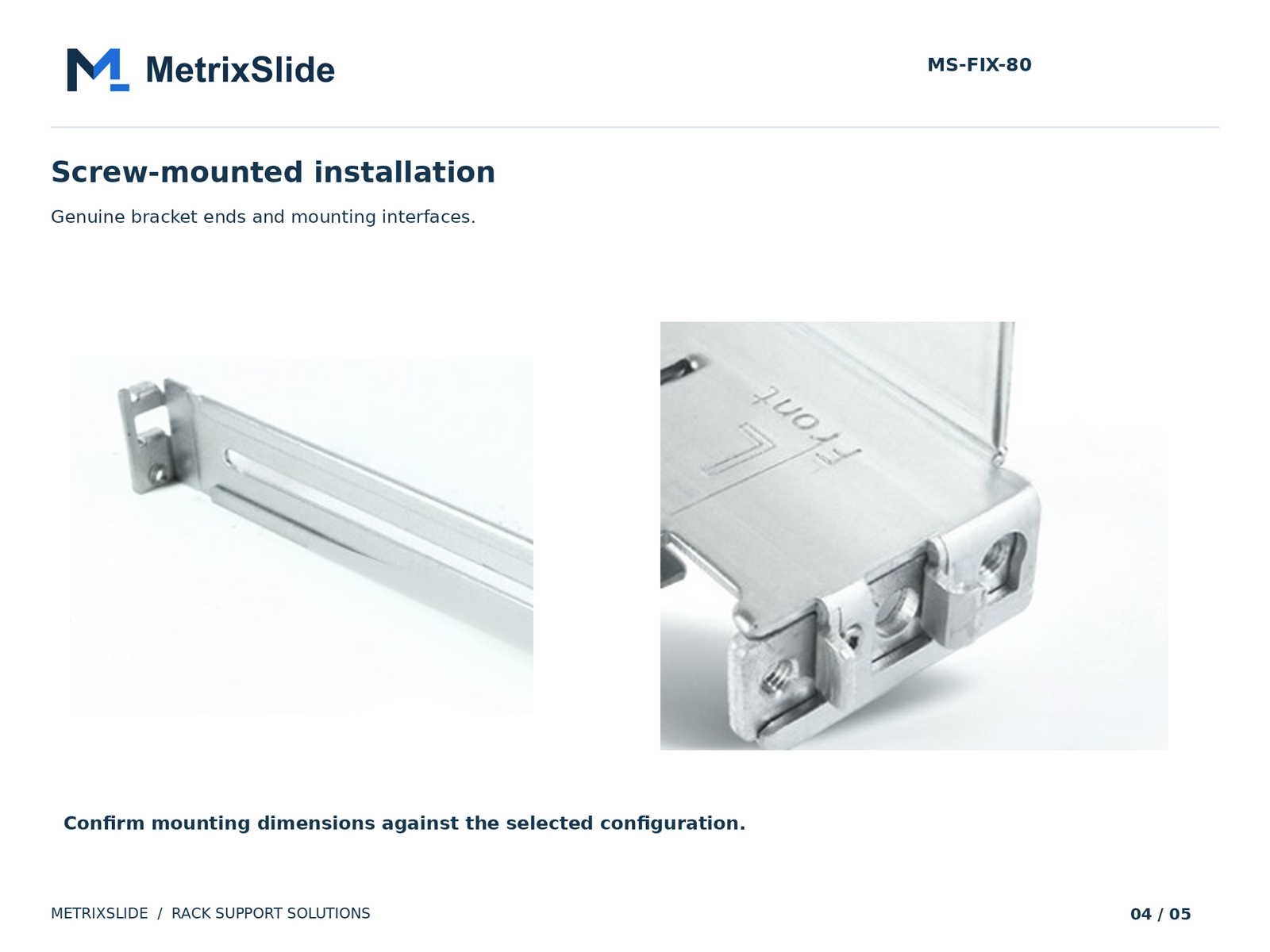
- Chassis standoffs not seated. A standoff resting on top of the inner member's keyhole instead of locked into it makes the chassis ride at an angle. Reseat every standoff with an audible click.
The rack-side steps are detailed in the server rails installation guide.
Fix 4: bent members, missing balls, broken latches
On a drawer slide, a bent outer member can be dressed flat and a missing ball tolerated. On a loaded server rail, none of these are repairs. The load rating and the anti-drop function depend on undamaged geometry. A straightened raceway no longer holds the balls at the designed contact angle; a retainer missing a ball overloads the rest and lets the member tilt; a latch that has lost its spring can let the chassis leave the rail. The rating assumes every part is present and to drawing. A repaired rail has no rating.
Signs of this category:
- A kink, twist or crease in any member when you sight along the channel.
- Gaps in the retainer where balls should be, or a cracked cage.
- A lock-out that holds on one side only, or releases when the server is pushed.
- A release latch that does not spring back.
- Wear grooves, flat spots or rust pitting in the raceways.
The load capacity guide explains what a dynamic rating covers; a rail rated close to the chassis weight has no margin left for a damaged part.
When to replace instead of fixing
Replace the pair, not one side, when any of the following is true:
- A member is bent where the balls run.
- Balls are missing or the retainer is cracked.
- A lock-out, release latch or anti-drop stop is broken or has lost its spring.
- It keeps dropping out of sync after cleaning and mounting checks.
- The raceways show wear grooves or corrosion.
- The chassis now weighs more than the rail's dynamic rating, for example after a GPU upgrade.
When the original vendor kit is available, ordering it is simplest. When it is discontinued or not offered for a non-standard chassis, a functionally equivalent rail can be matched to the chassis interface and the rack; the difference from a copy is explained in replacement server rails: functional equivalent vs copy.
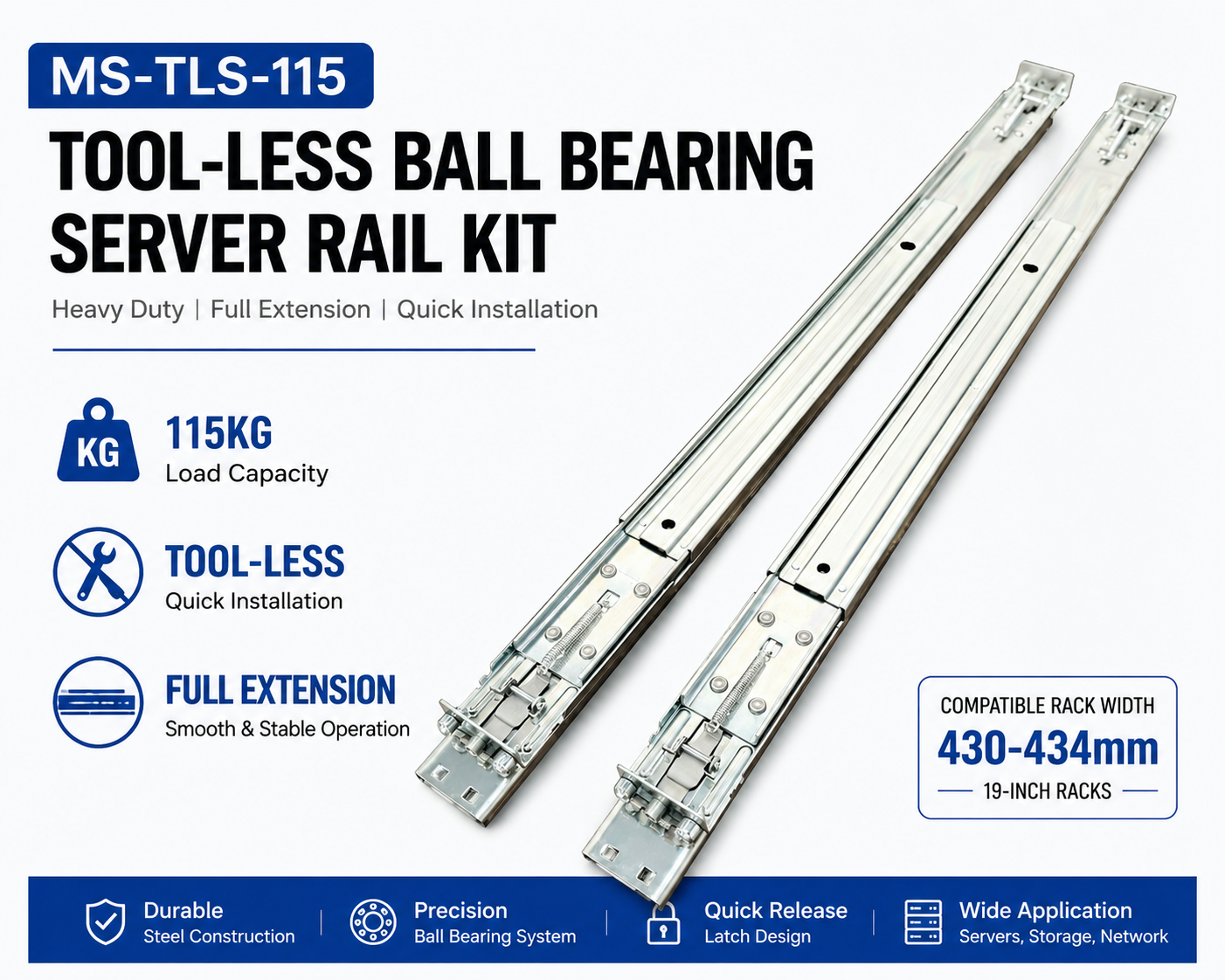
To order one from MetrixSlide, send the chassis model or side-wall drawing (standoff pattern and chassis length) plus the rack post-to-post depth and hole type. A mechanical engineer returns a fitment proposal within 24 hours. Standard models such as the MS-TLS-120 tool-less ball-bearing kit, with a specified capacity of 120 kg per pair, can be ordered as a sample pair at an MOQ of one pair, shipping in 3 business days. In the factory static-load test a rail pair is held under load at full extension for 24 hours, and the MS-FMR-2U-100 held 100 kg in that test.
A note on drawer slides
Fix 1 and Fix 2 apply to furniture as written. To fix ball bearing slides under a drawer, remove the drawer, pull the inner member fully out, push the retainer to the center of its travel with a flat screwdriver, and cycle the slide 3 to 5 times. Brush and wipe the raceways, and skip the grease.
Two issues are drawer-specific. The first is the release lever: most furniture slides detach with a small plastic lever on each inner member, pressed down on one side and up on the other. If the drawer will not come out, you are probably pushing both levers the same way. The second is plastic detent wear: the bump that holds a drawer closed is often plastic and flattens after a few years, so the drawer creeps open. A formed-steel detent can sometimes be bent back a little; a worn plastic one cannot be fixed, and a new pair of slides fits the same holes.
Drawer slides also tolerate what a rack cannot: a slightly bent outer member can be dressed flat, and a slide with one missing ball will still carry socks.
FAQ
Why does my server slide out only halfway and then stop hard?
The ball retainer has been pushed to the rear of its raceway. Remove the server, pull the intermediate member fully forward until the retainer seats, then cycle the rail 3 to 5 times.
Can I lubricate a ball bearing server rail that is stuck?
Clean it first; most stiffness is debris or a retainer out of sync. Never grease a server rail, because grease traps dust into an abrasive paste. If a clean, in-sync rail is still stiff, use a very light oil sparingly, only if the maker's documentation allows it.
The server tilts or drops slightly at full extension. Is that a rail fault?
Usually, yes. It points to missing balls, a cracked retainer, or a lock-out engaging on one side only. On a loaded rail those are replacement faults, because the load rating and anti-drop function assume an intact mechanism.
Can a bent server rail member be straightened?
Not for a loaded server. A straightened raceway no longer holds the balls at the designed contact angle, and the rating no longer applies. Replace the pair with the vendor kit or a functionally equivalent rail.
How do I fix drawer slides with ball bearings that only open partway?
Same fault as on a server rail. Release the drawer, pull each inner member fully out, push the ball retainer to the center of its travel with a flat screwdriver, and cycle the slide a few times.
Next step
If a rail has failed one of the checks above, send the chassis model or side-wall drawing and the rack details through the quote page. A fitment proposal comes back within 24 hours, and the MS-TLS-120 tool-less ball-bearing kit and the other kits in the sliding rack rails category can be ordered as a sample pair, MOQ one pair, shipping in 3 business days.
King Slide is a trademark of King Slide Works Co., Ltd. Dell and PowerEdge are trademarks of Dell Inc. HPE and ProLiant are trademarks of Hewlett Packard Enterprise. Other brand names are the property of their respective owners and are used only to describe compatibility or comparison. MetrixSlide is not affiliated with, endorsed by, or sponsored by these companies.