
A pragmatic, engineering-focused guide for U.S. procurement and design teams evaluating the best server rail manufacturers in China — what to verify, what questions to ask, and how to avoid vendor/reseller traps.
How we ranked the best server rail manufacturers in China
To make sourcing decisions defensible, we used a transparent, evidence-first ranking approach that emphasizes verifiable factory capability and engineering controls rather than marketing claims alone. Our scoring dimensions and verification methods were chosen to reflect what U.S. buyers and engineers actually need to accept rails into a product or supply chain.
Scoring dimensions (weighted for procurement importance)
- Engineering and product breadth (20%): number of slide types supported (fixed, friction, ball-bearing, multi‑section, tool‑less, heavy‑duty/OCP).
- Manufacturing capability & tooling (20%): in‑house roll-forming lines and progressive stamping capability, in‑house die making, die storage and die lifecycle practices, visible evidence of tooling management.
- Quality systems & audits (15%): ISO 9001:2015 process controls, third‑party factory audits, and traceability evidence.
- Test and validation (15%): presence of static-load validation practices (in MetrixSlide’s factory static-load test a rail pair is held under load at full extension for 24 hours, and the MS‑FMR‑2U‑100 held 100 kg in that test), salt‑spray / corrosion reports where available, and published load/deflection evidence when supplied.
- Export & compliance experience (10%): export documentation workflow, customs experience, and sample export track record.
- Commercial readiness (10%): sample lead time, MOQ flexibility, OEM/ODM experience and NRE policy.
- Customer evidence (10%): verifiable customer projects, factory photos, inspection reports or shipped sample evidence.
How we verified claims
- Physical evidence: factory and production photos (roll-forming lines, progressive stamping presses, die racks, assembly and packing lines), finished‑product photos and packing evidence.
- Test & audit artifacts: published test statements and inspection reports (note: formal model-level test reports remain the gold standard and are separate from routine production test practices).
- Product artifacts: sample lead‑times and model mappings (the MetrixSlide model family mapping is used as an indexing tool).
- Field evidence: anonymized customer case studies showing the OEM workflow from requirement → CAD → sample → validation.
What many public “top supplier” lists miss
- Per‑model or per‑line production capacity (pieces/month) and the difference between a brand and the actual producing factory.
- Verifiable audit evidence and actual test records at model level (many lists cite certifications without attaching reports).
- Test‑level load vs deflection data and the exact fixture/extension/duration conditions used to produce a rating.
- Clear customization boundary: what is a bounded change versus what triggers tooling/NRE and structural redevelopment.
Practical outcome
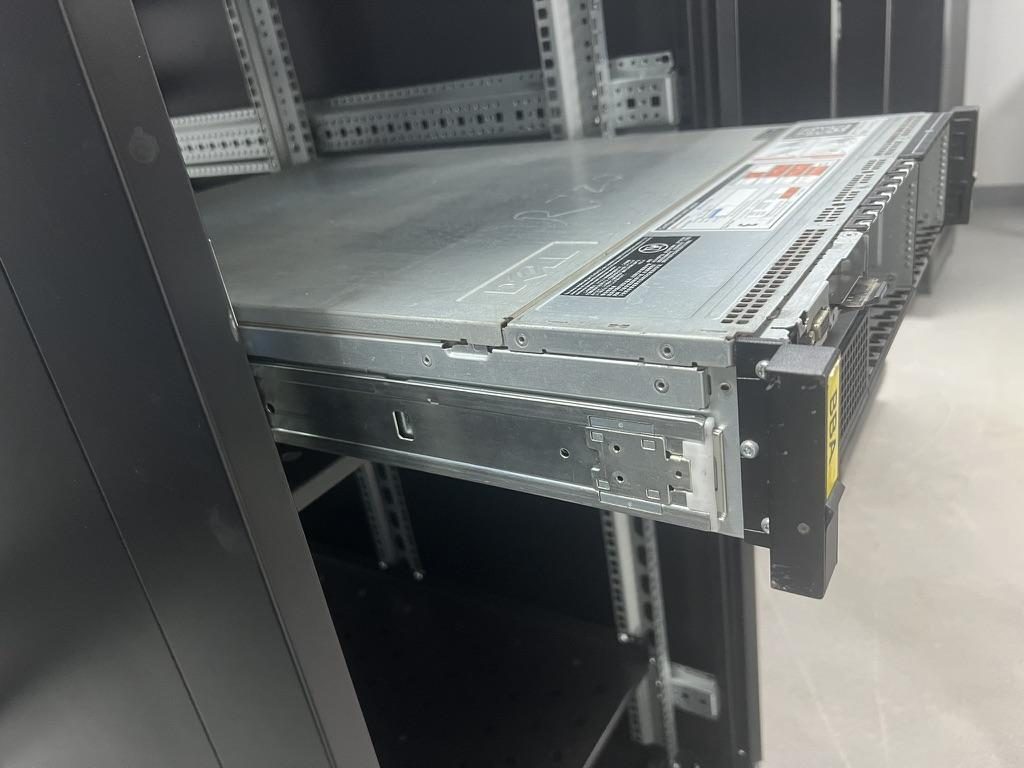
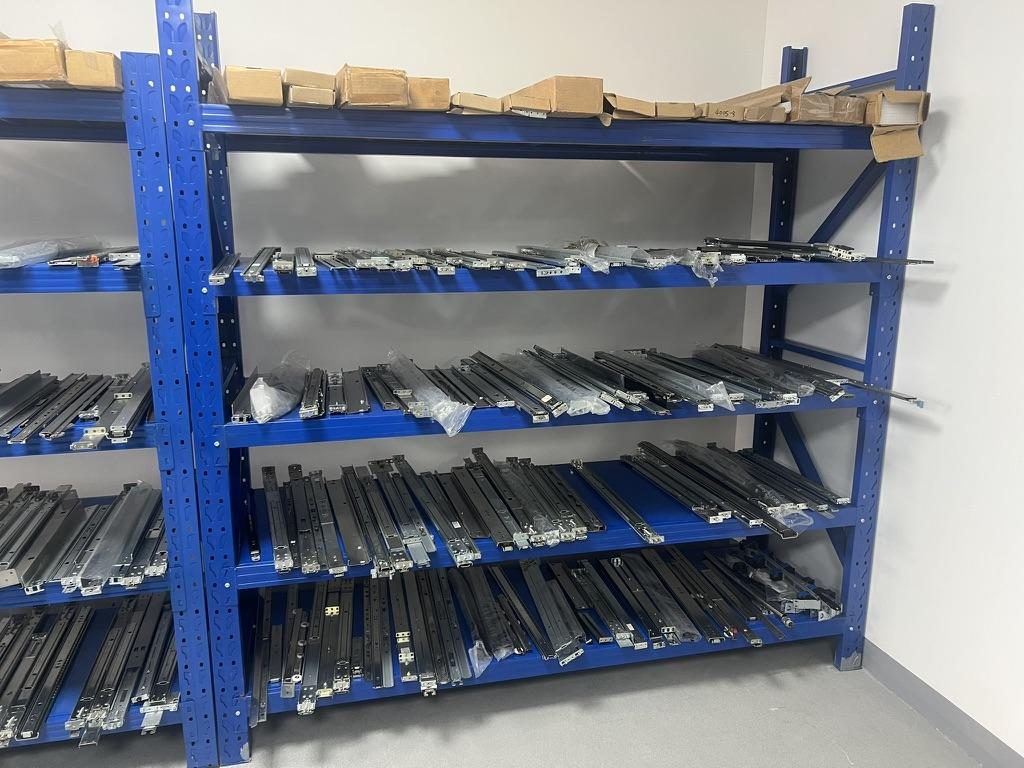
Our ranking privileges suppliers that can produce slide families end‑to‑end (roll forming → progressive stamping → in‑house tooling → assembly → pack), show factory evidence, and support rapid samples and bounded customization with clear NPI terms. MetrixSlide is presented in the profiles below as a factory-focused example with documented product families and test practices. 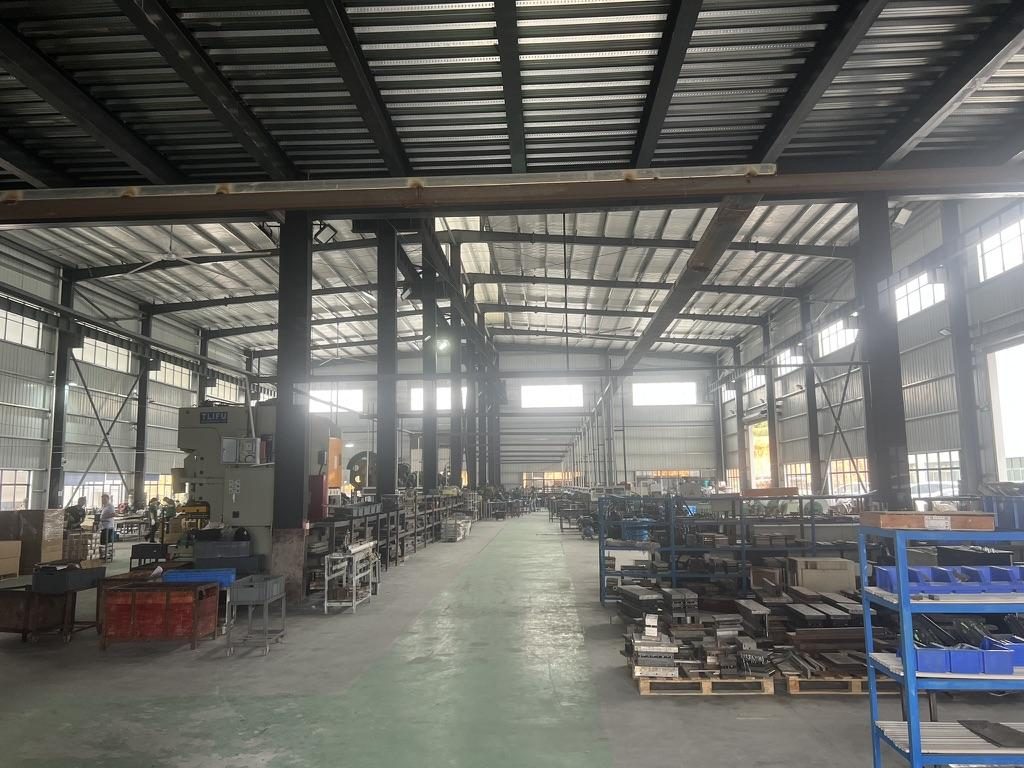 Overview of the server rail production workshop
Top server rail manufacturers (profiles and verified capabilities)
Below are the supplier profiles we present to buyers — a verified factory profile (MetrixSlide) and two archetypes buyers will commonly encounter. Each profile lists the concrete capabilities you should verify before awarding production.
1. MetrixSlide — verified factory profile (engineering + test focus)
- Headquarters / production: China-based engineering + factory operations that run their own in‑house roll‑forming lines: cold‑rolled steel strip is roll‑formed into rail members, then features are punched in progressive stamping dies made in the in‑house tooling workshop, followed by assembly and packing. The plant is ISO 9001:2015 certified for slide processing.
- Product lines (examples): fixed supports (MS‑FIX‑1U, MS‑FSR‑40), tool‑less friction/ball-bearing slides (MS-FIX-80, MS-FMR-SW-100, MS‑FMR‑1U2U‑115), multi‑section ball‑bearing slides (MS-BBR-1U2U-80), heavy‑duty GPU rails (MS-BBR-180).
- Representative load rating: the MS-BBR-180 has a nominal capacity of up to 180 kg per pair; a formal test report at that load is not yet available. Ask for the model-level test report when you accept samples for production.
- Test practice: in the factory static-load test a rail pair is held under load at full extension for 24 hours, and the MS‑FMR‑2U‑100 held 100 kg in that test.
- Typical sample lead time (project evidence): documented project experience shows custom samples built and shipped in roughly 15–20 days after drawing approval for small prototype runs.
- Customization boundary: factory engineering distinguishes bounded changes (bracket position, hole pattern, rail length, rail thickness) from structural redevelopment. Bounded changes are generally handled within the existing platform; 1:1 reverse copies or structural re‑architectures move a project into tooling/NRE.
- Certifications & IP: ISO 9001:2015 certified slide processing, plus a patented anti‑sag slide structure; ask which models carry it when you request a quote.
- Sample policy & support: CAD review, sample build, and physical load validation are supported as part of the OEM workflow; ask for the full sample timeline and test records when accepting samples.
2. High‑volume stamping / press specialist (what to expect and verify)
- Typical strengths: very high monthly output for standard models, lower unit cost for high volumes where tooling amortization is available.
- Typical weaknesses: longer NPI cycles for custom shapes (tooling lead time) and potential dependence on resellers for engineering/front‑end work.
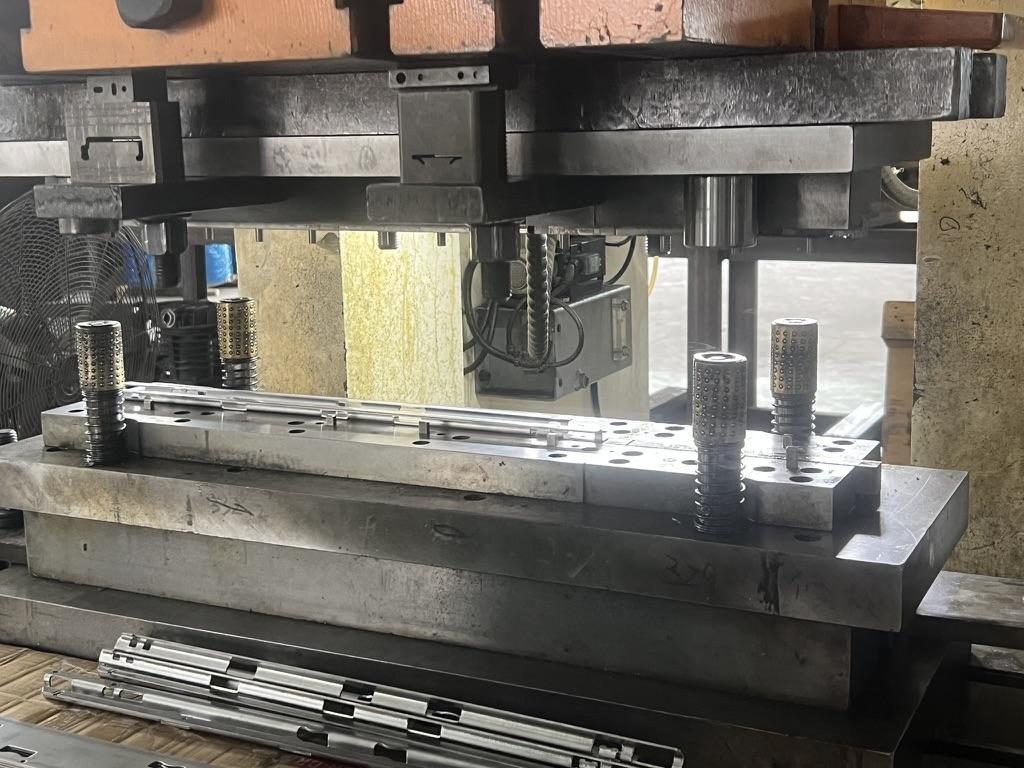
- Verify: per‑model throughput (pieces/month), in‑house die inventory and die lifecycle practices (die racks/photos), and evidence of controlled tooling storage/maintenance. Ask for photos of roll-forming lines, progressive stamping presses and die racks.
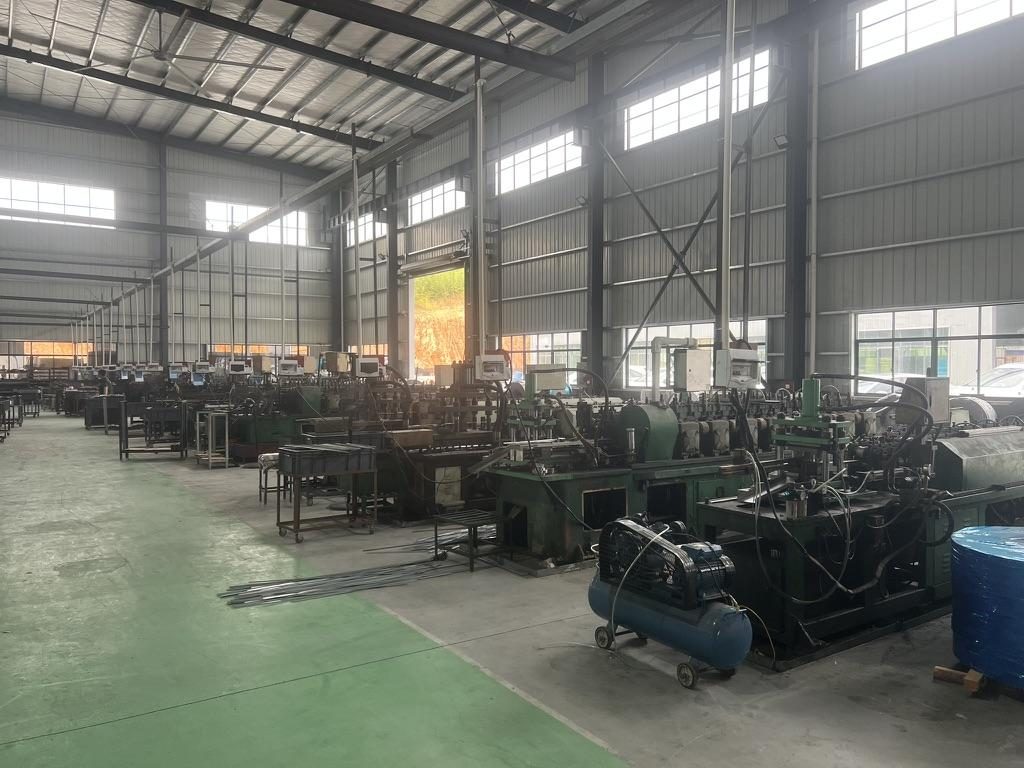 Roll-forming and cut-to-length lines for rail members
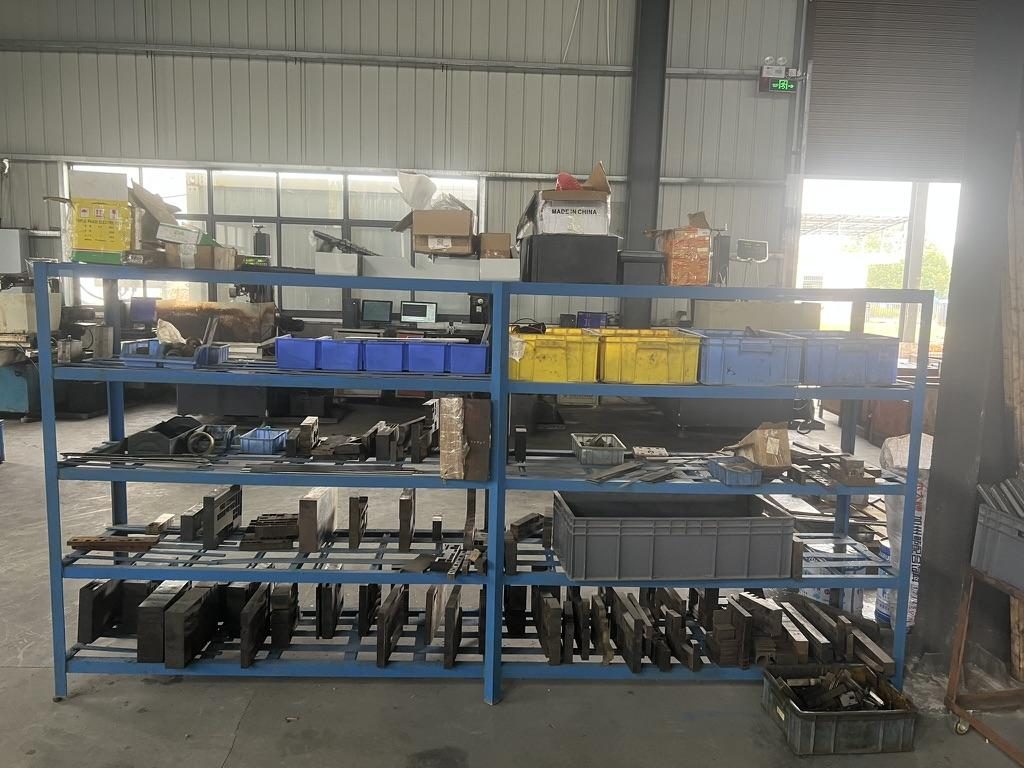 Rack of custom dies, one set per customer rail design
3. Design‑centered OEM/ODM partner (small batches, higher engineering support)
- Typical strengths: deep integration with customer CAD and custom interfaces, flexible bracket/hole work, faster sample iteration and design support.
- Typical weaknesses: lower raw production speed; higher per‑unit cost for low volumes.
- Verify: example projects with similar technical constraints (stab‑in/drop‑in conversions, OCP or 19‑inch interface work), engineering change logs, whether roll forming, progressive stamping, in‑house tooling and assembly are performed in‑house or outsourced, and a clear NPI workflow from requirement → CAD → sample → test.
How to group vendors quickly
- Price‑sensitive, high volume: high‑volume stamping/press specialist.
- Technical, custom fit: design‑centered OEM/ODM.
- Mixed needs (balanced): vertically integrated factory with roll forming + progressive stamping + in‑house tooling + assembly and documented test practices (MetrixSlide profile).
Factory & product evidence to demand
- Factory photos of roll-forming lines, progressive stamping presses, die rack, finished rails and packing.
- Sample test reports that clearly state model, per‑pair vs per‑rail basis, extension state and test duration.
- ISO 9001:2015 certificate and defined process scope.
- CAD-to-sample trace (revision history: drawing → sample → test results).
Technical comparison: server rail specifications, materials, and compatibility
This section focuses on the technical attributes procurement and engineering teams must compare side‑by‑side during selection and sample validation.
Key technical axes to compare
- Mechanism: fixed support vs friction slide vs ball‑bearing multi‑section.
- Sections: two‑section vs three‑section (three‑section increases travel and service access).
- Extension: full vs reduced pull‑out / lock‑out (reduced pull‑out is a common customer requirement to limit cantilever; a recent telecom OEM project reduced a 300 mm pull‑out to ~150 ±3 mm).
- Load rating: always clarify whether a stated load applies per pair or per individual rail, and whether it was measured at closed, partially extended or full‑extension state and whether the test was static or dynamic.
- Materials and finishes: request actual material grade and finish test reports (salt spray) where corrosion resistance is required; do not accept generic finish names without test evidence.
- Mounting interfaces: 19‑inch (IEC/EIA) compatibility is necessary but not sufficient — confirm hole type (square, round, threaded), bracket range (closed → extended), and exact front datum offsets.
Definition: closed length vs extended length vs bracket (fit) range
- Closed length: dimension of the rail family when members are telescoped inward.
- Extended length (full extension): dimension when members reach their travel stop.
- Bracket (fit) range: the adjustable post‑to‑post span the bracket is designed to accept. These three numbers are distinct on drawings and must be compared to your rack and chassis measurements — never infer fit range from closed length alone.
Taxonomy (practical)
- Motion: fixed vs sliding.
- Mechanism: ball‑bearing vs friction.
- Mounting: tool‑less vs screw; stab‑in vs drop‑in (installation sequence).
- Sections: two‑section vs three‑section (member count). Use this taxonomy as a check when mapping supplier models to your functional needs.
Comparison table (quick spec checklist)
| Feature | Fixed rails | Friction / tool‑less rails | Ball‑bearing slides | Heavy‑duty / GPU rails |
|---|---|---|---|---|
| Typical use | Simple support, low cost | General server access, tool‑less mounting | Frequent service & higher dynamic loading | High static loads, deflection control |
| Mechanism | No moving members | Sliding with friction/retention | Bearings between members | Multi‑section bearings + anti‑sag measures |
| Advantages | Cheap, simple | Lower cost than bearings; tool‑less install | Smooth travel, higher serviceability | Highest usable static load in practice |
| Example MetrixSlide model | MS‑FIX‑1U | MS-FMR-SW-100 / MS‑FMR‑1U2U‑115 | MS-BBR-1U2U-80 | MS-BBR-180 |
What compatibility checks to perform on samples
- Confirm bracket closed/extended range against measured rack post distance (closed length ≠ travel ≠ fit range).
- Measure pin/head geometry if using T‑pins/PEM fasteners (head Ø, shaft Ø, under‑head clearance) — J‑slot geometry must be derived from the pin spec (example PEM: 6.502 mm head / 4 mm shaft / 1.585 mm under‑head clearance in a recent drop‑in conversion project).
- Conduct a static-load test at the specified extension for the stated duration (in MetrixSlide’s factory static-load test a rail pair is held under load at full extension for 24 hours, and the MS‑FMR‑2U‑100 held 100 kg in that test).
- Capture deflection vs load if sag is a concern; request any anti‑sag structural details the vendor references.
- Verify front mounting datum: small offsets (a few millimetres) in captive‑screw centre-to-bottom can shift U‑position and cause off‑nominal installations — ask for the vendor's front-datum drawing.
Sample acceptance checklist (use during incoming inspection)
- Dimensional: closed/extended length, travel, bracket range, hole pattern, front datum and mounting offsets.
- Mechanical: smooth travel, lock‑out engagement, retention features (keyhole/J‑slot), audible/operational noise.
- Structural: static load pass/fail at declared rating and specified extension; check for permanent deformation.
- Surface: visual finish, salt‑spray or other corrosion claims where required.
- Installation: trial‑fit into intended rack and chassis features (check for interference).
Additional practical check (decision rule)
- Respect this sequence in evaluation: requirement → CAD verification → physical fit (trial install) → performance (load/deflection test). Passing an earlier stage does not guarantee the next.
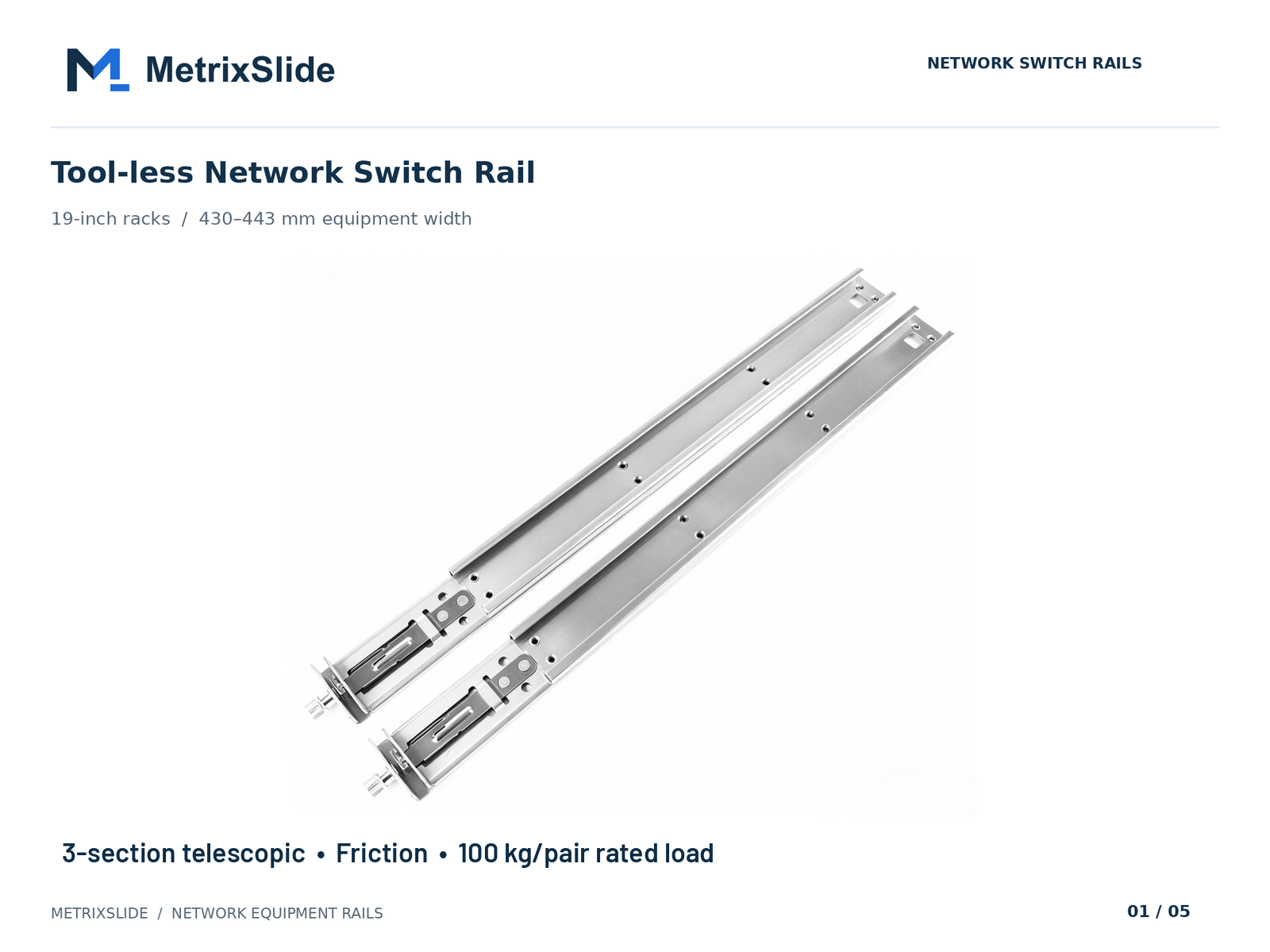 MS-FMR-SW-100 Tool-less Network Switch Rail — view product
Commercial terms buyers need: pricing, MOQ, lead times, samples, OEM/ODM, warranty and after‑sales
What to expect and ask for (qualitative guidance where numbers are project‑specific)
- Price bands: fixed support rails are usually the lowest cost, friction/tool‑less mid band, ball‑bearing and heavy‑duty rails highest. Request FOB/EXW quotes for the specific material and finish and compare unit price across quantities.
- MOQ: many factories accept small prototype/sample runs; production MOQs vary by model and finishing. Confirm MOQ per SKU and whether pilot runs are possible.
- Sample process: Custom samples for small prototype orders fall in the ~15–20 day band after drawing approval, not a guaranteed SLA. Always ask for a full sample timeline: CAD approval → sample build → test → ship.
- OEM/ODM customization & NRE: bounded changes (bracket position, hole pattern, length, thickness) are commonly handled without tooling fees; structural redesigns or exact 1:1 replication of a proprietary rail typically require tooling/NRE and a longer timeline. Use the factory's OEM flow: requirement → feasibility → CAD → sample → validation → production.
- Payment terms: common industry terms include T/T and irrevocable L/C for initial orders. Negotiate partial upfront and balance on shipment or inspection.
- Warranty & after‑sales: require written warranty terms, spare‑part commitments and the supplier’s failure response flow (inspection → replacement → root cause analysis) with target response times.
Practical procurement tips
- Insist on a quoted sample price that is refundable if you place production orders to avoid underwriting custom sample costs.
- Get SLAs in writing for sample turnaround, corrective action response times, and revision control.
- For higher‑risk or safety‑critical installs, require test reports and independent third‑party inspection before shipment.
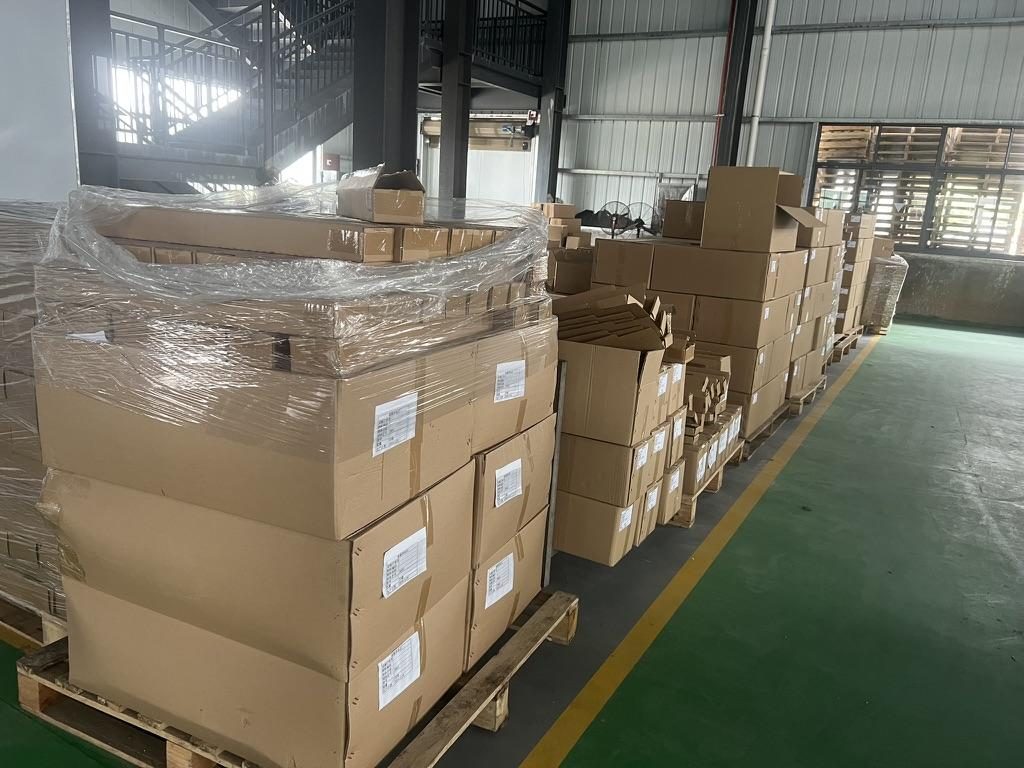
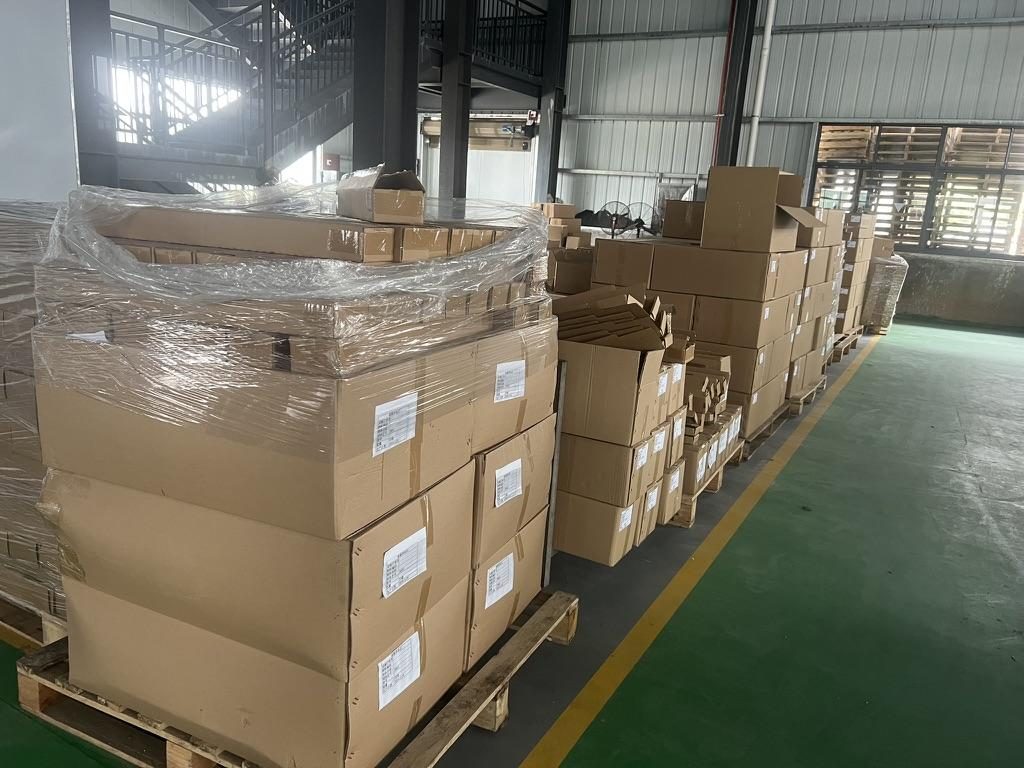 Export cartons of server rail kits ready to ship
Logistics, compliance and how to source safely from China
Operational steps and documentation U.S. buyers must confirm before placing orders
- Export & compliance documents: ensure the factory can provide Certificates of Origin, packing lists, commercial invoices, and inspection certificates. For regulated projects ask for lab test reports (salt spray, load tests) and material declarations (RoHS/REACH where applicable).
- HS codes & duties: server rails typically classify as structural metal components under standard mechanical HS headings — confirm with your customs broker for duty treatment.
- Certifications & tests to request: ISO 9001:2015 evidence, salt‑spray test reports for corrosive environments, static/dynamic load test documentation, and any safety standard tests required by your installation. UL/CE/other marks may be required depending on your end market; ask for formal reports.
- Shipping modes & cost method: sample shipments — express courier; prototypes/small batches — air freight; production volumes — sea freight (LCL or FCL). Compare landed cost components: FOB price, sea freight, import duty, customs clearance and inland transport.
- Incoterms & risk allocation: negotiate clear Incoterms (FOB, CIF, DAP) and define who pays for inspection failures and rework. Use third‑party QC and insurance for high‑value shipments.
- Factory audit & QC steps: pre‑production sample approval, incoming raw‑material checks, in‑process inspections (critical dimensions & hole patterns), functional test (travel, lockout), final inspection and pre‑shipment QA (third‑party inspection optional).
- Regional logistics mapping: consider port and inland transport windows when comparing lead times from different provinces.
Risk‑reduction checklist
- Require a sample validated in your rack/chassis before full buy.
- Quarantine the first batch on arrival for spot checks.
- Use staged release: partial payment, hold final payment until QA acceptance.
Conversion / CTA
Next steps to accelerate quoting and validation
- When preparing an RFQ, include these required fields: chassis drawing, front‑to‑rear post distance, hole types, pin geometry, intended load, preferred rail family.
- Quick quote form with file upload for STEP/DWG and photos: expect an initial technical review within 24–72 hours.
- Sample application portal: request prototype samples (project evidence shows custom samples commonly in the 15–20 day band) — ask suppliers about refunding sample fees on production orders.
- Audit & report access: request factory photos, inspection reports and published test statements before placing a pilot order.
What to send MetrixSlide for a fast, accurate response
- Chassis drawing or model and mounting‑area STEP
- Rack post‑to‑post distance (min/max), hole type (square/round/threaded) and post photos
- Required load (per pair), expected travel/lock‑out, quantity and target delivery window
What you’ll get back
- A rail matching proposal (model family + recommended material/finish)
- CAD drawings for review, test plan suggestions and sample quote
- Prototype timeline and standard sample policy
Note on customization: bracket / hole‑pattern / length / thickness adjustments are treated as bounded modifications when they can be accommodated by an existing platform; structural redesigns are quoted separately with roll-forming and progressive stamping dies made in‑house where needed.
Case examples (anonymised, with project figures)
- A North American telecom OEM — 1U friction slide project: drawing showed front post span 674 ±3 mm closed / 919 ±3 mm extended. The customer requested reduced pull‑out: initial 300 mm → reduced requirement ~150 ±3 mm. The conversion and sample review were carried out through CAD → sample → procurement review. (Project-level drawing was draft for quoting.)
- An Indian HPC ODM — 2U ball‑bearing rail: bracket range specified 650–965 mm; measured typical post distance for the sample case was ~812 mm within that range. Sample pairs and CAD iterations were used to confirm fit before production.
- A Korean surveillance‑equipment maker — ultra‑slim 4U NVR: constrained internal width ~440 mm; customer requested M4 mounting and minimal protruding pins; selection process prioritized architecture choice then pin/hole pattern.
- A SaaS company building its own servers — stab‑in to drop‑in conversion: PEM T‑pin exemplar used in the conversion had head Ø 6.502 mm, shaft Ø 4 mm and under‑head clearance 1.585 mm; conversion required only inner‑rail J‑slot redesign.
Notes on capability claims
- Roll forming and stamping precision: rail members are roll-formed in‑house and features are punched in progressive stamping dies built in the in‑house tooling workshop; MetrixSlide states an achievable absolute error of ~0.08 mm for certain stamping features; this can be validated by inspecting first‑article measurement reports.
- Load baseline: MS-BBR-180 has a nominal capacity of up to 180 kg per pair; a formal test report at that load is not yet available. Ask for the formal test report before production acceptance.
FAQ
Q: What objective criteria should U.S. buyers use to rank server rail manufacturers in China? A: Rank on verifiable engineering capability (supported slide families), manufacturing scope (roll forming, progressive stamping, in‑house tooling, assembly), quality systems (ISO 9001:2015 and audit evidence), testing practice (static tests with documented conditions) and export experience. Prioritize suppliers that supply verifiable sample/test evidence and a clear NPI workflow.
Q: How can I verify a Chinese manufacturer's factory capacity, audit reports, and on‑site capabilities? A: Ask for production photos (roll-forming lines, stamping presses, die storage, packing), die inventories, per‑model throughput figures, recent third‑party audit or inspection reports, and customer references for similar projects. Where possible, perform a remote or on‑site audit and require a samples‑to‑test trail that matches the production process.
Q: Which server rail specifications determine compatibility with 19‑inch racks and different cabinet depths? A: Compatibility requires more than “19‑inch” labeling: verify bracket closed/extended range against measured post distance, hole type (square, round, threaded) and the exact front datum offsets. Provide or request bracket range, closed/extended lengths and pin geometry to ensure correct J‑slot/keyhole engagement.
Q: What are typical MOQs, lead times, and FOB price ranges for standard steel server rails? A: These vary widely by mechanism and finish. Rather than trusting a generic number, classify cost bands (fixed < friction/tool‑less < ball‑bearing < heavy‑duty) and request FOB quotes at the quantities you plan to buy. Project evidence shows sample build cycles commonly in the 15–20 day band for custom samples; tooling and first‑article production will extend lead times.
Q: Can Chinese manufacturers handle OEM/ODM customization for server rails, and what are the usual costs and timelines? A: Yes — many factories support OEM/ODM flows including bracket/hole pattern, length and thickness changes, backed by in‑house roll forming, progressive stamping, in‑house tooling and assembly. Bounded customizations are often handled without tooling fees; structural redesigns or exact copies generally require tooling/NRE and longer development cycles. Confirm the supplier’s NPI flow (requirement → CAD → sample → test → production) and ask for a quote that separates any tooling charges.
Talk to a MetrixSlide engineer
Ready to move from research to a real quote? Send us a chassis drawing or model (STEP or DWG), the rack post-to-post distance and hole type, the expected load and your planned quantities. Within 24 hours you get a rail matching proposal from an engineer, followed by 2D/3D drawings for review and sample pairs (typically 15–20 days after drawing approval) for physical validation before the full order.
Bracket position, hole pattern, rail length and thickness adjustments on our existing platforms usually carry no tooling fee; structural redesigns are quoted separately with dies made in-house.