
A practical vetting checklist for U.S. buyers and engineers — certificates, factory proof, sample testing, revision traceability and red flags to watch for.
Verify company legitimacy and legal documents
Before you commit cash, confirm the supplier is legally registered, can export, and will issue compliant commercial documents. Treat document checks as a must-have, not optional.
-
Primary Chinese data sources to use
- China National Enterprise Credit Information Publicity System (企业信用信息公示系统): check the unified social credit code, business scope and legal representative. Confirm the business term is active and that export activities are in the declared scope.
- Customs export/import records: matching export shipments against the supplier name helps verify they actually export metal parts similar to rails.
- VAT invoices (增值税发票): request a sample invoice to confirm the exporter name and unified credit code match the business license. If you require “一般纳税人” status for VAT purposes, ask the supplier to confirm this and provide supporting documentation.
- Bank remittance receipts and BL/AWB for prior transactions (cross-check beneficiary name and unified social credit code).
-
Suggested verification phrasing (reusable)
- “Please provide a copy of the business license (含统一社会信用代码), export registration / 外贸经营者登记证明, and a sample VAT invoice. The registered company name and unified social credit code must match across these documents.” If the supplier refuses to share export documents or invoices, treat this as a red flag.
-
What to watch for (common forgery or risk indicators)
- Mismatch between company name on the business license and the name on invoices or beneficiary account.
- Business scope that omits metal processing or export, yet the supplier claims to manufacture rails.
- Export record entries that repeatedly show unrelated HS/HTS codes or inconsistent commodity descriptions.
-
U.S. import compliance notes
- Confirm the correct HTS code for customs and prepare material declarations (lead content, RoHS/REACH where applicable). Ask for test reports when required by your compliance program.
- Before wiring funds, verify the receiving bank account details (SWIFT beneficiary name and branch) match the exporter shown on the business license and invoices.
Note: MetrixSlide engineering practice separates corporate/legal checks (who you contract with) from factory-capability checks (who makes the parts). Both are required.
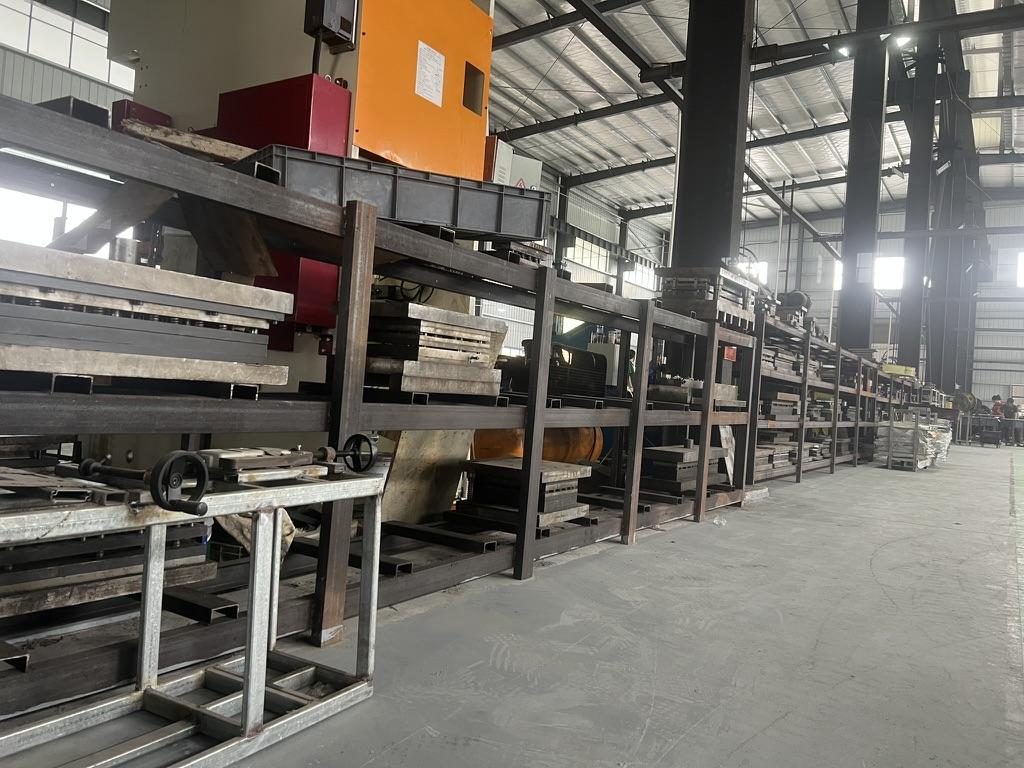
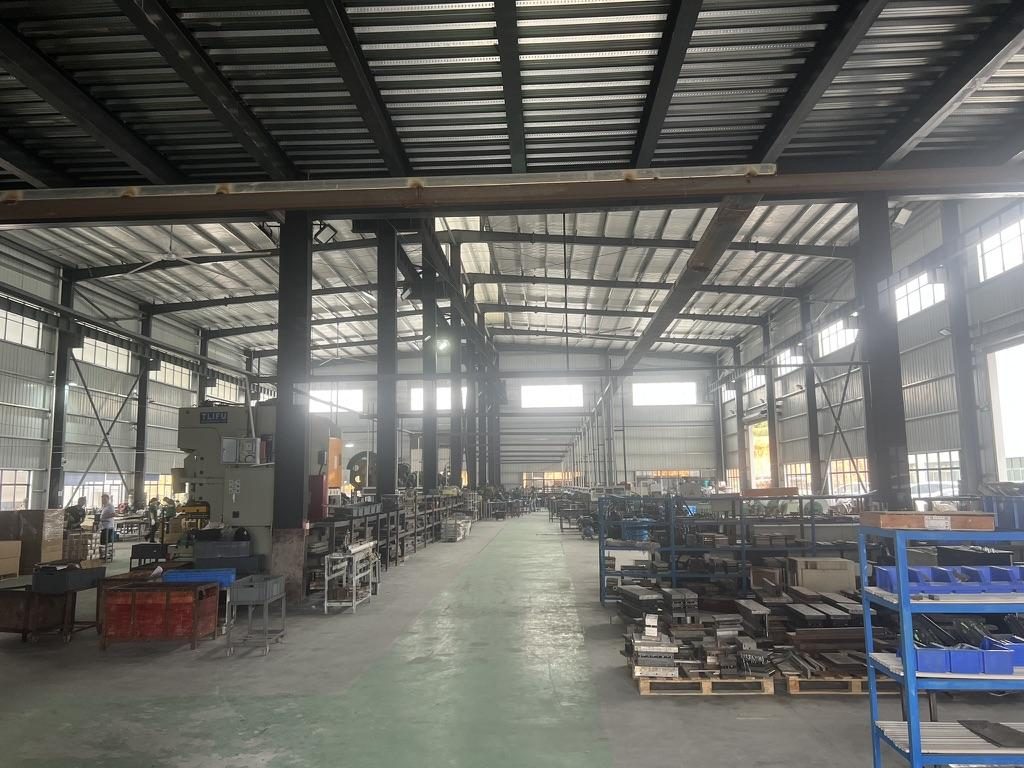 Overview of the server rail production workshop
Assess factory capability and confirm manufacturer status
Differentiating a true factory from a trading middleman protects lead-times, IP and quality. Ask for evidence tied to the parts you will order rather than generic marketing photos.
-
Evidence that indicates genuine manufacturing capability
- Time‑stamped shop‑floor photos or short unedited videos showing in-house roll-forming lines, progressive-stamping presses, die tooling made in the in-house tooling workshop, bending and welding/spot-weld stations, and surface-treatment lines (plating or powder-coat). Request close-ups of the dies/tooling that will be used for your family of parts.
- An equipment list and operations layout covering roll-forming lines, stamping presses, die tooling and assembly stations (machine model names are useful but proprietary details can be redacted).
- Sample-processing video that shows cold-rolled steel strip being roll-formed into a rail member, then punched in progressive stamping dies, deburred and surface-treated; an unedited clip with visible timestamps is more persuasive than stills.
- Production metrics tied to this part family: number of operators on the line, shifts, achievable monthly output for the requested family, and copies of recent production records (POs, delivery notes) for similar metal slides.
-
On-site or remote audit checklist for rails (inspection points)
- Roll forming & stamping: presence of in-house roll-forming lines, custom progressive dies, die identification markings, and die-storage controls.
- Dimensional control: evidence of calipers/CMM use and calibration records for the inspection tools used on your parts.
- Surface-treatment line & controls: process flow for pre-treatment, plating or powder-coating and thickness-measurement capability (supplier should state their process and provide typical thickness ranges for the finish they propose).
- Packing process and lot traceability: lot labelling, serialized sample tags and a revision-traceability log for tooling/drawing changes.
-
How to spot subcontracting or trading-company behaviour
- Inconsistent surface tones, finishes, or tooling marks across consecutive samples from the “same” lot.
- Refusal to show the dies or tooling that will be used — many trading companies cannot do this because they rely on a partner shop.
- Long lead-times for small sample quantities without a justified production schedule or tooling plan.
-
Tolerance claims and verification
- Suppliers may quote tight stamping tolerances. MetrixSlide engineering treats such claims as a measurement claim: ask for a recent CMM report or caliper inspection for the exact feature (hole center, datum‑to‑feature) before accepting the claim. Internal factory discussion records an internal stamping-capability claim (absolute error control to 0.08 mm); that is an internal statement and should only be used if matched by produced inspection data.
Product-specific quality checks, testing and standards
Define acceptance criteria in the RFQ and contract. For server rails you must validate material, critical dimensions, mounting interfaces and load behaviour. Avoid assuming a “19‑inch” label alone proves fit.
-
Key drawing definitions you must request and compare
- Closed length (rail assembly length when stowed), extended length (fully extended assembly length), and bracket/fit range (the range of rack-post distances the front/rear brackets can span). These three numbers are separate drawing calls and must all be checked against your rack and chassis. Do not infer one from another.
- Per‑pair vs per‑rail. A load rating should explicitly state “per pair” (typical) or per single rail and the extension state (closed, partial, full) used for the rating.
-
Load and deflection: what to require in the RFQ
-
Demand a documented static-load test that states: load value (per pair), extension state (e.g., full extension), fixture geometry, test duration and acceptance criteria (no permanent set, no slip, no failure). In MetrixSlide’s factory static‑load test a rail pair is held under load at full extension for 24 hours, and the MS‑FMR‑2U‑100 held 100 kg in that test; treat this as a factory practice, not an industry mandate.
- Baseline example from MetrixSlide materials: the heavy‑duty model labelled MS-BBR-180 has a nominal capacity of up to 180 kg per pair; a formal test report at that load is not yet available. Use model ratings only when they are explicitly documented and traceable to a test report.
- Do not multiply single-rail ratings by the number of rails unless the manufacturer provides a multi-rail test or explicit guidance on load sharing.
-
Dimensional and functional tests to request with samples
- A drawing-based dimensional checklist for critical features: hole centers, datum‑to‑feature dimensions, bracket fit range, closed/extended lengths, reduced pull‑out / lock‑out distances, and any T‑pin/keyhole/J‑slot geometry.
- For heavy or service-critical installations, require both a static load witness (inspector watches and records) and a signed test report including raw data and calibrated-equipment statements.
- Fatigue/dynamic testing only when your application requires it — specify cycle counts and acceptable failure modes.
-
Surface treatment and materials
- Ask for the declared steel grade (e.g., SPCC or stainless option), material certificates or mill-test reports and sample coupons for destructive or chemical analysis if required. Ask the supplier to state the exact coating process they propose; require coating-thickness readings and adhesion test results for acceptance where corrosion resistance is critical.
- If material or finish compliance is contractually required (RoHS/REACH, etc.), require traceable lab reports.
-
Third-party labs and traceability
- Use accredited labs for material analysis, salt-spray and test-witnessing; require photos of tested samples with supplier lot labels so lab reports trace back to the production lot.
-
Sample process and realistic lead time expectations
- Specify a formal sample approval cycle: engineering intake → first-article sample → fit test in your chassis/rack → functional/load testing → signed sample approval and revision record.
- MetrixSlide case history: a 2U compatibility project progressed to a PI for 10 sample pairs with an indicated sample lead time of roughly 15–20 days after order confirmation. Use supplier-provided, dated lead-time commitments in writing rather than verbal estimates.
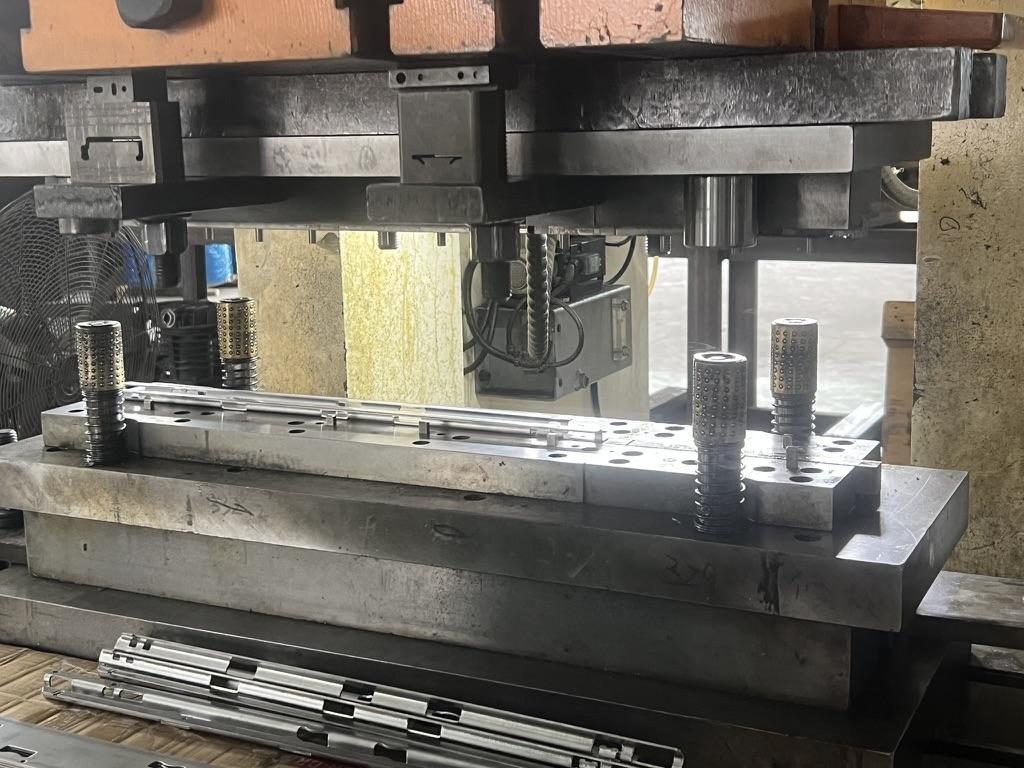
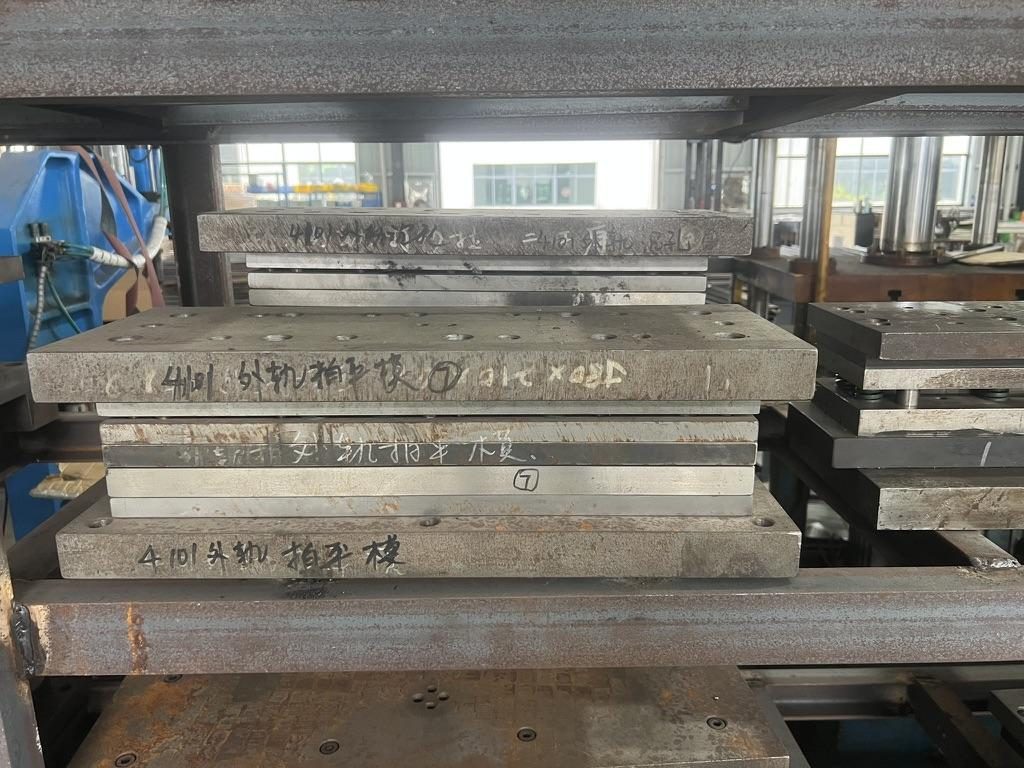 Detail of a progressive die used to punch rail mounting features
Compatibility decision rules, taxonomy and hard gates (MetrixSlide engineering practice)
Compatibility is a layered decision process — require the evidence for each layer before you buy.
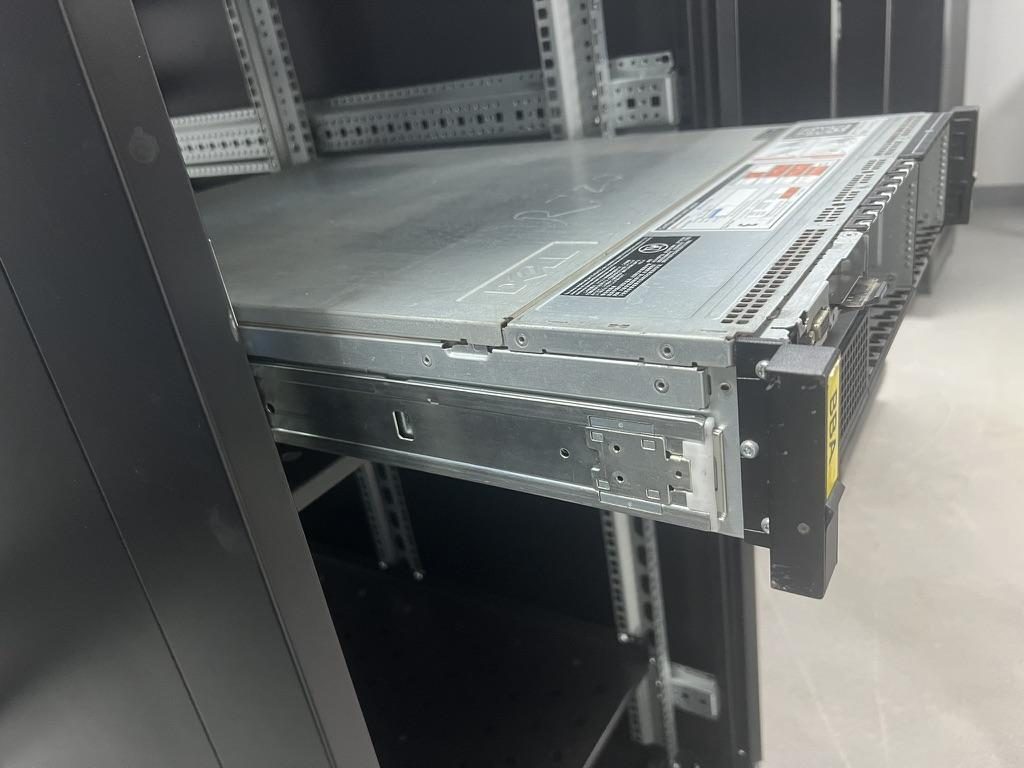
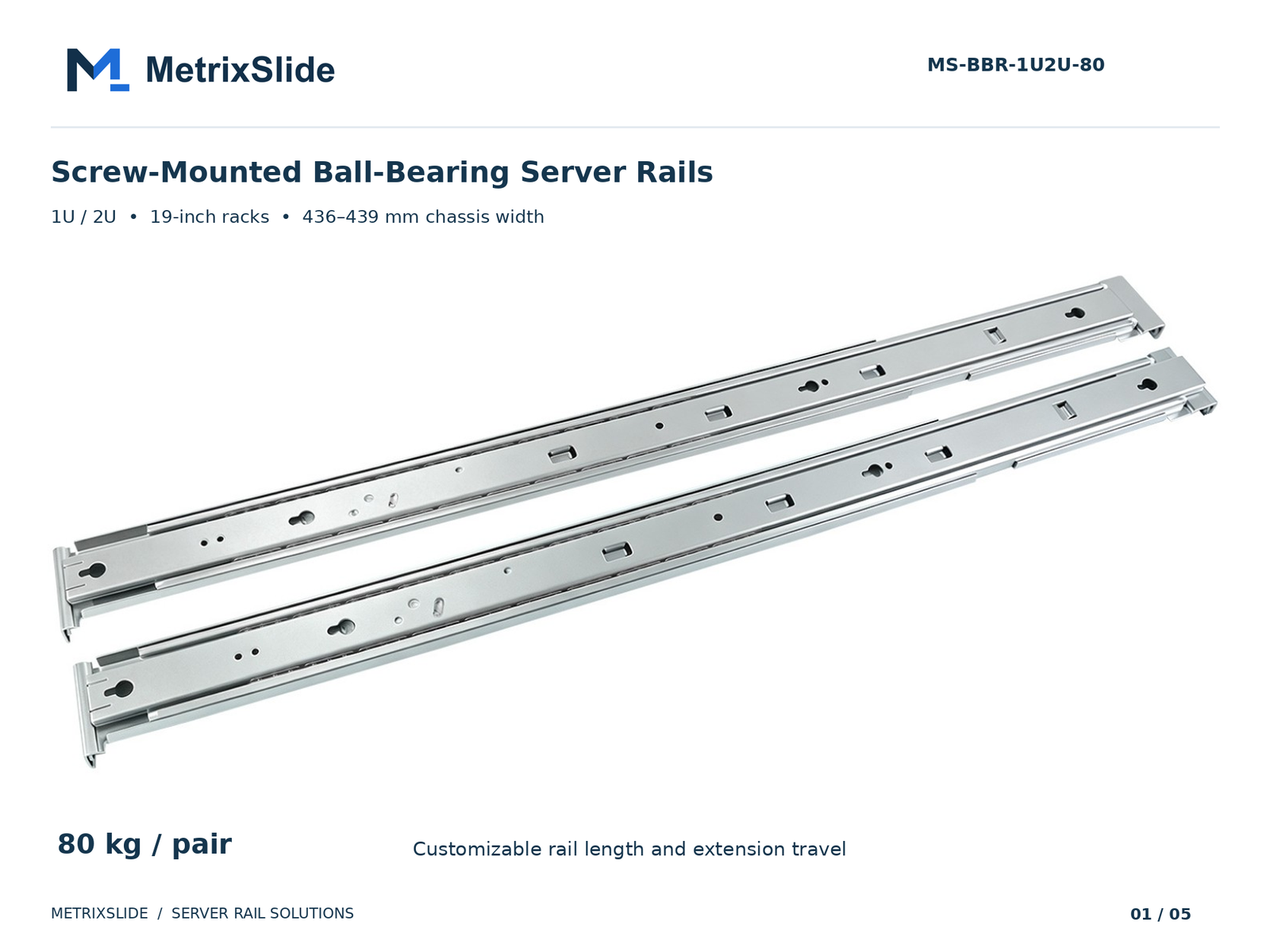 MS-BBR-1U2U-80 Screw-Mounted Ball-Bearing Server Rails — view product
-
The compatibility sequence (hard gates before preferences)
- Requirement capture (what your chassis & rack actually are)
- Compatibility hard gates: mounting‑interface alignment, bracket/fit range vs actual post distance, and dimensional fit
- Load hard gate: per‑pair (or per‑rail) static rating at the required extension state
- Architecture and service preferences (ball‑bearing vs friction, tool‑less vs screw, number of sections)
- CAD/drawing exchange
- Physical samples and installation validation
- Performance validation (load/deflection/fatigue)
- Record the conclusion at the level actually achieved: requirement → CAD → physical fit → performance. Passing an earlier level never proves the next.
-
Taxonomy (how MetrixSlide organises rail types)
- Motion architecture: sliding vs fixed
- Sliding mechanism: ball‑bearing vs friction
- Mounting attributes: tool‑less vs screw; stab‑in vs drop‑in
- Section count, travel/lock‑out and load rating Use taxonomy to prioritise compatibility gates (interface first, then preference).
-
Quick intake checklist (what to send in an RFQ)
- Chassis: U height, actual chassis width, depth/engagement envelope, mounting-feature positions (T‑pin/keyhole), captive-screw centre-to-bottom if used.
- Rack: actual post-to-post distance (front to rear), hole type and thread spec, photos of the front post and cage‑nut pattern.
- Functional: required load per pair, required travel/lock‑out or reduced pull‑out, service access steps, projected annual quantity.
- Deliverables requested: 2D/3D drawings (STEP/DWG), sample quantity, required test witness and acceptance criteria.
Concrete red flags to watch for
- Supplier refuses to provide a mounting‑area CAD or detailed front‑bracket dimensions when your design depends on interface alignment.
- No tooling photos or the claim “partner factory” without verifiable partner details.
- Inconsistent sample surface tones or mixed roll-forming/stamping-tool marks across the same lot.
- Load claims without a clear test fixture, duration or written report.
- Refusal to identify the exporter or to provide export invoices that match the business license.
Short anonymised case examples (engineering lessons)
- A North American telecom OEM (1U friction project): moved a 300 mm pull‑out requirement down to a reduced lock‑out of 150 ±3 mm during CAD and sample reviews to satisfy sag/installation constraints; a three‑section reference showed closed 674 ±3 / extended 919 ±3 / pull‑out 150 ±3 mm in the project drawings. This demonstrates the design and test changes a buyer may need to accept. (Source: internal case materials.)
- An Indian HPC ODM (2U compatibility project): chassis width 434 mm, target closed length ≈860 mm, 40–50 kg load, ball‑bearing preference; MetrixSlide provided customised 3D CAD with a front bracket/rack‑post adjustment range of 650–965 mm; the customer’s actual post distance (~812 mm) fell inside that range. Project progressed to PI for 10 sample pairs with an indicated sample lead time of ~15–20 days after confirmation. This is CAD‑level acceptance; physical installation was pending. (Source: an Indian HPC ODM case notes.)
- A SaaS company building its own servers (stab‑in → drop‑in conversion): conversion work was limited to inner‑rail J‑slot geometry tied to the chassis T‑pin specification. Example PEM T‑pin referenced in a customer case: head Ø 6.502 mm / shaft Ø 4 mm / under‑head clearance 1.585 mm — slot geometry must be derived from the pin, not guessed. (Source: a SaaS company building its own servers conversion notes.)
- A Korean surveillance‑equipment maker requested ultra‑slim rails and suggested ≤5 mm rail thickness as a requirement; this illustrates when bounded customization (bracket position, hole pattern, length, thickness) is feasible versus when structural redesign requires tooling/NRE.
Commercial safeguards: payments, contracts and references
Reduce financial and delivery risk with the right payment terms, contract clauses and reference checks.
-
Payment and escrow options (high level)
- Documentary L/Cs, staged payments tied to inspection milestones, escrow or third‑party payment platforms, and trade credit insurance are all mechanisms with trade‑offs. For first-time, high‑value orders prefer milestoneed protections.
-
Contract clause checklist (must-haves)
- Detailed acceptance criteria referencing the approved sample drawing and test reports.
- Inspection & rework: who pays for rework, sampling plans and re‑inspection timing.
- Warranty & spare parts: minimum warranty and spare‑part availability for a defined period.
- IP & tooling: clarify ownership of custom roll-forming and stamping tooling and who retains dies after production.
- Delivery, penalties and force majeure clauses; specify dispute resolution terms.
-
References and financial health checks
- Request 3–5 references (ideally U.S./EU/OEM customers): years of orders, approximate annual volumes, and a contact for technical fit verification. Ask for copies of recent POs or B/Ls you may contact to verify shipments.
Third‑party inspections, marketplace vetting and logistics checks
Use independent inspection and clear shipping controls to avoid last‑minute surprises.
-
When to use third‑party services
- Pre‑contract factory capability audit.
- First‑article inspection and pre‑shipment inspection (dimensions, coatings, packing).
- On‑site or witnessed load/functional test when acceptance depends on a full‑extension static load or lock‑out test.
-
Inspection instruction outline (scope highlights)
- Scope: visual + dimensional + coating + functional (witnessed load test if required).
- Sample selection: link to AQL and traceable lot numbers; include part‑ID photos.
- Tools list for the inspector: calipers, micrometer, coating‑thickness gauge; require lab tests (salt spray, material analysis) from accredited labs where needed.
-
Verifying export and logistics documents
- Cross‑check commercial invoice, packing list, certificate of origin and customs declaration against the order. Confirm INCOTERMS (FOB vs CIF) and who assumes insurance and duties.
- Confirm remittance beneficiary name and bank branch before wiring funds; require a signed cover letter authorising the account.
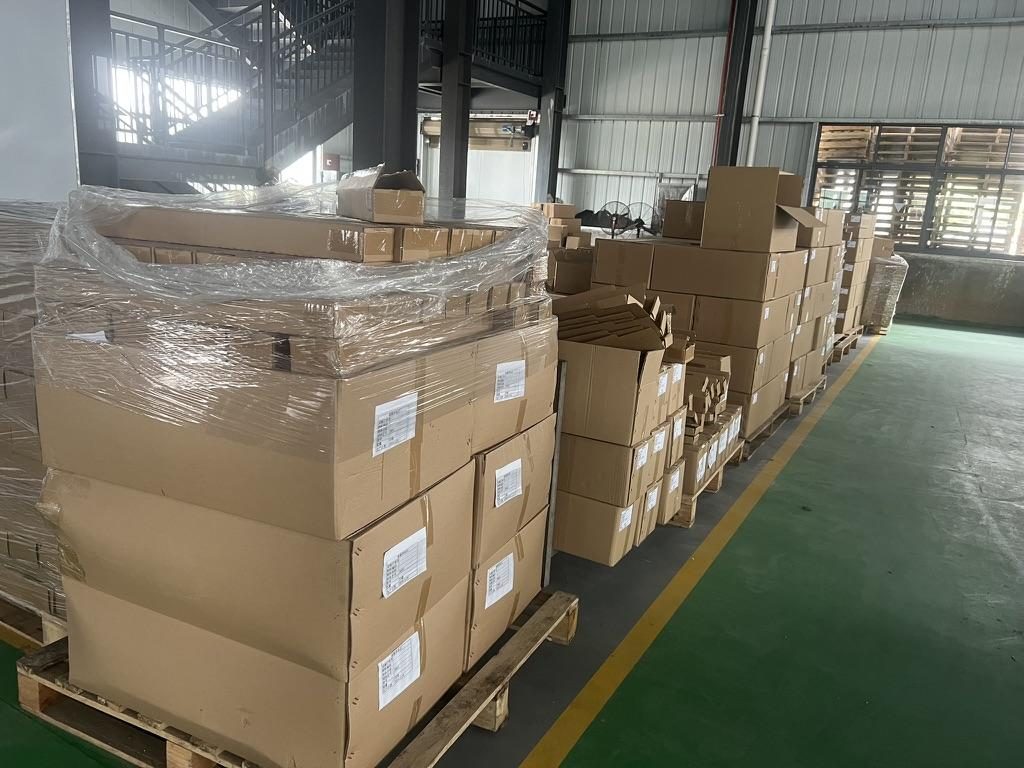
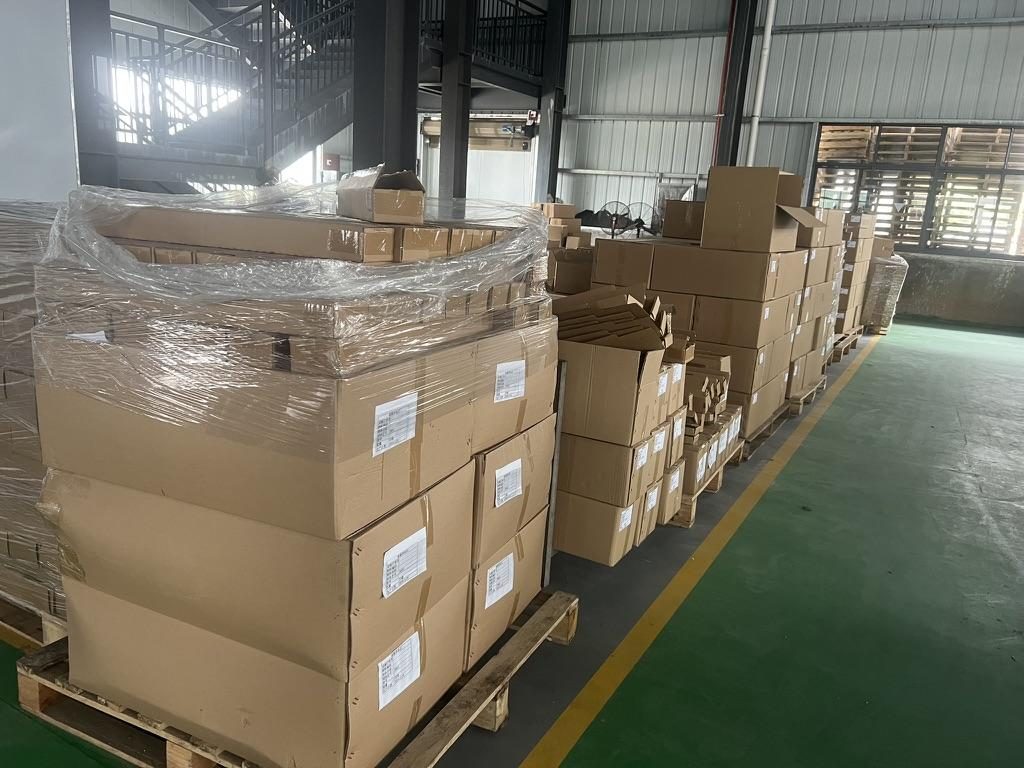 Export cartons of server rail kits ready to ship
Conversion / CTA
A clear, low‑friction next step will speed due diligence.
- Quick actionables to reduce risk today
- Send the supplier your chassis drawing and mounting‑area STEP/DWG (or clear front‑bracket photos), the rack post‑to‑post distance, required load per pair and projected annual quantity. Ask for a dated photo/video of the production tooling and a copy of the business license + sample VAT invoice.
- Be explicit about which compatibility validation level you require before production: CAD acceptance is not the same as physical installation or performance validation.
- Note: MetrixSlide practice treats bracket position, hole pattern, rail length and thickness adjustments as bounded customisation in many cases; structural redesigns will require quoting for tooling.
Contact and quote links: https://www.metrixslide.com/contact-us/ and https://www.metrixslide.com/page/create-a-quote/
FAQ
Q: How do I verify a Chinese supplier's business license and export registration for server rails? A: Request a copy of the business license, export registration and a sample VAT invoice and confirm the registered company name and unified social credit code are identical across all documents. Cross-check that name and code on the China National Enterprise Credit Information Publicity System and match recent customs export records for similar goods.
Q: What evidence proves a supplier is the actual manufacturer (not a trading company) for metal server rails? A: Ask for time-stamped shop-floor photos or unedited videos showing in-house roll-forming lines, progressive-stamping presses, custom dies made in the in-house tooling workshop, and welding and assembly stations, plus tooling inventories and recent production orders. Absence of tooling, refusal to show dies, or claims of “partner factories” without named references are red flags.
Q: Which tests should I require for server rails and what do they cover? A: Require material certificates, coating thickness and adhesion tests, salt-spray for corrosion resistance, dimensional CMM/caliper checks against drawing, and a documented static load test at your required extension state (in MetrixSlide’s factory static-load test a rail pair is held under load at full extension for 24 hours, and the MS-FMR-2U-100 held 100 kg in that test). For critical applications, add a third-party lab report for materials and corrosion tests.
Q: What payment methods and contract clauses best protect U.S. buyers? A: Use documentary L/Cs or staged payments tied to inspection milestones for larger buys; escrow or third-party payment services are options for smaller runs. Contracts must include clear acceptance criteria, inspection rights, warranty/spare-parts terms, tooling ownership, and dispute-resolution clauses naming the arbitration venue and governing law.
Q: How do third-party factory audits and pre-shipment inspections work for rails? A: Hire an accredited inspector (or audit firm) to perform a scope you define — capability audit, first-article verification, pre-shipment dimensions, coating and packing checks, and witnessing any required load tests. Provide the inspection checklist, sample IDs and required tools in your inspection instruction to ensure objective, traceable results.
Talk to a MetrixSlide engineer
Ready to move from research to a real quote? Send us a chassis drawing or model (STEP or DWG), the rack post-to-post distance and hole type, the expected load and your planned quantities. Within 24 hours you get a rail matching proposal from an engineer, followed by 2D/3D drawings for review and sample pairs (typically 15–20 days after drawing approval) for physical validation before the full order.
Bracket position, hole pattern, rail length and thickness adjustments on our existing platforms usually carry no tooling fee; structural redesigns are quoted separately with dies made in-house.