
A practical guide for purchasers and engineers on what to expect from server rail samples lead time, what physical samples validate beyond CAD, and how to reduce schedule risk.
Typical Sample Turnaround Times for Server Rails
A useful sample plan separates the calendar into the work packages that actually consume days: engineering confirmation, part fabrication, subassembly, surface finish, inspection and shipment. Suppliers that quote a single “X days” hide where the risk sits; ask for a stage-level schedule so you can trade off engineering cycles, coating batches and freight.
MetrixSlide example: a recent customized 2U ball-bearing project (10 pairs, CAD review complete) moved from order confirmation to shipped samples in approximately 15–20 days. Use that as an example of what is achievable when CAD is provided and no new dies are required, not as a universal guarantee.
What the stages actually are (how to read a stage-level schedule)
- Engineering confirmation: CAD/drawing review, mounting-area checks, and any minor drawing revisions before production release. When customers can supply a mounting-area STEP or finalized drawing, this stage shortens significantly.
- Fabrication: stamping/CNC/laser work to produce the rail members. Whether existing tooling is used or new progressive tooling is required is the single biggest schedule delta.
- Subassembly: bearings, pins, rivets, captive fasteners and any pre-assembly operations.
- Surface finish: plating, passivation or powder coat. Coatings are commonly batched and are often the longest variable in the sample flow.
- Inspection & validation: dimensional checks and any short-duration static validation the supplier runs before packing (in MetrixSlide’s factory static‑load test a rail pair is held under load at full extension for 24 hours, and the MS‑FMR‑2U‑100 held 100 kg in that test).
- Packing & shipping: packing list, photos, carrier hand-off and export paperwork.
Common sample-type scenarios (planning guidance)
- Stock/off-the-shelf sample: shortest path because no engineering change is required.
- Small customization: simple hole/bracket/length changes handled from existing tooling — typically a short additional cycle once CAD is agreed.
- Prototype / structural change: new tooling or a structural redesign moves the job into a prototype development path that can take multiple weeks.
Why ask for a stage-level schedule
- It shows where calendar risk is concentrated (finish, tooling, engineering sign-off).
- It allows you to price and time-expedite specific stages (e.g., rush plating vs rush CNC).
- It lets you identify design gates where your calendar must hold (CAD approval → shop order release → sample production).
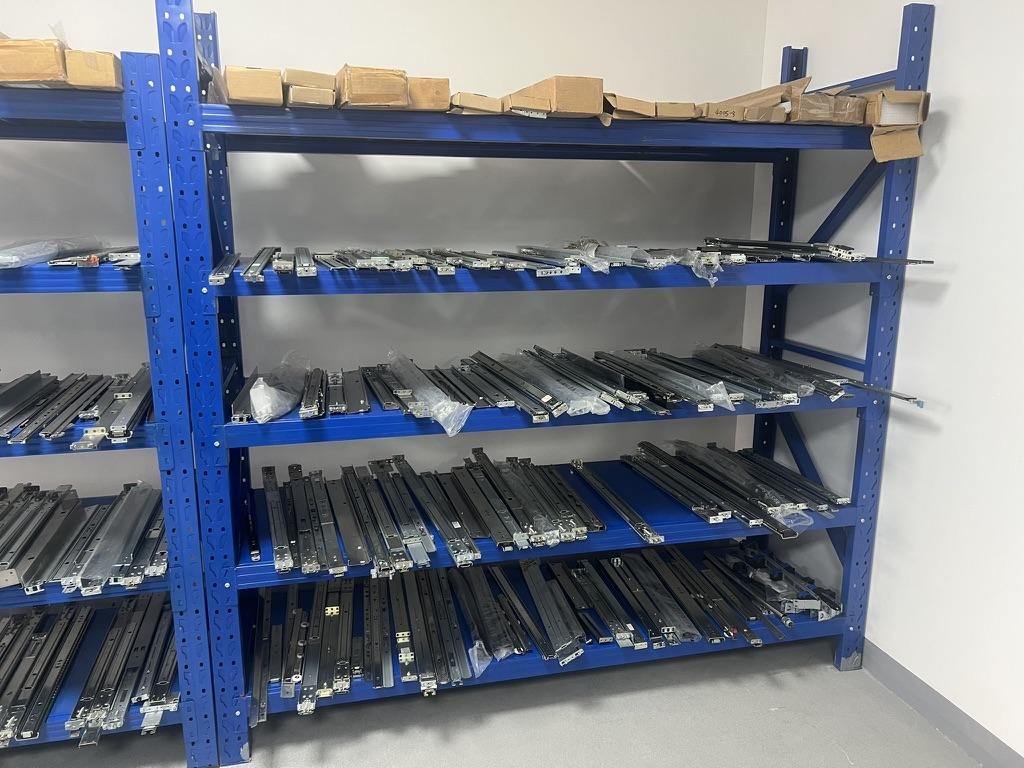
 Server rail sample display rack at the MetrixSlide factory showroom
How Customization and Material Choices Impact Lead Time
Customization usually drives schedule more predictably than geometry. The two questions to ask immediately are: (1) does this change cross into “tooling required” (new die/progressive tool) or (2) is it a bounded change that can be made from existing tooling? MetrixSlide’s working boundary treats bracket position, hole pattern, rail length and thickness as bounded customizations that are frequently handled without full tooling NRE; structural changes or 1:1 copy projects typically require NRE and longer lead times.
Common custom items and their practical impact
- Hole / bracket pattern changes: small repositions or added holes are usually quick when existing dies can be used; a new progressive die is a project change and takes much longer.
- Special shapes / laser parts: add lead‑time variability for scheduling and edge treatment.
- Welded or brazed subassemblies: introduce fixture and cleaning steps.
- Special materials or niche coatings: can add unpredictable sourcing delay because coatings and coil batches are sometimes run only on minimum quantities.
- Heat treatment or stress‑relief: often outsourced and therefore scheduling depends on the heat‑treat supplier’s queue.
- Structural redesigns: take prototype workflows, CAD iteration and physical validation — plan for multiple weeks.
Taxonomy (how MetrixSlide engineers classify rail work)
- Motion architecture: fixed vs sliding (two-/three‑section).
- Sliding mechanism: ball‑bearing vs friction.
- Mounting feature: tool‑less vs screw; and installation style: stab‑in vs drop‑in.
- Fit parameters: closed length, full extension, bracket (fit) range, section count and rated load.
Key dimensional definitions (use these as a checking shorthand)
- Closed length: the overall rail length when members are nested (do not assume this equals rack-post separation).
- Extended / full extension: the member travel distance when fully deployed; used in load/deflection considerations.
- Bracket range (fit range): the adjustable front‑to‑rear bracket span the rail can accommodate — this is the value to match against your actual rack post distance.
Practical example from MetrixSlide projects
- A customized ball‑bearing rail delivered a front bracket adjustment range of 650–965 mm; the customer’s rack-post distance was approximately 812 mm — this shows how a bracket range (not closed length) is the real fit check.
What Physical Samples Prove Beyond CAD
Always think of validation as levels: Requirement → CAD/drawing → Physical fit → Performance. Passing a CAD review does not equal physical acceptance.
What to expect from physical samples
- Physical fit: confirmation that bracket holes, captive screws or T‑pins align in the cage/rack and chassis without interference (CAD can predict this, samples prove it).
- Installation ergonomics: whether the chassis lands in the intended U‑space and how sensitive insertion is to slight misalignment (small datum differences — e.g., a 2 mm captive screw‑to‑chassis datum variation — can change how the chassis sits in the U-space).
- Functional kinematics: smooth travel, jam points, retention, lock‑out behavior and whether tool‑less features operate as intended.
- Short‑duration performance checks: dimensional inspection, and for heavy‑duty families a 24‑hour static load stability check is a common factory practice.
- Evidence for certification or endurance testing decisions: samples let you decide whether to invest in longer test programs.
Case examples
- A North American telecom OEM changed a 300 mm pull‑out requirement to roughly 150 mm (customer‑accepted range 100–150 mm) to enable practical load testing and a compact lock‑out — the drawing revision targeted approximately 150 ±3 mm for the sample run. This illustrates that extension/lock‑out is an application decision and not always “the longer the better.”
- An Indian HPC ODM integrated a MetrixSlide 3D CAD into its server model, confirmed front‑bracket compatibility in CAD and requested 10 sample pairs. The rail’s bracket range of 650–965 mm covered the customer’s ~812 mm post distance; the sample lead time indicated for that job was ~15–20 days after order confirmation. Samples are still required to prove final installation and performance.
Per‑pair rating reminder
- A load rating must state whether it applies per pair or per individual rail, and under which condition (closed/partially extended/fully extended, static/dynamic). MetrixSlide’s heavy‑duty GPU rail has a nominal capacity of up to 180 kg per pair, and a formal test report at that load is not yet available; use this classification logic when comparing ratings.
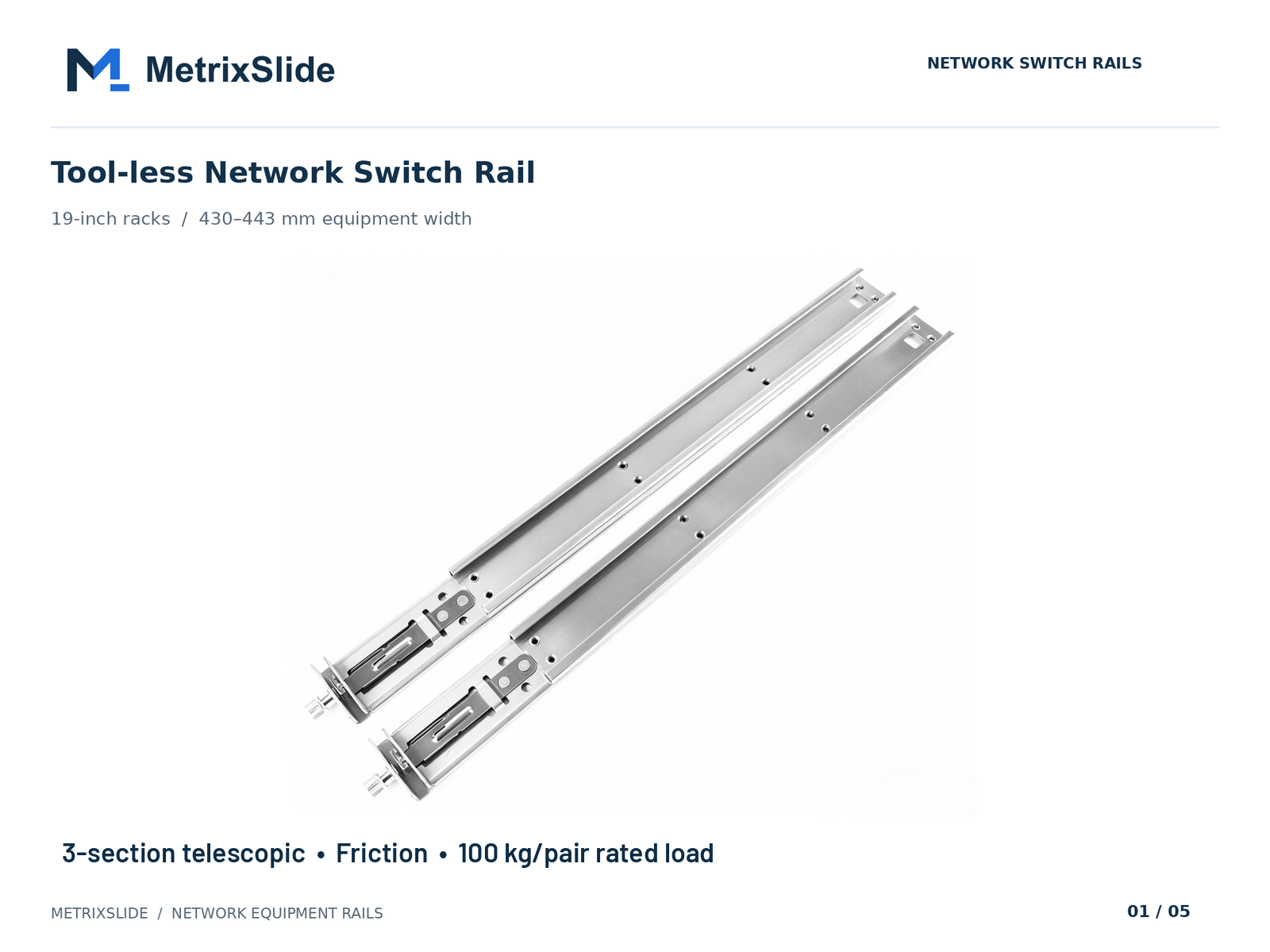 MS-FMR-SW-100 Tool-less Network Switch Rail — view product
Expedited Options and Where Time Is Actually Saved
When the calendar is tight, targeted expedites are more cost‑effective than blanket rush. The usual levers are: priority shop‑floor insertion, subcontracted or overtime processing, splitting or using premium finishing houses, and express freight. Which stage to rush depends on your critical path: if CAD → shop order is already complete, priority production slots and rush finishing move the needle most; if CAD is not final, expediting shop work won’t help.
Trade‑off guidance
- Rush production only helps when tooling and drawings are final.
- Rush finishing helps only if finish is part of the validation; plating is commonly batched so speed premiums can be high.
- Air or express freight shortens transit but does not shorten paint or plating batch waits.
Seasonality and risk
- Peak factory shutdowns and holiday seasons can erase expedite value unless you secure a confirmed ready‑for‑shipment date and a backup slot in writing.
Ordering Process, Minimums, and Supplier Capacity
Compatibility and validation order of operations — MetrixSlide engineering practice
- Hard gates first: capture chassis constraints and rack constraints (mounting depth, hole type, post distance, T‑pin details) and confirm load requirement. If a hard gate fails, preferences are irrelevant.
- Candidate selection: choose rail architecture (fixed/sliding, ball‑bearing/friction) that meets the hard gates.
- CAD/drawing: produce mounting‑area CAD for customer integration (partial STEP files are often sufficient under NDA).
- Physical sample: order samples to verify physical fit and short‑term functional checks.
- Performance validation: run agreed static or endurance tests if required, and only then design‑freeze for production.
Typical ordering steps to include in the RFQ
- Supply: chassis mounting‑area drawing or STEP, full chassis STEP if available, and photos showing the rack posts.
- Rack inputs: actual front‑to‑rear post distance (not just nominal rack depth), hole type (square size or round Ø, or thread spec), and post photos.
- T‑pin / PEM details (if used): head diameter, shaft diameter, under‑head clearance and intended datum/centre positions. (a SaaS company building its own servers example: a PEM spec with head ~6.502 mm, shaft 4 mm and under‑head panel clearance ~1.585 mm was used to derive J‑slot geometry.)
- Load and extension: expected static load per pair or per rail, and desired extension/lock‑out.
- Finish and acceptance: finish type and whether sample must be representative of production (same coating batch, same bearings).
- Sample quantity and target arrival date.
- Whether sample fees should be credited against the production order.
Minimums and sample policy realities
- Many suppliers will ship one or a small number of pairs, sometimes at a premium; others prefer a small‑run MOQ for custom variants. MetrixSlide has executed small sample runs (example: 10 pairs with ~15–20 day lead time after confirmation) and projects with sample ranges of 5–20 pairs when customers requested evaluation quantities. Ask explicitly whether sample cost is refundable or credited to the production PO.
Supplier capacity and schedule control
- Ask for a capacity window and an explicit statement of how changes (material, hole pattern, bracket move) add days. A mutually agreed “ready‑for‑shipment” date with a fallback slot is the practical remedy for overbooked capacity.
Checklist to attach to an RFQ (MetrixSlide recommended)
- Mounting‑area STEP or chassis drawing.
- Rack post‑to‑post distance and hole type (square/round/thread spec).
- Chassis mounting datum and any captive screw centre‑to‑datum distances.
- T‑pin/PEM spec: head Ø / shaft Ø / under‑head clearance and centre spacing.
- Expected static load (per pair or per rail) and required extension / lock‑out.
- Desired finish and any batch‑matching requirement.
- Sample quantity, target arrival date and whether sample fees should be credited.
- Whether tool‑less or drop‑in installation is required.
Compatibility Decision Rules (hard gates before preferences)
A repeatable MetrixSlide rule of thumb: capture chassis constraints → capture rack constraints → check rail capability envelope → CAD/drawing review → physical sample → performance validation → design freeze. Hard gates (interface fit, dimensional fit, validated load) must be satisfied before preferences (ball‑bearing vs friction, tool‑less vs screw, exact extension length).
Practical compatibility checks to request
- Confirm bracket fit range covers actual post distance.
- Verify captive screw / T‑pin datums align (small differences such as 2 mm matter in practice).
- Ensure intended installation method (stab‑in vs drop‑in) is supported by the inner‑rail slot geometry or identify conversion work required.
Regional / Shipping Notes (practical planning, not a carrier schedule)
Transit time depends on origin, carrier choice and season; do not treat carrier published schedules as immutable during peak seasons. For tight calendar targets, explicitly request a "ready‑for‑shipment" date, attach expedite options to the stage‑level schedule and confirm any premium freight costs up front.
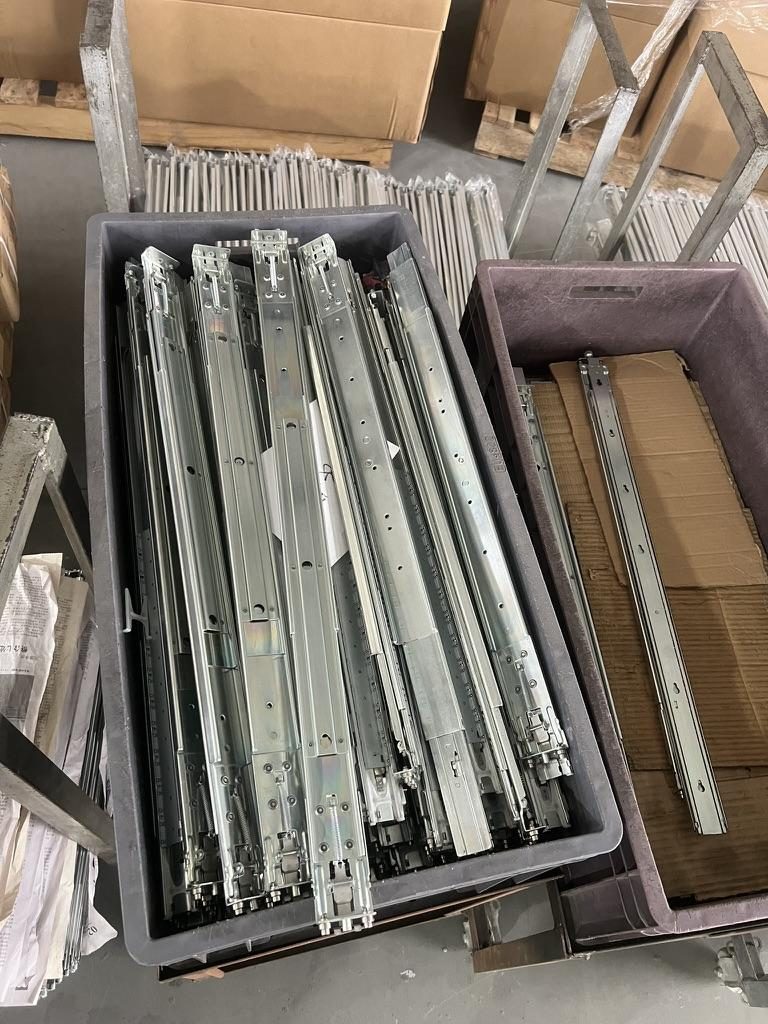
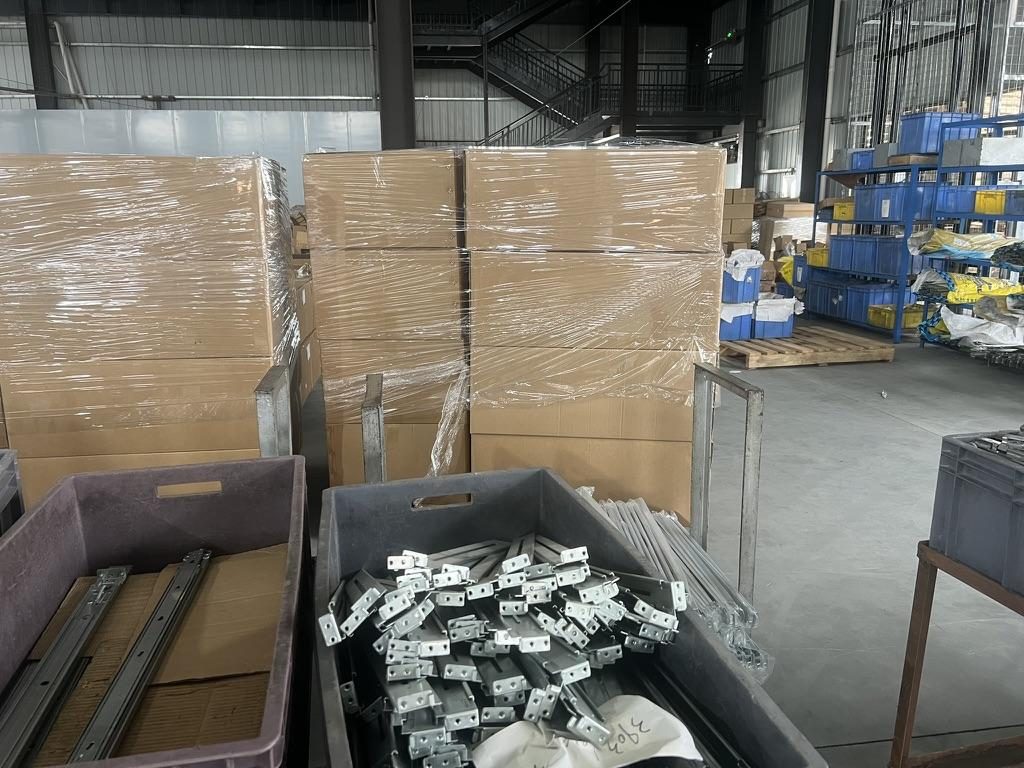
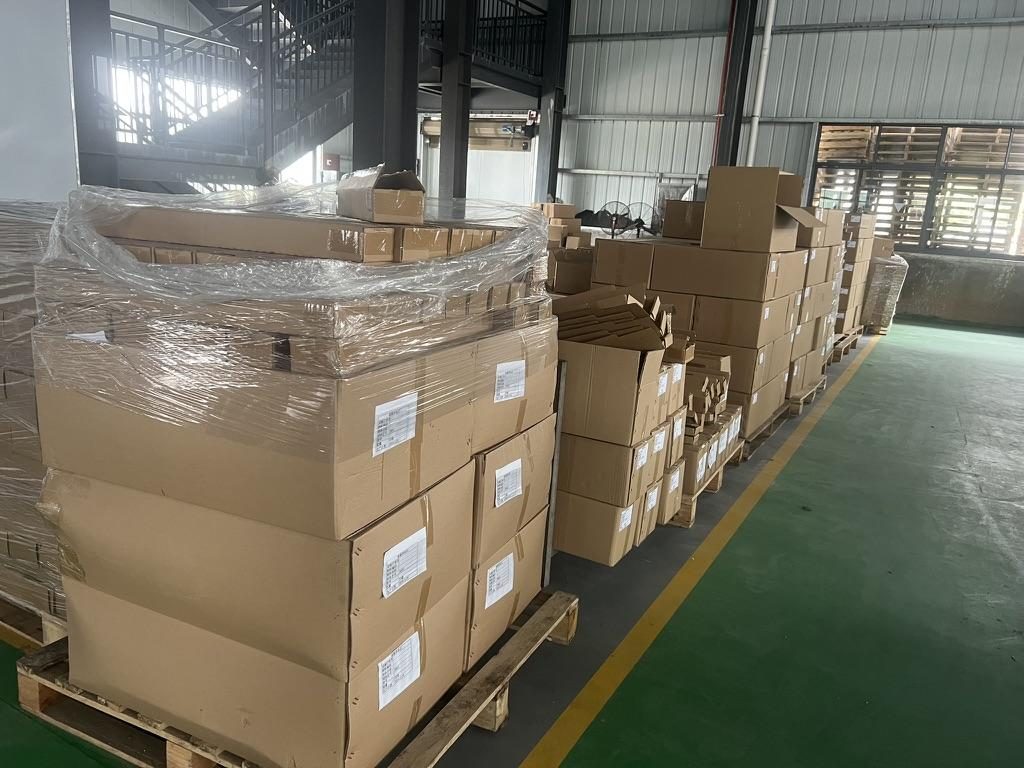 Export cartons of server rail kits ready to ship
Conversion / CTA
To get an accurate sample lead‑time and a stage‑by‑stage schedule, prepare this short packet with your RFQ:
- Mounting‑area STEP or chassis drawing (full STEP if available).
- Rack post‑to‑post distance and hole type (square/round/threaded + picture).
- Chassis datum(s) such as captive screw centre‑to‑chassis‑bottom and any T‑pin centre spacing.
- Expected static load per pair (state whether per pair or per rail) and target extension / lock‑out.
- Desired sample quantity and target arrival date.
- Required finish and whether sample must be representative of the production batch.
- Any installation preference (stab‑in vs drop‑in, tool‑less required).
Ask suppliers to return:
- A stage‑level delivery schedule (days per stage) and the overall sample lead time.
- A line‑item expedite‑cost table (priority production, rush finishing, express freight) and the approximate time saved per option.
- Confirmation of whether sample fees are credited to the production PO and whether small changes (bracket position, hole pattern, length, thickness) trigger tooling NRE.
Plan the sample sequence early and use a compatibility‑first checklist (hard gates before preferences) to avoid calendar compression near integration milestones.
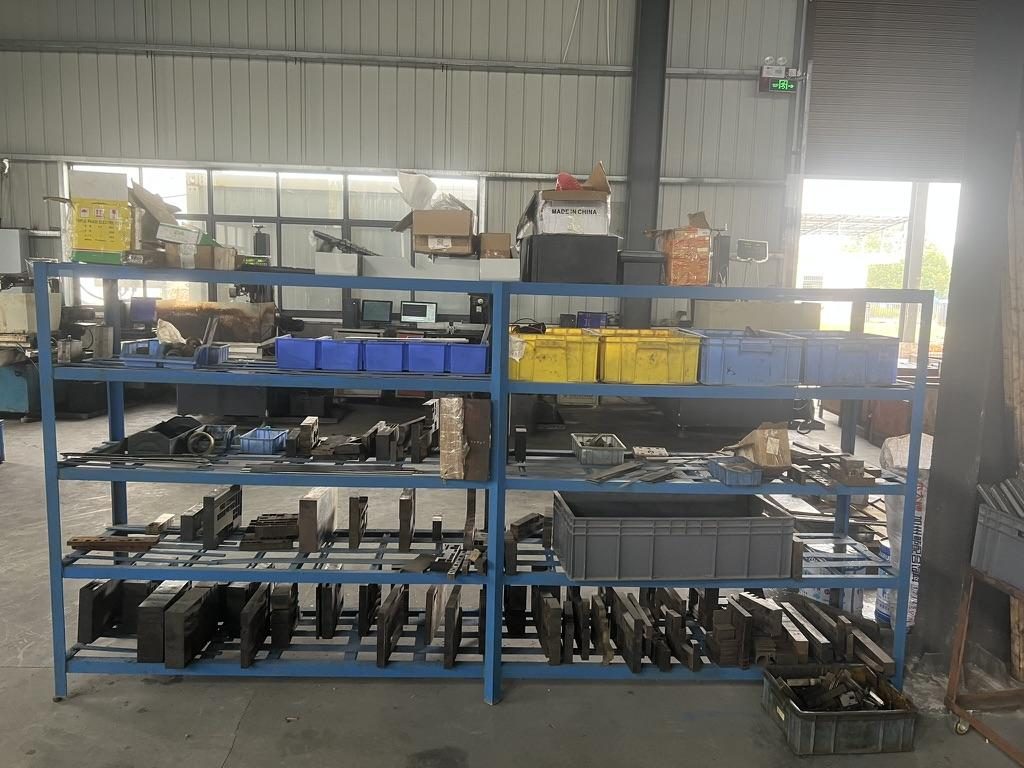
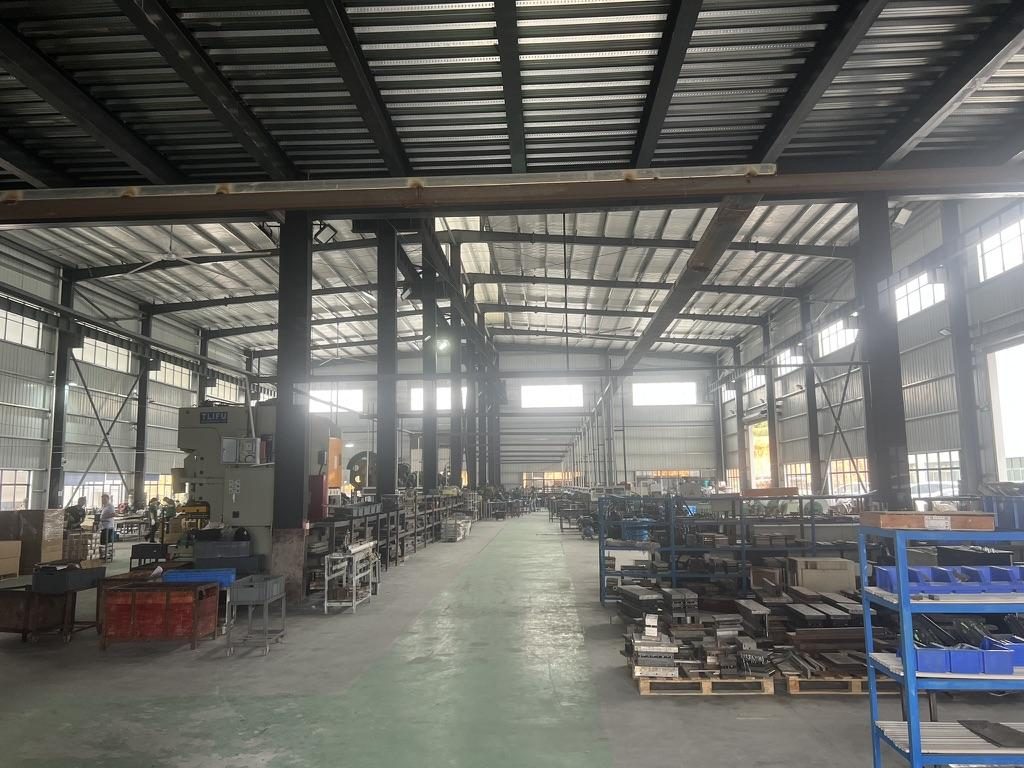 Overview of the server rail production workshop
FAQ
Q: What is the typical turnaround time for a standard server rail sample in the U.S.?
A: For an off-the-shelf model, expect 3–7 days to ship from the factory once you confirm the order. For a simple customization (bracket or hole pattern) typical industry practice is 10–15 days; MetrixSlide’s recent 2U ball-bearing sample job ran ~15–20 days from order confirmation.
Q: How much extra time do common customizations add to sample lead times?
A: Small changes such as hole-pattern tweaks or minor length trims usually add a few days; laser cutting, welding or special coatings add more — commonly +2–10 days. Structural redesigns that require new tooling or dies can push a sample into a multi-week prototype cycle.
Q: What expedited manufacturing and shipping options are available, and how much do they usually cost?
A: Options include priority production slots (saves about 3–7 days), rush CNC or plating (saves 1–10 days depending on the process) and express air freight (saves 1–3 transit days). Expedited freight and rush processing frequently carry premiums (air freight and small-parcel express commonly cost 2–5× standard freight for samples).
Q: How do prototype sample timelines differ from production samples, including tooling and certification steps?
A: Prototypes that change structure or require new dies typically move from a “sample” workflow into a “tooling + validation” workflow; that extends lead times by weeks because of die manufacture, fit checks and longer functional testing. Certification or endurance testing (if required by the buyer) further extends calendar time.
Q: What minimum order requirements or returnable sample policies should I expect from server rail suppliers?
A: Policies vary: many suppliers will ship single or pair samples at a premium, while some require a small batch MOQ for custom variants. Clarify whether sample costs can be credited against production orders and whether customized small changes incur tooling fees.
Talk to a MetrixSlide engineer
Ready to move from research to a real quote? Send us a chassis drawing or model (STEP or DWG), the rack post-to-post distance and hole type, the expected load and your planned quantities. Within 24 hours you get a rail matching proposal from an engineer, followed by 2D/3D drawings for review and sample pairs (typically 15–20 days after drawing approval) for physical validation before the full order.
Bracket position, hole pattern, rail length and thickness adjustments on our existing platforms usually carry no tooling fee; structural redesigns are quoted separately with dies made in-house.