
Customer Initial Request
The project started with a simple technical inquiry:
"Can you share the detailed drawing for the Server Rack Slide Rails 2240-2U? We also need the CAD file, as we plan to order 1,000 units — but first, we must verify it against our designed server using the CAD file."
The customer was planning to order approximately 1,000 units, but before moving forward, they needed to verify the rail solution against their own server design using CAD files.
This meant the key requirement was not only product supply. The customer needed:
- Technical documentation
- CAD verification support
- Compatibility confirmation
before production.
Step 1 — Understanding the Application
After receiving the inquiry, our team did not immediately provide a quotation. Instead, we first reviewed the application requirements to ensure the rail would match the customer's system.
Our engineering team requested key information:
- Server chassis size
- Server chassis width
- Rack type
- Required rail length
- Maximum loading weight
- Ball-bearing or friction slide preference
- Expected annual demand
Step 2 — Requirement Confirmation
The customer provided:
| Parameter | Requirement |
|---|---|
| Server chassis | 2U |
| Rack type | 19" standard rack |
| Chassis width | 434 mm |
| Rail length | Around 860 mm closed |
| Load requirement | 40–50 kg |
| Slide type | Ball-bearing |
| Annual demand | Around 1,000 units |
Step 3 — Engineering Matching
Based on the application requirements, our engineering team reviewed the installation conditions and recommended a suitable 2U ball-bearing server rail solution.
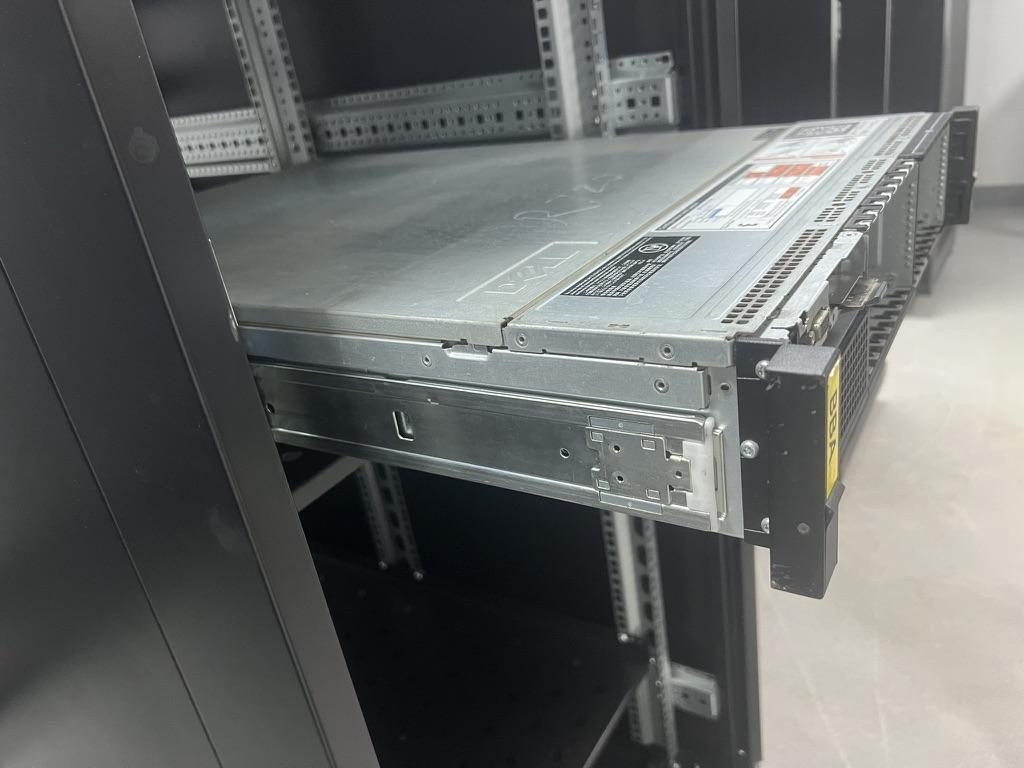
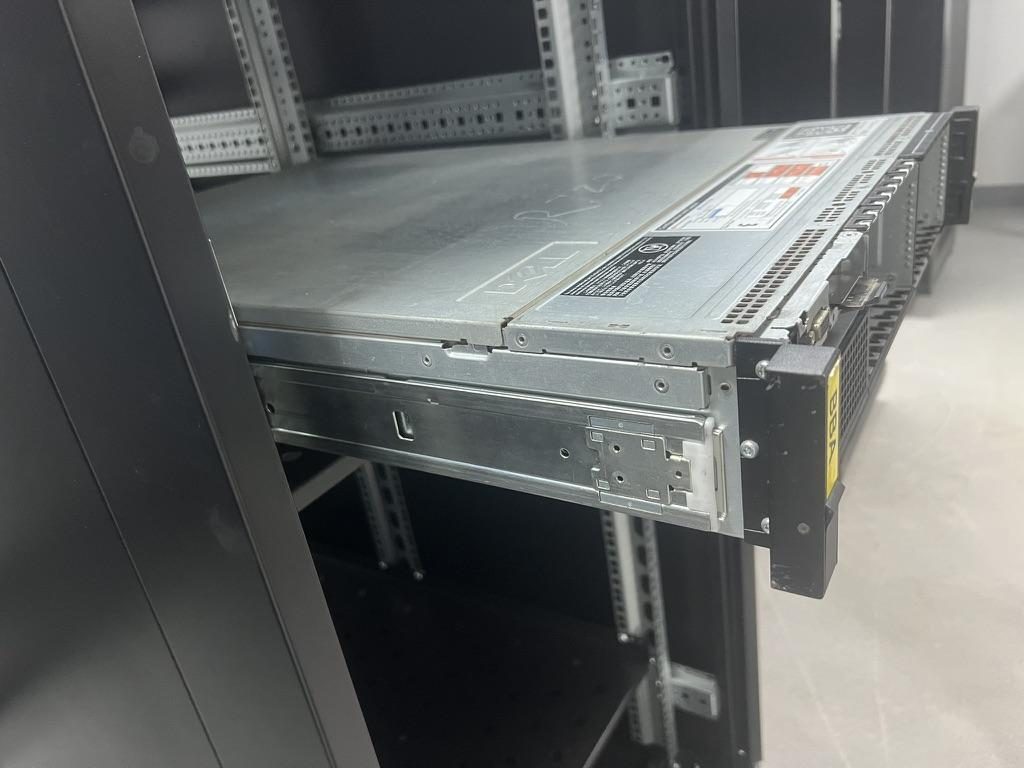 A 2U ball-bearing rail kit from our standard platform, the starting point for the matching proposal
We provided:
- Detailed technical drawing
- CAD reference
- Installation compatibility information
for the customer's engineering review.
Step 4 — CAD Integration & Modification Support
After reviewing the drawing, the customer confirmed:
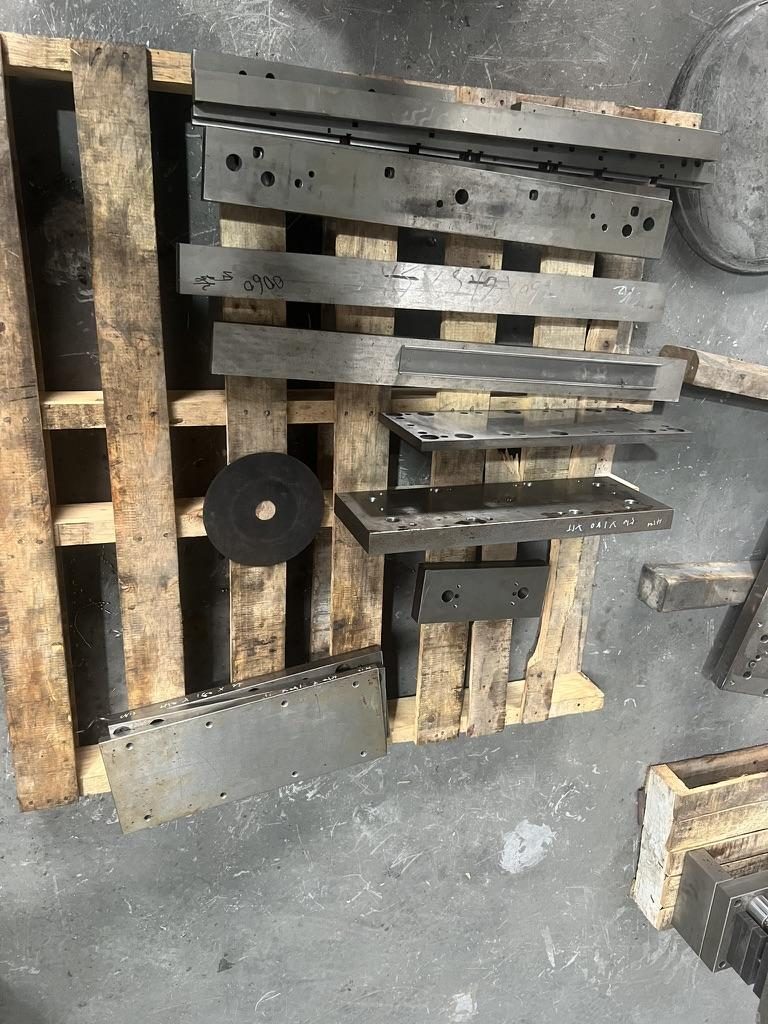
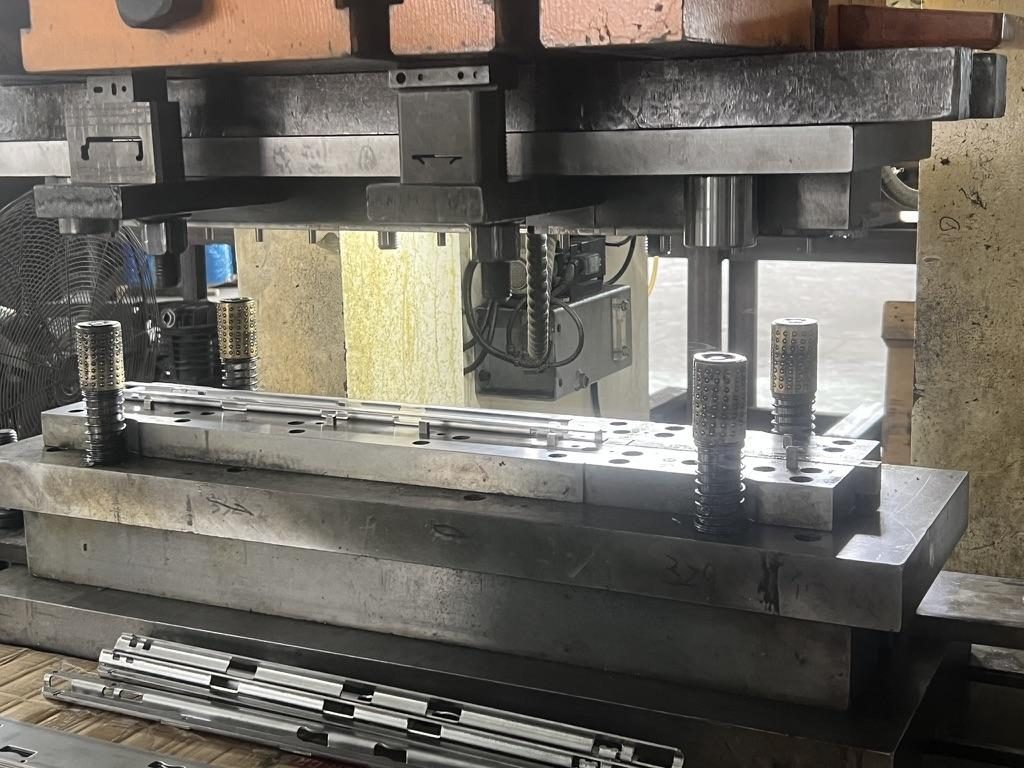 Rail members leaving the progressive die: bracket and hole-position changes are made here, without new core tooling
"The 2U slide rail looks like it could work for our project, though we will likely need a slight modification at the mounting area."
Since the customer was developing a custom server system, they needed to verify the fitment against:
- Their 3D model
- Physical hardware constraints
- Assembly requirements
The customer requested STEP/CAD files so they could integrate the rail into their assembly and confirm the exact modification details.
The Engineering Value We Provided
For OEM server projects, selecting the right rail is not simply matching:
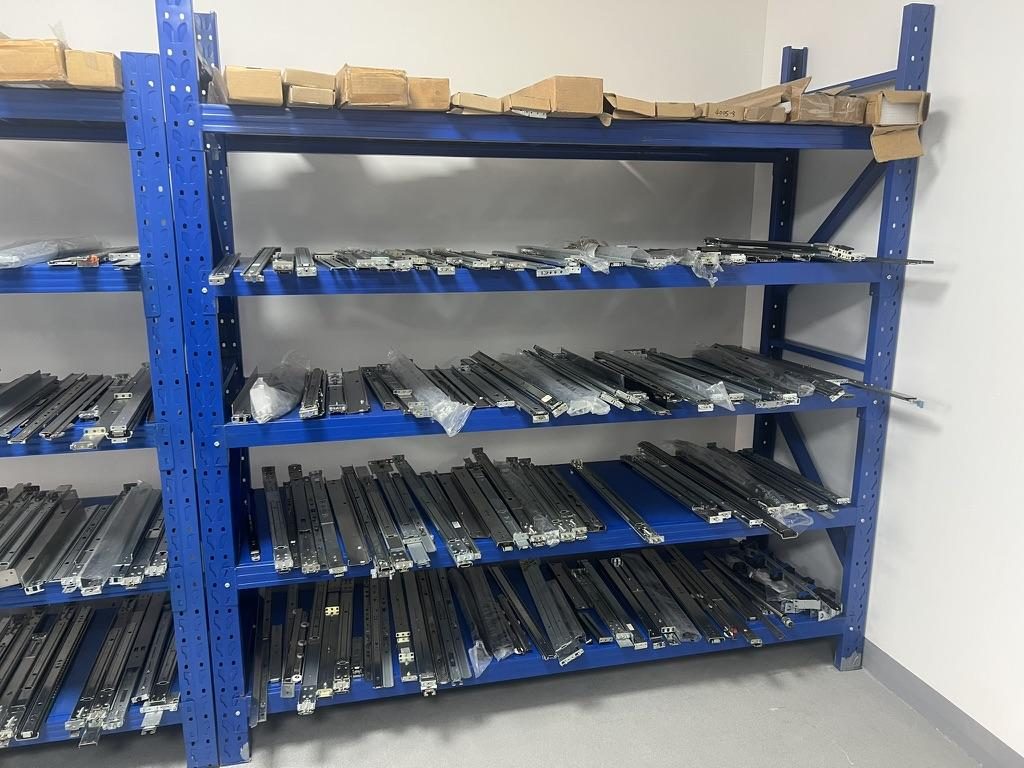
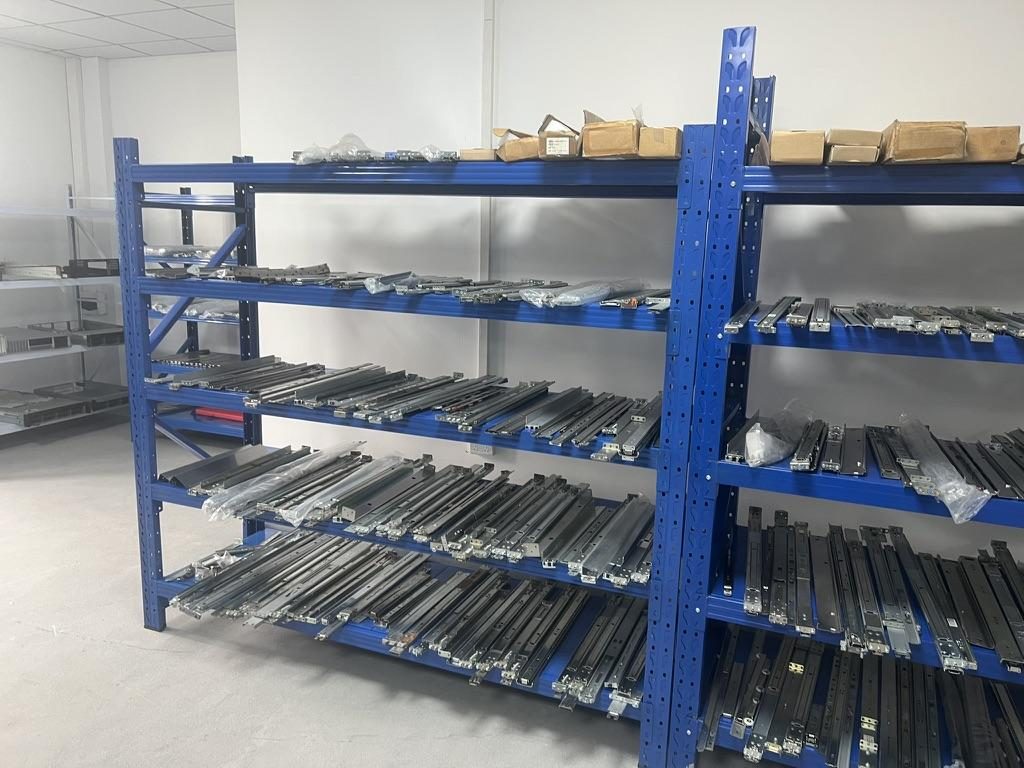
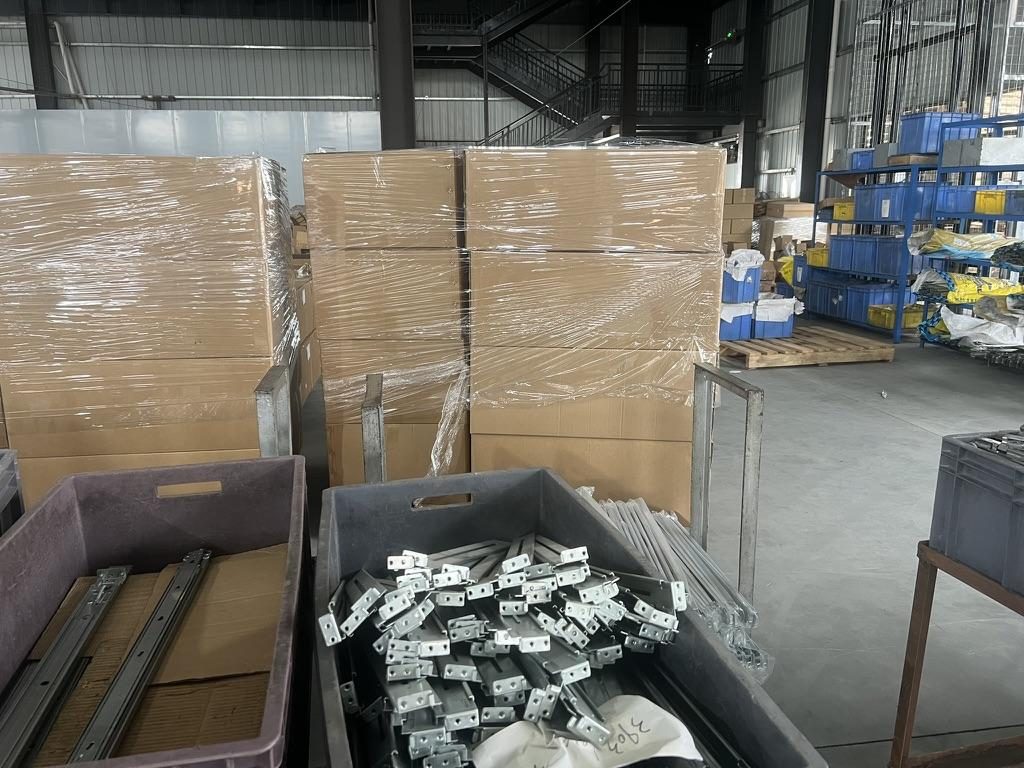 Validated rail kits being packed for the customer sample order
- 2U
- Rack size
- Rail length
The actual engineering process requires:
- Requirement understanding — reviewing the customer's installation environment and application conditions.
- Parameter review — confirming key mechanical requirements before any recommendation.
- CAD support — helping engineers validate compatibility inside their own product design.
- Customization support — adjusting mounting details when a standard solution needs modification.
Need the Same Support for Your Server Project?
If you're integrating server rails into a custom chassis, we can help you validate fitment before you commit to production — including STEP/CAD files and no-tooling-fee adjustments to brackets, hole positions, rail length and thickness.
Request a matching proposal — send us your chassis dimensions and we'll respond within 24 hours.